News · Science & Technology
Discovery of CRISPR's long lost ancestor may expand gene-editing toolkit
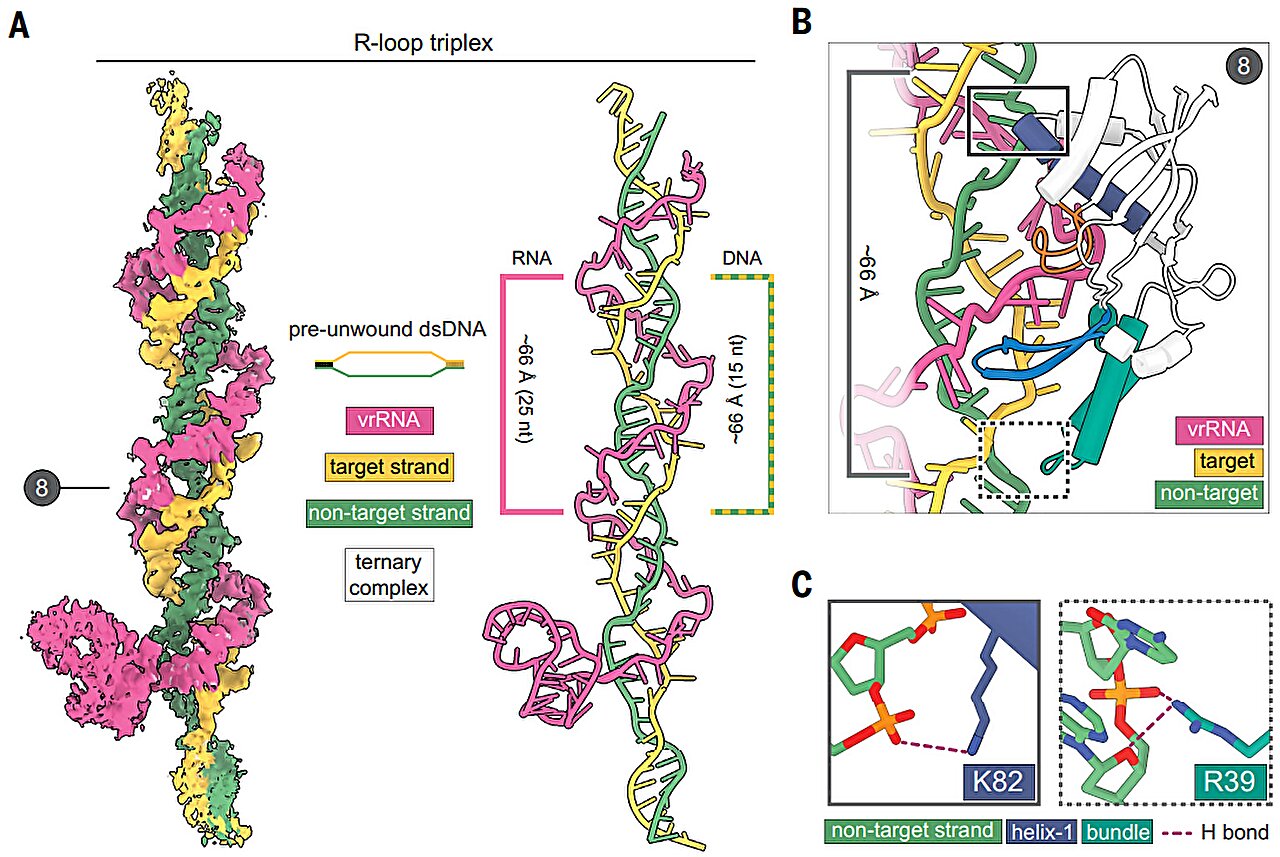
The surprising discovery is that RNA-guided defense systems may not belong only to bacteria. Two studies published in Science describe a similar system that originated in viruses. This matters because CRISPR, now famous for gene editing, may have deeper evolutionary roots than scientists expected. The article does not provide the system’s detailed parts or exact operation. It does establish that the viral system is RNA-guided, meaning RNA helps direct biological activity toward a target. Its resemblance to CRISPR is the key connection. CRISPR itself functions as a microbial immune system against invading viruses. The findings do not show that the viral system is already a gene-editing tool. Instead, they identify a possible earlier form of an important biological strategy. Studying it could help researchers understand how RNA-guided systems evolved and whether their features might eventually inspire new biotechnology. The studies therefore connect viral evolution with modern genetic engineering.
Based on reporting by Phys.org
What did the two new studies discover about RNA-guided systems in viruses?
The surprising discovery is that RNA-guided defense systems may not belong only to bacteria. Two studies published in Science describe a similar system that originated in viruses. This matters because CRISPR, now famous for gene editing, may have deeper evolutionary roots than scientists expected.
The article does not provide the system’s detailed parts or exact operation. It does establish that the viral system is RNA-guided, meaning RNA helps direct biological activity toward a target. Its resemblance to CRISPR is the key connection. CRISPR itself functions as a microbial immune system against invading viruses.
The findings do not show that the viral system is already a gene-editing tool. Instead, they identify a possible earlier form of an important biological strategy. Studying it could help researchers understand how RNA-guided systems evolved and whether their features might eventually inspire new biotechnology. The studies therefore connect viral evolution with modern genetic engineering.
What is CRISPR, and how does it help bacteria defend themselves against invading viruses?
CRISPR is a biological defense system found in bacteria and other microbes. It helps protect these organisms from viruses that invade them. Scientists later adapted CRISPR because its targeting ability can be directed toward chosen genetic sequences. In nature, however, its original role is immune protection, not laboratory gene editing.
A bacterium can retain pieces of genetic material from earlier viral encounters. These pieces can help produce RNA guides. The guide works with a CRISPR-associated protein, directing that protein toward a matching viral sequence. The protein can then cut or otherwise disrupt the invading genetic material. This recognition system gives the microbe a way to respond to familiar threats.
The article emphasizes that CRISPR existed long before researchers used it. It has operated for billions of years as a natural microbial immune system. That long history explains why CRISPR became such a powerful research tool. Scientists borrowed an ancient defense mechanism and redirected it toward controlled gene editing.
How old and widespread are CRISPR-like immune systems among bacteria and other microbes?
CRISPR-like immune systems are extraordinarily old. The article says CRISPR has protected bacteria and other microbes for billions of years. That places the system far before modern science and even before scientists recognized genes as editable biological instructions. Its age shows that gene-targeting strategies can arise through natural evolution.
These defenses are not limited to one bacterial species. The article describes CRISPR as a natural immune system in bacteria and other microbes. Their shared purpose is protection from invading viruses. Although the article does not give a percentage or a species-by-species survey, it clearly presents the systems as broadly distributed across microbial life.
This ancient, widespread presence matters for both biology and biotechnology. It suggests that microbes have repeatedly faced viral attacks and evolved sophisticated countermeasures. Scientists can study these systems as products of long evolutionary experimentation. The viral systems described in the new studies add another piece to that history, linking microbial immunity with virus biology.
Why might a virus-based system be considered a possible ancestor or precursor of CRISPR?
The virus-based system is considered a possible CRISPR precursor because it shares a central feature with CRISPR: RNA guides a biological response. The two Science studies describe this resemblance and identify the viral origin. That combination makes the system relevant to questions about where CRISPR-like mechanisms came from.
The word possible is important. The article does not prove that modern CRISPR directly descended from this specific viral system. It reports that the system appears to be a precursor, meaning it may represent an earlier form or evolutionary stage. More evidence would be needed to establish a precise family tree between the viral system and bacterial CRISPR.
Even so, the discovery changes the search for CRISPR’s origins. Researchers can now compare RNA-guided systems from viruses with those in bacteria and other microbes. Such comparisons may reveal which components are ancient and which evolved later. They may also clarify how viruses and their hosts shaped one another’s defenses over time.
How could discovering this viral-origin system expand the tools scientists use to edit genes?
Finding an RNA-guided system in viruses could broaden the biological designs scientists examine for gene editing. CRISPR is powerful because an RNA guide can help direct a protein toward a chosen genetic target. A related viral system might contain different proteins or targeting features. Those differences could eventually provide alternatives for editing DNA.
The article itself reports a discovery, not a finished biotechnology. It does not say that researchers have adapted the viral system to edit genes in cells. Any future tool would need testing for accuracy, safety, delivery, and control. Scientists would first have to determine exactly how the viral system recognizes and changes genetic material.
Its main immediate value is therefore exploratory. Researchers can compare the viral mechanism with bacterial CRISPR and identify useful properties. If the system proves programmable and reliable, it might expand the range of gene-editing tools. It could also reveal new ways to target genetic sequences that current CRISPR systems handle poorly.
How do bacteria and viruses use RNA-guided systems in their evolutionary struggle against one another?
Bacteria and viruses are locked in an evolutionary arms race. Viruses invade bacteria and use their resources to reproduce. Bacteria respond with defenses such as CRISPR, a natural immune system that helps recognize and counter viral genetic material. Each side creates pressure for the other to change.
A bacterial CRISPR system uses RNA guidance to help a protein find a matching sequence from an invading virus. That targeting can help disable the viral threat. The new studies add a striking twist: viruses themselves appear to carry a similar RNA-guided system. The article does not specify exactly what the viral system does, so its role should not be overstated.
The shared strategy shows how closely connected viral and microbial evolution can be. A defense developed by bacteria may resemble, or perhaps have roots in, a viral mechanism. Comparing both sides could reveal how RNA-guided systems arise and adapt. It may also help scientists find biological components useful for future research and biotechnology.
How does an RNA guide direct a gene-editing protein to a specific DNA sequence?
In a typical CRISPR gene-editing system, the RNA guide carries a sequence designed to match a chosen DNA target. The guide forms a complex with an editing protein, often a CRISPR-associated protein. The RNA’s bases pair with complementary bases in the DNA, helping the protein locate the intended site rather than searching randomly.
Once the guide and DNA match, the protein can act on that sequence. In widely used CRISPR systems, the protein cuts both strands of DNA near the target. The cell then repairs the break. Researchers can use that repair process to disrupt a gene or introduce a planned change, depending on the editing design.
The source article does not explain this molecular mechanism in detail; this description uses established CRISPR biology. The new studies concern a similar RNA-guided system found in viruses, not necessarily the exact protein used in laboratory editing. Understanding how its guide and protein interact would be essential before adapting it for gene editing.
Key Facts:
📌 Two Science studies describe a viral RNA-guided system resembling CRISPR.
📌 The system appears to have originated in viruses.
📌 Researchers propose it may be a precursor to CRISPR.
📌 CRISPR is a natural immune system in bacteria and other microbes.
📌 It helps microbes defend against invading viruses.
📌 Scientists adapted its targeting ability for gene editing.
📌 CRISPR-like immunity has existed for billions of years.