News · Defence & Security
Russian forces fail to achieve September objectives in Huliaipole and Orikhiv directions — Defense Forces
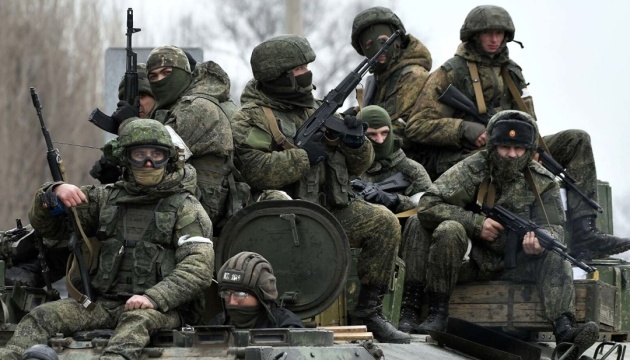
In this article, Russia’s September objectives involved capturing designated settlements and advancing along the Huliaipole and Orikhiv directions. Those goals were not achieved. The failure shows that Russian plans were more ambitious than battlefield results. The clearest example concerns the Kinska River. Russian airborne units were tasked with reaching its barrier line by the end of October, even though September’s settlement-capture objectives remained incomplete. In Orikhiv, Russian forces also continued attacking but made no significant advance toward their designated lines. The article says Russian commanders still intended to reach their October lines and continue offensive operations. However, the September shortfall suggests Ukraine’s Defense Forces were containing the attacks. It also shows a gap between reported progress and actual progress, since some Russian units reportedly claimed successes that had not occurred.
Based on reporting by Ukrinform English
What September objectives did Russian forces fail to achieve in the Huliaipole and Orikhiv directions?
In this article, Russia’s September objectives involved capturing designated settlements and advancing along the Huliaipole and Orikhiv directions. Those goals were not achieved. The failure shows that Russian plans were more ambitious than battlefield results.
The clearest example concerns the Kinska River. Russian airborne units were tasked with reaching its barrier line by the end of October, even though September’s settlement-capture objectives remained incomplete. In Orikhiv, Russian forces also continued attacking but made no significant advance toward their designated lines.
The article says Russian commanders still intended to reach their October lines and continue offensive operations. However, the September shortfall suggests Ukraine’s Defense Forces were containing the attacks. It also shows a gap between reported progress and actual progress, since some Russian units reportedly claimed successes that had not occurred.
What do “the Huliaipole and Orikhiv directions” mean in military reporting?
In military reporting, a “direction” means a geographic axis where forces are operating or trying to advance. The Huliaipole and Orikhiv directions therefore identify two nearby operational sectors in Ukraine’s southeastern theater. They help readers track attacks without naming every position on the front.
For example, Russian forces attacked Ukrainian positions five times in the Huliaipole direction on October 5. They tried to move toward Uspishne, Rizdvianka, and Yehorivka. In the Orikhiv direction, they attempted one attack toward Pavlivka. These place names show the directions’ practical meaning.
The labels also help explain command decisions. The Huliaipole sector was described as the hottest area, while Orikhiv saw continued offensive tasks without significant progress. The article says Russia still wanted to capture Orikhiv and Zaporizhzhia, but lacked enough forces and means for a direct advance toward the regional capital.
How large are the forces involved, and what losses did Russia reportedly suffer in September?
The article does not provide a precise headcount for the Russian force. It does describe Huliaipole as the hottest area and says Ukraine faced one of the largest Russian occupation-force groupings there. That grouping included units from several Russian combined-arms armies, indicating substantial scale.
The reported September losses were significant. Units of the Operational Task Force South said they eliminated more than 4,900 Russian troops and destroyed 2,070 pieces of weapons and military equipment. These figures cover the task force’s operational zone, not necessarily only Huliaipole or Orikhiv.
The numbers help explain why Russia struggled to meet its objectives, but they are wartime claims attributed to Ukraine’s Defense Forces. The article gives no independent verification or Russian figures. It also says the overall situation remained largely unchanged, while Russian forces continued trying to advance and suffered further personnel losses.
Why has Russia shifted from broad, large-scale attacks to infiltration and small assault groups using motorcycles and quad bikes?
Russia had abandoned large-scale offensive operations across a broad front and was using infiltration tactics, according to the spokesperson. The article presents this as a change in battlefield method, but it does not give a confirmed reason for the shift. Any explanation beyond that would be interpretation rather than a stated fact.
The reported pattern was limited and localized. Russian forces periodically sent small assault groups supported by motorcycles and quad bikes. They attempted to exploit narrow approaches rather than attack across a wide front. The article says these assaults achieved no success. In Huliaipole, Russia also kept trying to move toward several named settlements.
The shift may indicate an effort to continue pressure despite the failure of larger operations, but the source does not confirm that motive. What is clear is that Russia still had offensive ambitions. It continued attacking in both directions, while Ukraine said it was containing the advance.
Who sets the objectives for Russian units, and how can inaccurate reports from frontline units affect later military planning?
The article describes a reporting chain rather than naming one specific commander. Some Russian units report to senior military leadership that they have captured settlements and advanced. The spokesperson says those claims are sometimes untrue. Russia’s command then uses the reported picture when setting new objectives.
This creates a dangerous planning loop. A false report can make commanders believe an operation succeeded, even when positions were not captured. In the article, that led to more ambitious October objectives. Russian airborne units were tasked with reaching the Kinska River’s barrier line, although September settlement objectives had not been completed.
The immediate consequence is a mismatch between plans and battlefield reality. Units may receive goals based on ground they do not control, while commanders underestimate resistance and losses. The article links this reporting problem to continued Russian attempts to advance, despite Ukraine’s assessment that the September objectives had failed.
What does Russia’s failure to reach its September objectives mean for Ukraine’s ability to contain the offensive?
The main implication is that Russia was unable to convert its offensive plans into the territorial gains its commanders expected. Ukraine’s Defense Forces, including the Operational Task Force South, said the September failures showed effective containment. Containment does not mean attacks stopped; it means the enemy’s advance was limited.
The article gives several examples. Russian forces failed to capture settlements assigned for September. In Orikhiv, they continued offensive tasks but made no significant advance toward designated lines. In Huliaipole, small assaults using motorcycles and quad bikes reportedly achieved no success. Russia still attacked, including five attempts there on October 5.
Ukraine should nevertheless expect continued pressure. The spokesperson said Russian forces would likely keep attacking and try to reach their planned line by the end of October. Thus, the September result demonstrates Ukrainian defensive effectiveness, but not the end of Russia’s offensive intentions or capabilities.
What does an army need—such as personnel, equipment, supply lines, and coordination—to capture settlements and advance toward a designated line?
An army needs several connected capabilities to capture settlements and advance to a designated line. It needs enough personnel to attack, protect flanks, rotate exhausted units, and hold ground afterward. It also needs weapons, vehicles, communications, medical support, ammunition, fuel, and food. Without these, momentum quickly fades.
Coordination is equally important. Leaders must align reconnaissance, artillery, infantry, armor, air defense, and engineers. Supply lines must keep moving forward as troops advance. Engineers may need to clear mines or repair routes. Accurate battlefield reports are essential, because commanders must know which positions are actually controlled before issuing the next order.
The article illustrates these requirements indirectly. Russia faced a large force grouping but still failed to complete September objectives. It suffered reported personnel and equipment losses, used small assault groups, and lacked sufficient forces and means for a direct advance toward Zaporizhzhia. These limitations can prevent breakthroughs even when offensive intentions remain strong.
Key Facts:
📌 September settlement-capture objectives were not achieved.
📌 Russian forces failed to reach planned advance lines.
📌 October objectives became more ambitious despite September’s failures.
📌 A military direction is a geographic axis of operations.
📌 Huliaipole was described as the hottest sector.
📌 Orikhiv attacks produced no significant recorded advance.
📌 Huliaipole faced forces from several Russian combined-arms armies.