News · International Relations
Munich Security Conference CEO Benedikt Franke: ‘India has said right things for years… not often lent its weight… It’s finally walking the talk’
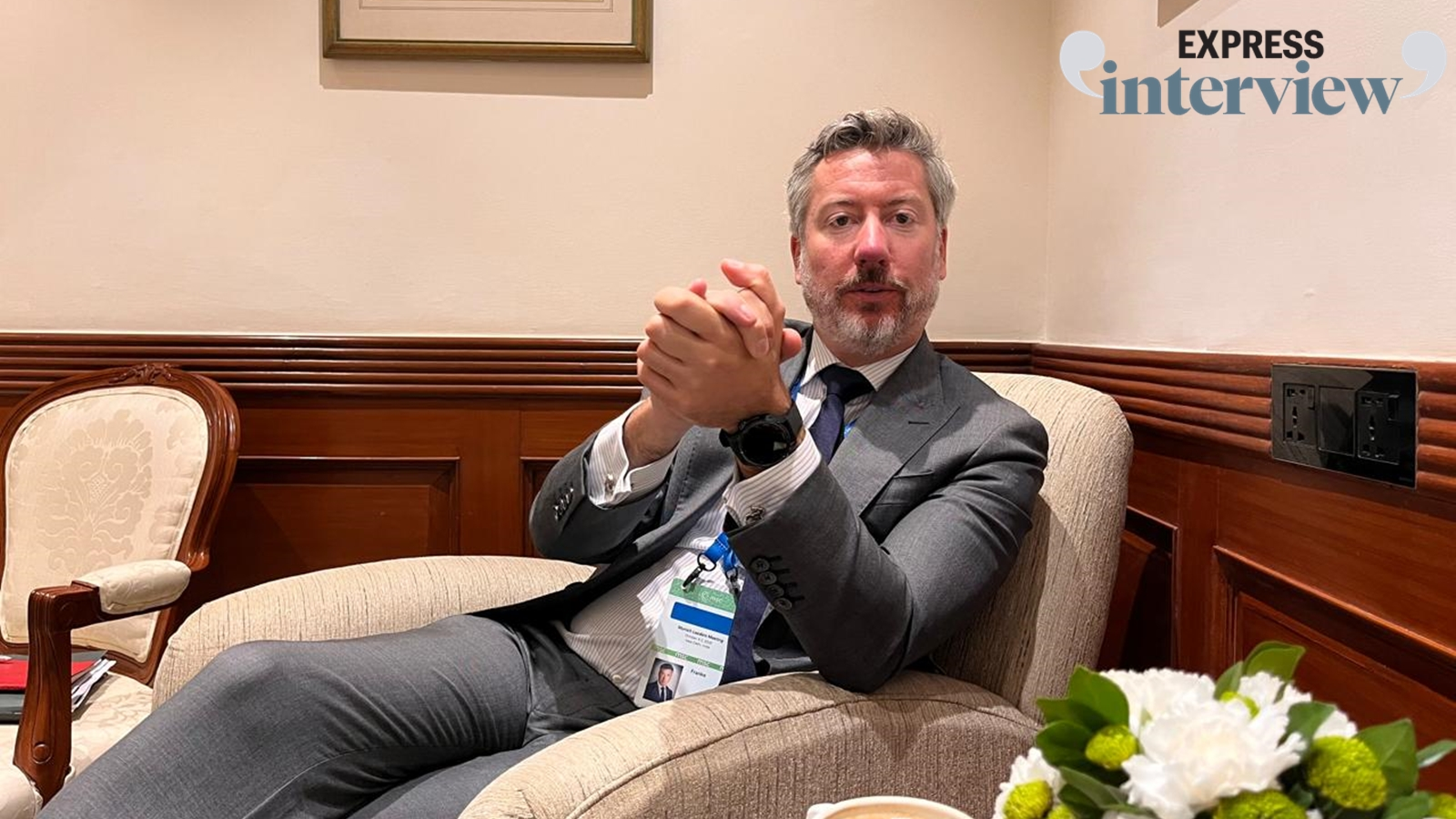
The Munich Security Conference, or MSC, is an international forum focused on security and foreign policy. It brings influential leaders together to discuss wars, diplomacy, defence, and global risks. Its importance lies in encouraging direct conversation when countries disagree or formal negotiations are difficult. The article describes Benedikt Franke, the MSC’s Vice-Chairman and CEO, visiting Delhi for a Munich leaders’ meeting. This meeting is a regional chapter of the wider conference, which is held in different locations each year. Such gatherings connect decision-makers beyond normal government channels. The MSC does not itself command countries or impose settlements. Its influence comes from convening people who can shape policy. In this case, Franke used the platform to highlight India’s possible role in ending the Russia-Ukraine war. The conference therefore acts as a diplomatic bridge, bringing attention to ideas and relationships that might support negotiations.
Based on reporting by Indian Express
What is the Munich Security Conference, and what role does it play in international diplomacy?
The Munich Security Conference, or MSC, is an international forum focused on security and foreign policy. It brings influential leaders together to discuss wars, diplomacy, defence, and global risks. Its importance lies in encouraging direct conversation when countries disagree or formal negotiations are difficult.
The article describes Benedikt Franke, the MSC’s Vice-Chairman and CEO, visiting Delhi for a Munich leaders’ meeting. This meeting is a regional chapter of the wider conference, which is held in different locations each year. Such gatherings connect decision-makers beyond normal government channels.
The MSC does not itself command countries or impose settlements. Its influence comes from convening people who can shape policy. In this case, Franke used the platform to highlight India’s possible role in ending the Russia-Ukraine war. The conference therefore acts as a diplomatic bridge, bringing attention to ideas and relationships that might support negotiations.
What has India done differently that led Benedikt Franke to say it is now “walking the talk” on the Russia-Ukraine war?
Franke says India had long used the language of dialogue and negotiation, but its actions had not fully matched those statements. He points especially to India’s earlier voting record at the United Nations. The change, in his view, is a move from general appeals for peace toward active diplomatic engagement.
The strongest example is India’s reported proposals to the parties. Franke says the Ukrainian foreign minister and President Putin described the Indian proposals as the only ones they were seriously considering. That suggests India used its unusual access and relationships to offer ideas directly, rather than simply commenting from the sidelines.
This matters because India has close ties with Russia while also engaging with Europe, the United States, and Ukraine. Franke hopes India will “double down” on these signs. Its credibility will depend on whether it continues pressing for talks without accepting aggression or weakening Ukraine’s negotiating position.
How much leverage does India have over Russia through its diplomatic relationship, trade, and purchases of Russian energy?
India’s leverage over Russia is significant but not unlimited, and the article gives no numerical measure. Franke identifies India as one of the countries with a special relationship with Moscow. That relationship gives India access and credibility that many European countries lack. Its diplomatic weight also reflects its growing economic and geopolitical importance.
Energy is a central example. India continues buying Russian oil and gas, even while Russia wages war in Ukraine. India also maintains visible political contact, including the Modi-Putin embrace and their meetings at the BRICS summit. These links create channels through which India can communicate pressure, proposals, or incentives.
The mechanism is influence, not control. Russia may listen more closely to a major partner that buys its energy and can expand future business. Franke says India could pressure its “favourite shopkeeper” and make a major difference. Still, leverage depends on India’s willingness to use it and Russia’s willingness to respond.
What could happen if India uses that relationship to pressure Russia toward negotiations?
If India uses its relationship to pressure Russia, it could help move the conflict from military confrontation toward negotiations. This matters because Franke says countries such as India and China may have the best chance of influencing Moscow. Their relationships provide access that outside pressure alone may not achieve.
The key mechanism would combine pressure and incentives. India could use diplomatic contact, energy ties, and possible future business to encourage Russia to end aggression. It could also present proposals that Moscow is willing to consider. Franke argues that India’s close relationship should be used to overcome the stalemate, rather than merely preserve friendly symbolism.
The outcome would depend on the terms. Europe wants Ukraine to enter negotiations from the strongest possible position. Franke says any agreement should end the war, restore Ukraine’s sovereign territory, and avoid rewarding the aggressor. If those conditions are absent, a business agreement could send the wrong signal instead.
Why have India and Russia maintained a close relationship, including cooperation in energy, defence, and diplomacy?
The article highlights India’s special and possibly emotional relationship with Russia, but it does not provide a full historical explanation. Established history shows that India and the Soviet Union developed close ties during the Cold War. Their cooperation supported India’s strategic independence and created long-lasting political trust.
Defence has been a major foundation. Russia and the Soviet Union supplied India with weapons, technology, training, and military cooperation. Energy has added another layer, including oil, gas, and civilian nuclear cooperation. Diplomatic coordination also mattered, as Moscow often supported India’s positions or interests in international affairs.
These links survived the Soviet Union’s collapse because they serve continuing interests. India values reliable partners and strategic autonomy, while Russia benefits from arms sales, energy trade, and a major relationship in Asia. Today, India also works with Western countries. That creates a balancing challenge, but it explains why India may have unusual influence with Moscow.
What is “multi-alignment,” and why can a country eventually face limits to staying close to opposing sides?
Multi-alignment is a foreign-policy approach in which a country works with different powers at the same time. It avoids joining one permanent bloc and instead seeks benefits from several relationships. For India, this can mean ties with Russia, the United States, Europe, China, and other partners. The approach supports strategic flexibility.
The problem appears when partners are on opposite sides of a major conflict. India may want Russian energy, Western technology, and influence in global institutions. But Russia’s invasion has caused civilian deaths and destroyed civilian infrastructure. Maintaining equal closeness can then look inconsistent with India’s stated support for international cooperation and development.
Franke says multi-alignment is “great on paper” but reaches a natural limit. A country that presents itself as a liberal democracy and global leader may face pressure to act against blatant violations of international law. India’s growing ambitions also raise expectations that its diplomatic actions should match its self-image.
What do sovereignty and international law mean, and why is Russia’s invasion of Ukraine described as a breach of both?
Sovereignty means that a country has authority over its own territory, government, and political choices. International law is the body of rules governing relations among states, including respect for territorial integrity and limits on using force. Together, these principles protect countries from being conquered or dictated to by stronger neighbours.
Russia’s invasion of Ukraine is described as a breach because Russian forces attacked another state and sought to control its territory. The article refers to civilian deaths, destroyed infrastructure, aggression, and the need to restore Ukraine’s sovereign territory. These actions conflict with the basic rule that disputes should not be settled through unlawful force.
The issue matters beyond Ukraine. If aggression succeeds, other states may doubt whether borders and treaties provide real protection. Franke therefore says any peace effort must end aggression and restore Ukraine’s sovereign territory. Diplomatic pressure can support negotiations, but an agreement that rewards conquest could weaken international law and future security.
Key Facts:
📌 The MSC is an international forum focused on security and foreign policy.
📌 Its meetings bring influential leaders together for dialogue.
📌 The Munich leaders’ meeting in Delhi is an MSC regional chapter.
📌 India reportedly shifted from statements about dialogue toward concrete diplomatic proposals.
📌 Putin and Ukraine’s foreign minister reportedly took India’s proposals seriously.
📌 Franke says India’s actions now better match its public position.
📌 The article describes India’s leverage as potentially major, not numerically measurable.