News · Social Issues
'Gen Z has risen up': Tens of thousands mass for tense France school protests
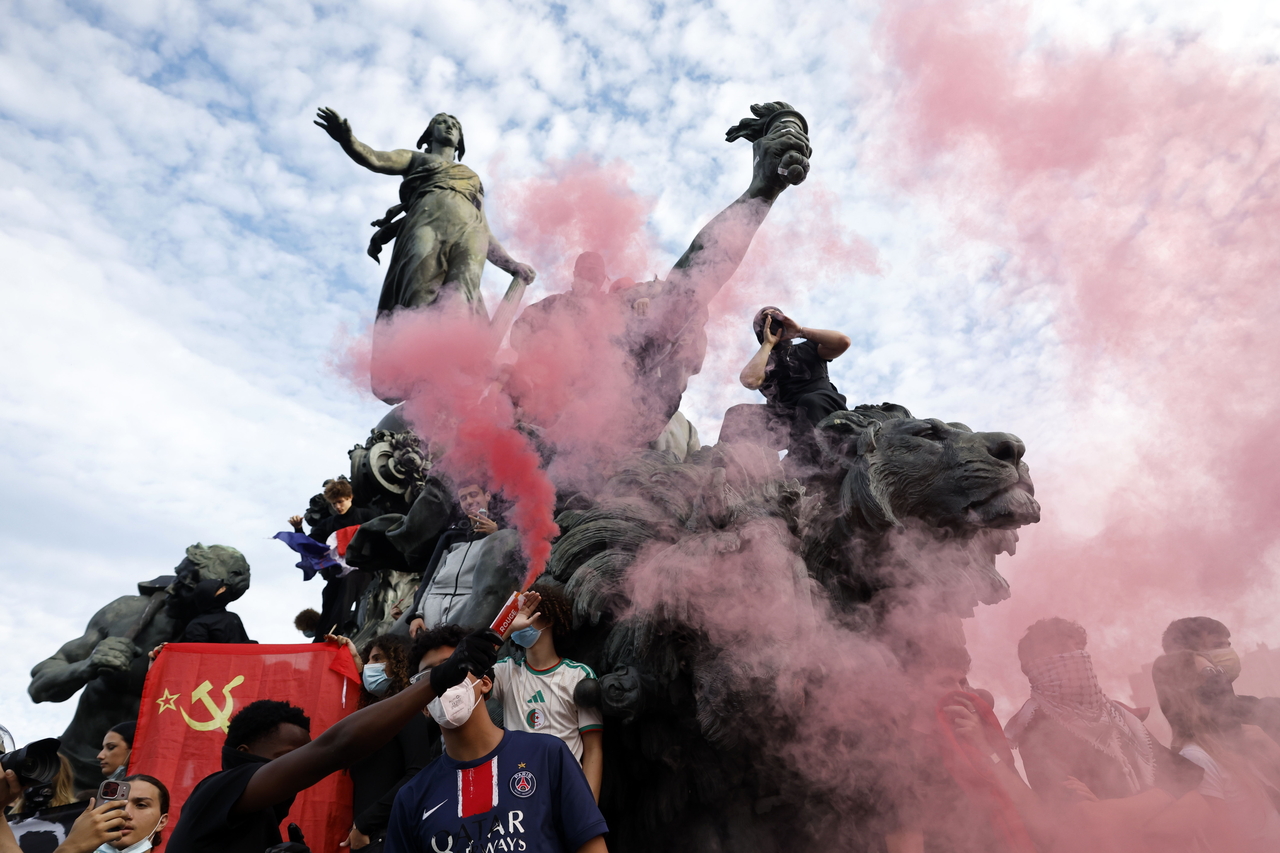
Gen Z is the commonly used name for the generation born roughly from the late 1990s to the early 2010s. The article focuses on its teenagers and young adults because they are the students living with France’s school problems every day. They want better conditions for learning and a voice in decisions affecting them. Students have blocked hundreds of high-school entrances since late September. They cite missing teachers, overloaded timetables, damaged classrooms, and buildings struggling with rising temperatures. At a Paris march, 19-year-old Lilia said, “Gen Z has risen up and wants to be heard.” Her comment captures the protest’s generational message. The movement has grown beyond students. Teachers, parents, and unions have joined them, while some protests have become violent. More than 250,000 people demonstrated nationwide according to the Interior Ministry. The protests may pressure President Emmanuel Macron’s government to improve schools before the 2027 election.
Based on reporting by Korea Herald
What does “Gen Z” mean, and why are young people from this generation at the center of these protests?
Gen Z is the commonly used name for the generation born roughly from the late 1990s to the early 2010s. The article focuses on its teenagers and young adults because they are the students living with France’s school problems every day. They want better conditions for learning and a voice in decisions affecting them.
Students have blocked hundreds of high-school entrances since late September. They cite missing teachers, overloaded timetables, damaged classrooms, and buildings struggling with rising temperatures. At a Paris march, 19-year-old Lilia said, “Gen Z has risen up and wants to be heard.” Her comment captures the protest’s generational message.
The movement has grown beyond students. Teachers, parents, and unions have joined them, while some protests have become violent. More than 250,000 people demonstrated nationwide according to the Interior Ministry. The protests may pressure President Emmanuel Macron’s government to improve schools before the 2027 election.
How large are the protests, and how many schools, students, teachers, and police officers have been affected?
The protests were enormous by national standards. France’s Interior Ministry counted 256,000 participants nationwide, while union organizers estimated 450,000. The difference reflects competing counting methods and the political tension surrounding the movement. Either figure shows broad support and serious disruption.
Students have blocked entrances to hundreds of high schools. The Education Ministry said 24 schools had been burned or ransacked. Since the movement began, more than 5,000 people were arrested, and 87 percent were minors. The government reported 215 injured students and 715 injured police officers. It also said 85 teaching staff were hurt.
These figures show that the conflict affects more than protesters. It disrupts education, damages public buildings, and puts young people, educators, and police at risk. The scale increases pressure on Macron’s government to answer demands while restoring safety. It also makes the protests politically important before the 2027 presidential election.
What problems in France’s high schools are students, teachers, and parents demanding the government fix?
The protesters want schools that are usable, properly staffed, and suitable for learning. Students report missing teachers and overloaded timetables. They also describe dilapidated classrooms and buildings that cannot cope with rising temperatures. These are daily problems, not abstract policy complaints.
Thomas, a 17-year-old student from Val-de-Marne, said some classrooms lacked desks and chairs. He said bathrooms had no doors, toilet paper, or soap. Other students objected to teacher shortages and poor building conditions. Teachers and parents joined demonstrations because these shortages affect learning, working conditions, and student dignity.
The demands therefore cover both resources and basic safety. Better funding could support repairs, equipment, and staffing, but the article does not specify a government budget plan. Macron was expected to meet senior officials, including the education and interior ministers. The government must respond to legitimate school grievances while preventing damage and protecting students during demonstrations.
How did some of the demonstrations turn from peaceful protests into clashes, property damage, and injuries?
The demonstrations did not all follow the same pattern. Many remained peaceful, with students, teachers, parents, and unions calling for better schools. Elsewhere, a minority of demonstrators set fires, damaged bus shelters, ransacked schools, or confronted riot police. Those actions shifted the issue from school conditions toward public order and violence.
In Paris, police said 300 hostile individuals were trying to confront officers near the march’s endpoint. Officers fired tear gas as some protesters threw rocks at a line of riot police. An AFP reporter saw a young man with a head wound. Police also used batons and riot-control rounds in other locations.
The consequences were severe. The government reported injuries to 215 students and 715 police officers, while 24 schools were burned or ransacked. A 15-year-old lost a hand after a sting-ball grenade was fired in Lens. The violence now complicates negotiations, because officials must address school grievances while investigating alleged police misconduct.
What roles do the students, teachers’ unions, parents, police, government ministers, and political parties play in the conflict?
Students are the movement’s central actors. They block school entrances and demand better learning conditions. Teachers’ unions and parents support those demands, helping turn local complaints into nationwide demonstrations. Teachers also join marches, with one Lyon teacher saying students’ demands were legitimate and should be conveyed peacefully.
Police are tasked with protecting people and property, but their use of force has become controversial. Interior Minister Laurent Nunez said police opened ten internal investigations into misconduct allegations. Prime Minister Sebastien Lecornu condemned violence and rejected claims that the government ordered repression. Macron was expected to meet the interior and education ministers.
Political parties frame the unrest in competing ways. The government accused the hard-left France Unbowed party, or LFI, of encouraging the movement. LFI leader Jean-Luc Melenchon strongly supported the protests while calling for non-violent methods. These competing roles make a settlement harder: officials must answer school demands, restrain violence, and maintain public trust.
Why has police use of tear gas, batons, stun grenades, and other crowd-control weapons become a human-rights issue?
Police use became a human-rights issue because weapons intended to control crowds allegedly caused severe injuries, including to minors. Rights groups, unions, and students accused authorities of disproportionate force. Amnesty International urged French authorities to end what it called disproportionate police repression during the protests.
The article gives stark examples. A 15-year-old in Lens lost a hand after a sting-ball grenade was fired by riot officers. A 14-year-old near Paris lost most of his teeth and suffered facial wounds after a tear-gas grenade was fired at close range. A policeman was charged in that case. In Metz, prosecutors requested an inquiry into alleged misconduct involving a detained girl under 15.
The issue is not only whether police face disorder, but whether their response is necessary and proportionate. The government reported 715 injured officers, yet it also opened ten internal investigations. Independent investigations and accountability could determine responsibility, reassure families, and prevent further escalation.
How are French public schools funded and governed, and why can shortages of teachers, equipment, and safe buildings persist even when the government is responsible for education?
The article does not explain France’s funding system in detail. In general, public education is mainly financed by the national government, which sets curricula and pays most teachers. Responsibilities are also shared with local authorities. Communes manage primary-school buildings, departments handle collèges, and regions generally manage lycées, including much building investment and equipment.
That division can make problems persistent. A school may need a teacher, desks, repairs, or cooling, but different authorities may control hiring, budgets, buildings, or procurement. National staffing rules can also leave vacancies when recruitment does not match local needs. Construction and repair projects take time, while inflation, enrollment changes, and hotter weather increase pressure.
Shared governance does not remove the government’s responsibility to ensure education works. It can, however, make accountability unclear and solutions slow. The protests’ complaints about missing teachers, poor bathrooms, damaged classrooms, and overheated buildings show the practical result. Clear funding, faster repairs, and coordinated staffing would be needed to rebuild trust.
Key Facts:
📌 Gen Z generally refers to people born from the late 1990s to early 2010s.
📌 Students have blocked hundreds of French high-school entrances.
📌 Teachers, parents, and unions joined the student-led demonstrations.
📌 The Interior Ministry counted 256,000 demonstrators nationwide.
📌 Unions estimated the turnout at 450,000 people.
📌 More than 5,000 people were arrested, 87 percent minors.
📌 Students report missing teachers and overloaded timetables.