News · Environment & Climate
Andhra government declares drought in 21 districts; 283 mandals ‘severely affected’
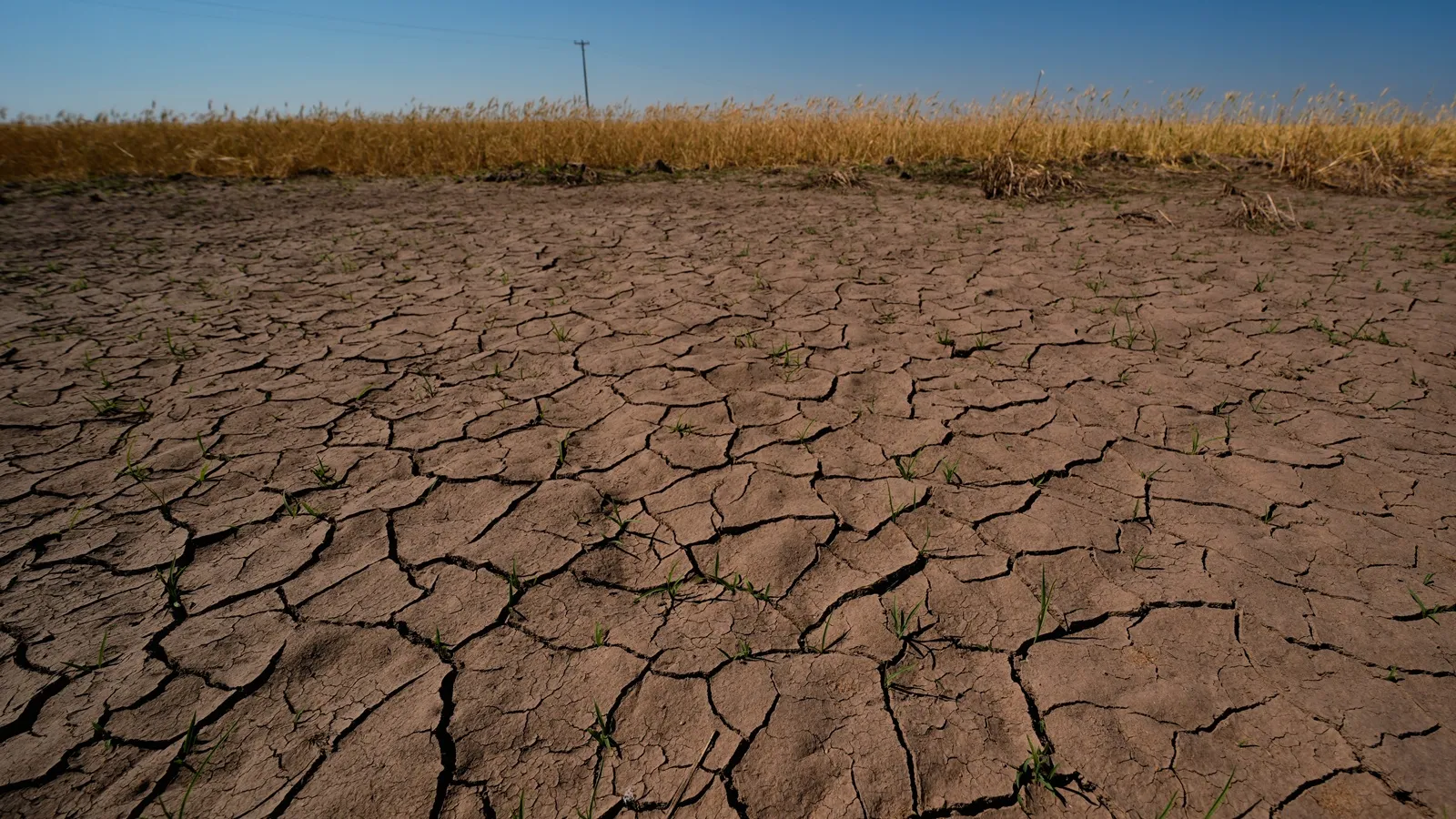
An official drought declaration means the government has assessed a mandal using recognised drought indicators and formally recorded it as drought-affected. This matters because it confirms that the area is facing unusual water and rainfall stress during the Kharif season. The declaration follows the Government of India’s Manual for Drought Management, 2016. Andhra Pradesh placed 388 mandals in the drought-affected category. Within that total, 283 were judged severely affected and 105 moderately affected. Thus, “drought-affected” is the umbrella status, while “severe” and “moderate” describe the intensity of the problem. The article does not list separate criteria for each level. The classification helps the government identify where drought conditions are most serious and where attention should be focused. In this case, the assessment used data from June through August 2026. It provides an official basis for responding to the Kharif rainfall crisis, rather than treating every affected mandal as equally damaged.
Based on reporting by Indian Express
What does it mean for a mandal to be officially declared drought-affected, and how is it different from being classified as severely or moderately affected?
An official drought declaration means the government has assessed a mandal using recognised drought indicators and formally recorded it as drought-affected. This matters because it confirms that the area is facing unusual water and rainfall stress during the Kharif season. The declaration follows the Government of India’s Manual for Drought Management, 2016.
Andhra Pradesh placed 388 mandals in the drought-affected category. Within that total, 283 were judged severely affected and 105 moderately affected. Thus, “drought-affected” is the umbrella status, while “severe” and “moderate” describe the intensity of the problem. The article does not list separate criteria for each level.
The classification helps the government identify where drought conditions are most serious and where attention should be focused. In this case, the assessment used data from June through August 2026. It provides an official basis for responding to the Kharif rainfall crisis, rather than treating every affected mandal as equally damaged.
How many of Andhra Pradesh’s mandals and districts were included in the drought declaration, and how many mandals were classified as severely affected?
The drought declaration covered 388 of Andhra Pradesh’s 688 mandals. These mandals were spread across 21 districts, meaning the problem affected a large part of the state rather than a small local pocket. The declaration applied to the South-West Monsoon 2026 Kharif season.
The 388 mandals were divided by severity. A total of 283 were classified as severely affected, while 105 were classified as moderately affected. Together, those two groups account for all 388 drought-declared mandals. The severe category therefore made up the larger share of the affected mandals.
The figures show both the scale and uneven intensity of the crisis. Twenty-one districts were included, but five of the state’s 26 districts were not named in the declaration. The government issued its order on October 1, following a recommendation for early action from the high-level Committee on Drought.
How large was the rainfall shortage from June through August 2026 compared with the normal rainfall for that period?
Rainfall from June 1 through August 31, 2026, was far below the normal level in Andhra Pradesh. The state received an average of 197.6 millimetres, compared with normal rainfall of 424.3 millimetres. This deficit affected the main early months of the South-West Monsoon and helped trigger the drought assessment.
The difference between normal and actual rainfall was 226.7 millimetres. Expressed as a percentage, the government reported a 53.4% rainfall deficit. In simple terms, the state received less than half of its usual rainfall during this period. Such a gap can leave fields, tanks, reservoirs, and groundwater with less water.
The shortage was not treated as an isolated measurement. Officials considered it alongside other drought indicators and prevailing El Niño conditions. These findings supported the early declaration for Kharif-2026, rather than waiting until the usual October 31 deadline.
Why did the government declare the drought before the usual October 31 deadline?
The government declared the drought early because the available evidence already showed serious rainfall stress. From June through August 2026, Andhra Pradesh received 197.6 millimetres of rain against a normal 424.3 millimetres. That amounted to a 53.4% deficit during a crucial monsoon period.
The decision also considered prevailing El Niño conditions, which can disrupt rainfall patterns. Officials examined drought indicators using data available through August. The high-level Committee on Drought met on September 30 and recommended declaring drought in 21 districts before the normal October 31 deadline.
The Revenue (Disaster Management) Department issued the government order on October 1. Early recognition allowed the state to formally acknowledge the situation sooner, rather than waiting for the calendar deadline. The article also records criticism from the YSRCP, which said the government had delayed action despite severe conditions reported since early September.
How can a rainfall deficit and El Niño conditions affect crops, drinking water, and rural livelihoods during the Kharif season?
A rainfall deficit during Kharif can leave fields without enough soil moisture when crops are being planted and established. Water levels in tanks, reservoirs, and groundwater sources may also fall. That can affect drinking-water supplies, livestock, and household needs, especially in villages that depend heavily on local sources.
The key mechanism is simple: less rain means less water entering farms and storage systems. Farmers may delay sowing, plant fewer acres, or spend more on pumping and irrigation. If crops receive too little water at important growth stages, yields can decline. El Niño conditions can add to the risk by disturbing normal seasonal rainfall patterns. These are general impacts; the article reports the rainfall deficit but does not quantify crop or water losses.
For rural households, weaker harvests can reduce farm income and demand for agricultural labour. The government’s drought classification identifies where such risks are concentrated. Future conditions will depend on later rainfall, water-management measures, and support provided to affected communities.
Why is the Rayalaseema region particularly affected, and what does the distribution of drought-declared mandals there show?
Rayalaseema is particularly affected because a large share of Andhra Pradesh’s drought-declared mandals lies there. The former Agriculture Minister cited the region’s rainfall deficit as especially severe. The available figures show that drought is concentrated in this part of the state, rather than being evenly distributed across all affected districts.
Of the 388 drought-declared mandals, 186 were in Rayalaseema. Of the 283 mandals classified as severely affected, 159 were also located there. That means nearly half of all declared mandals and more than half of the severe group were in the region. The distribution is the clearest evidence in the article of Rayalaseema’s heavier burden.
This concentration matters for farming, water planning, and rural livelihoods. It suggests that drought responses may need stronger attention in Rayalaseema, including water management and agricultural support. Chief Minister Chandrababu Naidu also argued that using Godavari floodwater could help Rayalaseema become greener and more productive.
What is a monsoon, and why is seasonal rainfall so important to farming and water supplies in Andhra Pradesh?
A monsoon is a seasonal pattern in which winds and rainfall change direction or strength, producing a distinct wet season. In Andhra Pradesh, the South-West Monsoon is especially important because it supplies rain during the Kharif farming season. Farmers plan sowing and crop growth around this seasonal water supply.
Rain replenishes soil moisture, tanks, reservoirs, rivers, and groundwater. These sources support crops, livestock, households, and drinking-water systems. When rainfall is timely and sufficient, farmers can cultivate more reliably. When it is weak or delayed, fields may dry, water storage may shrink, and farming costs can rise. The article reports that Andhra Pradesh received only 197.6 millimetres from June through August, compared with 424.3 millimetres normally.
That shortfall explains why the monsoon matters beyond weather forecasts. It contributed to drought conditions across 388 mandals. Future water security will depend on rainfall, storage, conservation, and the management of available river water, including proposals to use Godavari floodwater.
Key Facts:
📌 Drought-affected is the broad official status.
📌 283 mandals were classified as severely affected.
📌 105 mandals were classified as moderately affected.
📌 388 of 688 mandals were declared drought-affected.
📌 The declaration covered 21 districts.
📌 283 mandals were severely affected.
📌 Actual rainfall was 197.6 mm.