News · Defence & Security
Ondo Crash: ADC questions NAF aircraft maintenance funding
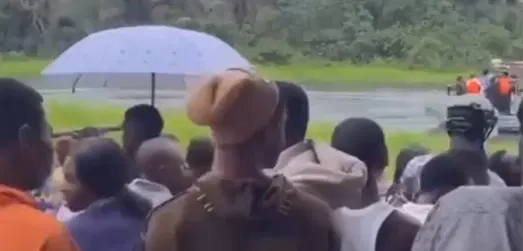
The article reports that an ATR-42 aircraft crashed on Monday at Igbokoda, Ondo State. It does not establish the cause, and the investigation was still ongoing when the ADC spoke. That distinction matters. A crash location and aircraft type describe what happened, but they do not prove whether weather, equipment, maintenance, human factors, or another issue was responsible. The ADC therefore urged investigators not to stop at the immediate event. The party also called for a wider review of Nigerian Air Force maintenance funding. It cited N4.5 billion released from N34.71 billion budgeted by December 2025, and asked for an audit of releases and spending. Those figures raise accountability questions, but the article does not say that funding caused this crash. A complete inquiry should establish the facts before assigning blame.
Based on reporting by Vanguard Nigeria
What happened to the Nigerian Air Force ATR-42 aircraft at Igbokoda, Ondo State?
The article reports that an ATR-42 aircraft crashed on Monday at Igbokoda, Ondo State. It does not establish the cause, and the investigation was still ongoing when the ADC spoke.
That distinction matters. A crash location and aircraft type describe what happened, but they do not prove whether weather, equipment, maintenance, human factors, or another issue was responsible. The ADC therefore urged investigators not to stop at the immediate event.
The party also called for a wider review of Nigerian Air Force maintenance funding. It cited N4.5 billion released from N34.71 billion budgeted by December 2025, and asked for an audit of releases and spending. Those figures raise accountability questions, but the article does not say that funding caused this crash. A complete inquiry should establish the facts before assigning blame.
What is an ATR-42, and what is it used for by the Nigerian Air Force?
An ATR-42 is a twin-engine turboprop regional aircraft designed to carry passengers or cargo over relatively short routes. The article identifies the crashed aircraft as an ATR-42, but does not state its specific mission or configuration in Nigerian Air Force service.
Military operators can use aircraft of this type for transport, liaison, logistics, or other approved support tasks, depending on how each airframe is equipped. Its turboprop engines suit regional operations and airfields where a larger jet may be unnecessary. Those are general uses, not details confirmed by this article.
For this incident, the key point is that the ATR-42 was part of the Nigerian Air Force fleet and crashed at Igbokoda. The article focuses on maintenance funding, not the aircraft’s payload, route, occupants, or assignment. Investigators must establish those operational facts, alongside the technical cause, without assuming a link between aircraft type and the accident.
How much money was budgeted for Nigerian Air Force aircraft maintenance, and how much had actually been released by December 2025?
By December 2025, Nigerian Air Force aircraft maintenance had a N34.71 billion budget, but only N4.5 billion had been released. That means the released amount was about 13.98 percent, leaving roughly N30.21 billion unreleased.
An appropriation is the approved spending authority. A release is money actually made available to the responsible agency. Thus, a large budget line does not automatically mean maintainers received the funds needed for parts, servicing, inspections, or other work. The article gives the release figure, not a detailed spending breakdown.
This gap is central to the ADC’s criticism after the crash. The party requested an audit to determine whether appropriated money was released and properly used. The figures show severe under-release by the stated date, but they do not by themselves prove that the funding gap caused the accident. That requires the official investigation and financial review.
How did funding released for Nigerian Air Force aircraft compare with funding released for the Presidential Air Fleet?
The striking comparison is 13.98 percent versus 97.76 percent. By December 2025, NAF aircraft maintenance had received N4.5 billion of N34.71 billion, while Presidential Air Fleet maintenance received N20.27 billion of N20.74 billion.
This means the Presidential Air Fleet received about N15.77 billion more in released maintenance funds. It also received nearly all its allocation, while the NAF fleet received only a small share. The comparison is about budget implementation, not merely the amounts originally approved.
The ADC used these figures to argue that military aircraft serving the wider public were treated less favorably than aircraft serving political leaders. The party called for an audit and cautioned that the crash investigation should not be prejudiced. The figures support scrutiny, but they do not alone establish why the crash occurred or whether funding directly caused it.
Why can inadequate or delayed aircraft-maintenance funding affect the safety and readiness of military aviation?
Aircraft maintenance protects both safety and readiness. If funding is inadequate or delayed, operators may struggle to obtain spare parts, complete scheduled inspections, repair defects, or keep trained support systems available. The article captures this concern through the ADC’s line that patriotism cannot replace spare parts.
Military aviation depends on planned work, not only emergency repairs. Missing a service interval or waiting for a component can ground an aircraft, reduce the number available for missions, or increase operational pressure on the remaining fleet. A maintenance shortfall can therefore affect capability even when no accident occurs.
Still, the article does not say inadequate funding caused the ATR-42 crash. It says the crash should prompt scrutiny of maintenance funding and equipment. Investigators must connect financial records, maintenance histories, engineering evidence, and operating conditions before reaching a conclusion. Better funding transparency could support safer, more reliable aviation.
What should a full investigation examine beyond the immediate technical cause of the crash?
A full investigation should look beyond the aircraft’s immediate technical failure. The ADC specifically called for examination of defence-equipment maintenance, especially the Nigerian Air Force fleet, plus an audit of maintenance spending and budget releases.
That broader review would trace what was approved, what was released, what was spent, and whether work was completed properly. It should also compare maintenance records with required inspections, parts, servicing, and aircraft availability. These checks can show whether systemic problems existed, without assuming they caused this particular crash.
The article says the inquiry must not be prejudiced. Its immediate job remains determining the accident’s cause, while the financial and maintenance review addresses wider accountability. Together, both tracks could clarify whether any equipment, procurement, funding, or oversight weaknesses affected safety or readiness. The ADC wants findings that extend beyond condolence messages to verifiable responsibility.
What is the difference between money being appropriated in a defence budget, released by the government, and properly spent on maintenance?
Appropriated money is the amount lawmakers authorize for a purpose. Released money is the portion government actually makes available; properly spent money is the amount used lawfully and effectively for the intended maintenance.
These stages can diverge. A defence budget may approve N34.71 billion for Nigerian Air Force aircraft maintenance, yet only N4.5 billion may be released. Even released funds still require checks: an audit must determine whether they bought required parts, servicing, inspections, and related work, rather than being misused or left unspent.
The article relies on this distinction in its call for an audit of maintenance expenditure and budgetary releases. It says the audit should determine whether appropriated funds were released and properly utilised. The figures show under-release by December 2025, but they do not reveal how the N4.5 billion was spent. That requires records, contracts, payment evidence, and maintenance documentation.
Key Facts:
📌 An ATR-42 crashed at Igbokoda, Ondo State.
📌 The crash happened on Monday.
📌 The article does not establish the crash’s cause.
📌 An ATR-42 is a twin-engine turboprop regional aircraft.
📌 It can carry passengers or cargo.
📌 The article does not specify its military assignment.
📌 N34.71 billion was budgeted for Nigerian Air Force aircraft maintenance.