News · Defence & Security
Saudi coalition says intercepted missile fired by Yemen's Houthis
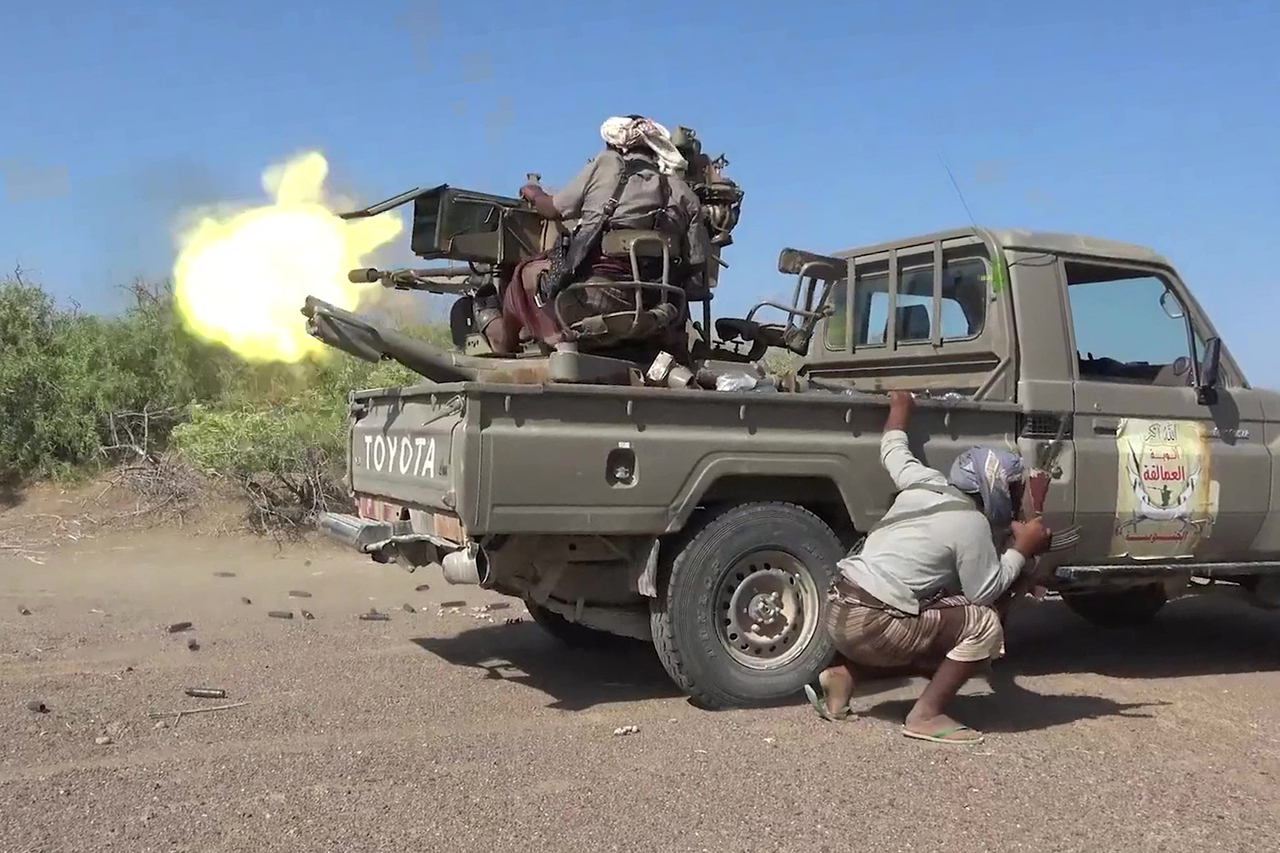
The reported interception shows how Yemen’s renewed war is reaching beyond the battlefield. Saudi Arabia supports Yemen’s government, while the Houthis have launched missiles and drones toward Saudi targets. Such attacks raise risks for military sites, airports, civilians, and regional trade. Coalition spokesman Turki al-Maliki said the missile was launched toward Khamis Mushait in southwestern Saudi Arabia. He said coalition defenses “intercepted and destroyed” it. The city is home to an airbase, making it a significant military target. The Houthis also claimed attacks on Riyadh’s main airport and an Aramco refinery, though Saudi authorities did not confirm those claims. The wider picture remains uncertain. Residents reported explosions in Riyadh, and Saudi Arabia said attacks on Jazan and Najran airports wounded three people. Claims from both sides cannot be independently verified. Continued launches could bring more airspace closures, casualties, and pressure for outside countries to become involved.
Based on reporting by Korea Herald
What happened when the Saudi-led coalition said it intercepted a missile fired by Yemen's Houthis?
The reported interception shows how Yemen’s renewed war is reaching beyond the battlefield. Saudi Arabia supports Yemen’s government, while the Houthis have launched missiles and drones toward Saudi targets. Such attacks raise risks for military sites, airports, civilians, and regional trade.
Coalition spokesman Turki al-Maliki said the missile was launched toward Khamis Mushait in southwestern Saudi Arabia. He said coalition defenses “intercepted and destroyed” it. The city is home to an airbase, making it a significant military target. The Houthis also claimed attacks on Riyadh’s main airport and an Aramco refinery, though Saudi authorities did not confirm those claims.
The wider picture remains uncertain. Residents reported explosions in Riyadh, and Saudi Arabia said attacks on Jazan and Najran airports wounded three people. Claims from both sides cannot be independently verified. Continued launches could bring more airspace closures, casualties, and pressure for outside countries to become involved.
What is a ballistic missile, and why is it difficult to defend against?
A ballistic missile is a weapon that uses powered flight to gain speed, then travels much of its path along a high, curved trajectory before falling toward a target. It can cover long distances quickly. The article identifies the Houthi weapon as ballistic but does not provide its range, speed, or warhead.
Defense is difficult because warning time can be short. The missile may rise high, move extremely fast, and descend steeply. Defenders must detect the launch, calculate the path, and fire an interceptor at the right moment. A successful defense therefore requires advanced sensors, communication, and layered missile systems.
In this case, coalition spokesman Turki al-Maliki said a ballistic missile aimed at Khamis Mushait was “intercepted and destroyed.” That claim, like other battlefield statements, was not independently verified. More launches could test Saudi defenses and increase risks for nearby military bases and cities.
How large and deadly has the renewed fighting become, including the reported deaths of more than 270 fighters in one day?
The reported toll shows that Yemen’s renewed conflict is not a small flare-up. Sources on both sides told Agence France-Presse that more than 270 government troops and Houthi fighters were killed during the previous day. That figure covers combatants, not the additional civilian harm and displacement caused by the fighting.
The violence spans multiple fronts. Government forces said they pushed the Houthis from areas near the Bab al-Mandab Strait and Mocha, while also advancing in Taiz and southern Marib. Houthi spokesman Yahya Saree denied losing ground and claimed attacks in Al-Jawf, Marib, and Taiz. The Houthis also reported a Saudi airstrike in Hajjah that killed six family members, including four children.
The scale could grow if neither side accepts the other’s advances. Yemen’s government says it wants to retake all Houthi-held territory. Continued fighting would threaten civilians, shipping, airports, and fragile hopes of restoring the ceasefire.
Who are the Houthis, who is Saudi Arabia supporting in Yemen, and why are Iran and other countries connected to the conflict?
The Houthis are the armed group fighting Yemen’s government and holding territory that includes much of the country’s population. The article describes them as pro-Iran and says they seized Yemen’s western Red Sea coastline. Saudi Arabia is the main external backer of Yemen’s government and provides air support for its counter-offensive.
Iran is connected because the Houthis are aligned with Tehran, making Yemen part of a wider regional confrontation. The article does not detail the exact form or scale of Iranian assistance. Saudi Arabia’s role includes supporting government forces against Houthi advances. Pakistan and Turkey added another layer by pledging troops to Saudi Arabia under a mutual defense pact.
Those outside connections raise the conflict’s regional stakes. An analyst said the Turkish and Pakistani deployment would likely help intercept Houthi missiles and drones. He also warned that separating support for Saudi Arabia from support for the United States could become harder if escalation continues.
What is the Bab al-Mandab Strait, and why does control of this narrow waterway matter to global shipping and energy markets?
The Bab al-Mandab Strait is a narrow waterway at the southern entrance to the Red Sea. It connects the Red Sea with the Gulf of Aden and the wider Indian Ocean. Because ships moving between Europe, Asia, and energy-producing regions use this route, it is a major global chokepoint.
Control matters because a military force can threaten, inspect, block, or attack vessels passing through a confined corridor. The article says government forces were fighting to secure the strait and reported removing the Houthis from nearby areas. It also says the Houthis seized Yemen’s western Red Sea coastline and declared a maritime blockade on Saudi ships.
A prolonged threat could force ships to avoid the Red Sea and take longer routes around Africa. That would increase travel time, fuel costs, and insurance expenses. The article links the wider conflict to roiled energy markets and snarled trade routes, so further disruption could affect prices and supplies internationally.
What could happen to air travel, oil shipments, trade routes, and civilians if missile attacks and fighting continue to spread?
If missile attacks and ground fighting spread, the effects would reach far beyond military targets. Airports may suspend flights or close airspace when launches threaten runways and nearby cities. Ships may avoid the Red Sea if attacks or a blockade make the route unsafe. That would slow deliveries and strain energy markets.
The article gives early examples. Riyadh’s King Khalid International Airport faced frequent temporary airspace closures, according to Flightradar24. Saudi authorities did not confirm strikes on the airport, but attacks on Jazan and Najran airports wounded at least three people. In Yemen, a resident said Mocha had become a war zone with no movement.
Further escalation could bring more civilian deaths, displacement, damaged infrastructure, and interrupted aid. Longer shipping routes could increase prices and delivery times worldwide. Foreign deployments might improve Saudi defenses, but they could also widen the conflict if the regional war continues to escalate.
Why has Yemen's civil war repeatedly reignited after periods of ceasefire, and why is it difficult to independently verify battlefield claims?
Yemen’s conflict has repeatedly become active after periods of reduced fighting because underlying territorial and political disputes remain unresolved. The article says a four-year ceasefire preceded the latest escalation. It also links the renewed war to the wider Middle East conflict, which began with US-Israeli strikes on Iran in February. Regional tensions therefore created conditions for a new Yemeni front.
The latest fighting shows how quickly a lull can break. The government reported advances near Bab al-Mandab, Mocha, Taiz, and Marib. Houthi spokesman Yahya Saree denied being pushed back and claimed the group still controlled its recent gains. Both sides also reported attacks and casualties, but their accounts sharply differed.
Independent verification is difficult because access for journalists is limited and the situation changes rapidly. This means reported victories, territorial losses, and casualty figures may remain uncertain. If each side believes it is advancing, compromise may become harder and the ceasefire may be further away.
Key Facts:
📌 The coalition said it destroyed a missile aimed at Khamis Mushait.
📌 Khamis Mushait is home to a Saudi airbase.
📌 Saudi Arabia reported three people wounded at Jazan and Najran airports.
📌 Ballistic missiles travel through a high, curved flight path.
📌 Their speed and short warning time complicate interception.
📌 The coalition said it destroyed one missile near Khamis Mushait.
📌 More than 270 fighters reportedly died in one day.