News · Politics & Governance
Libya’s parliament speaker ousted after 12 years
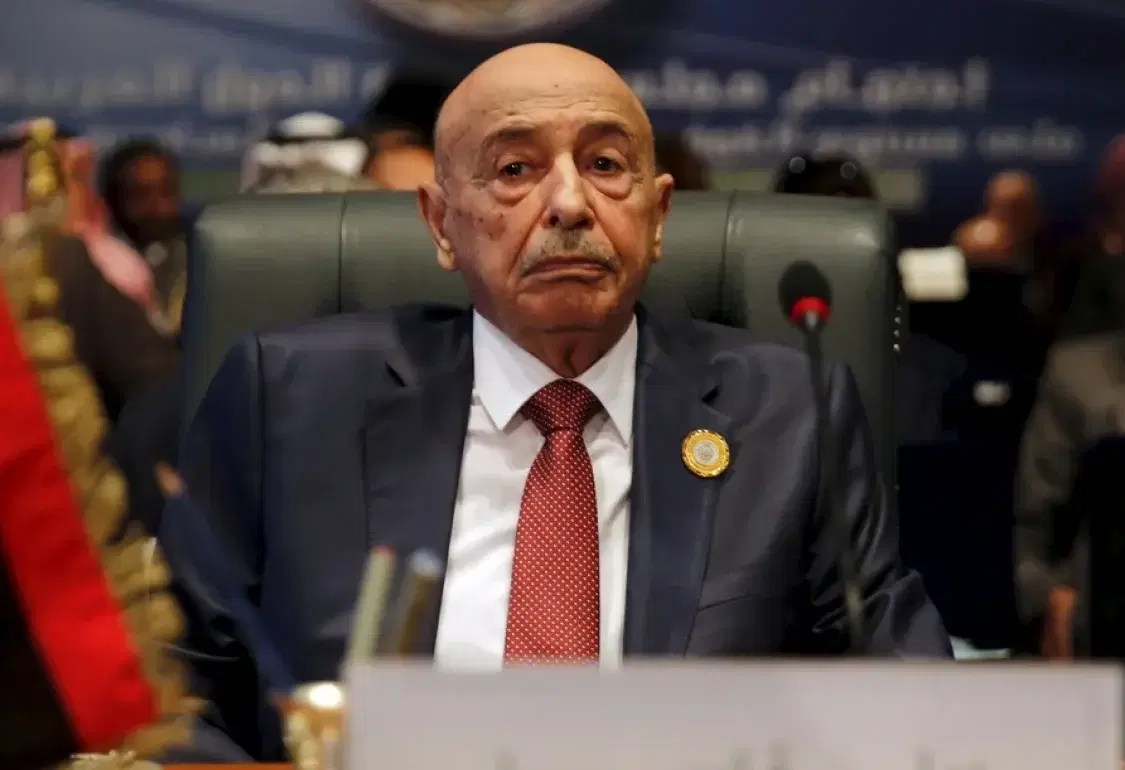
MPs in Libya’s eastern parliament voted to remove Agila Saleh and install Al-Salhin Abdelnabi al-Obeidi. Saleh had held the speakership for 12 years and was a prominent supporter of eastern military commander Khalifa Haftar. The vote therefore changed both the parliament’s leadership and a key political relationship. The speaker helps manage parliamentary business, represents the chamber, and can shape its public direction. In this case, Saleh’s removal matters because the parliament is a central institution for Haftar’s rival administration. Analysts view the decision as possible evidence of a changing balance within eastern Libya. The article links Saleh’s weakening to the growing influence of Haftar’s sons, especially Saddam Haftar. It says Saddam has helped consolidate their positions and may be seeking a larger political role. The replacement could therefore give Haftar’s family greater control over eastern decision-making, although the article does not establish the new speaker’s exact political alignment.
Based on reporting by Vanguard Nigeria
What changed in Libya’s eastern parliament when MPs replaced Agila Saleh with Al-Salhin Abdelnabi al-Obeidi?
MPs in Libya’s eastern parliament voted to remove Agila Saleh and install Al-Salhin Abdelnabi al-Obeidi. Saleh had held the speakership for 12 years and was a prominent supporter of eastern military commander Khalifa Haftar. The vote therefore changed both the parliament’s leadership and a key political relationship.
The speaker helps manage parliamentary business, represents the chamber, and can shape its public direction. In this case, Saleh’s removal matters because the parliament is a central institution for Haftar’s rival administration. Analysts view the decision as possible evidence of a changing balance within eastern Libya.
The article links Saleh’s weakening to the growing influence of Haftar’s sons, especially Saddam Haftar. It says Saddam has helped consolidate their positions and may be seeking a larger political role. The replacement could therefore give Haftar’s family greater control over eastern decision-making, although the article does not establish the new speaker’s exact political alignment.
What is a parliament speaker, and what role does the position usually play?
A parliament speaker is the presiding officer of a legislative chamber. The speaker usually organizes sessions, applies parliamentary rules, recognizes members to speak, and helps manage votes and the chamber’s public business. The position can also represent the parliament in dealings with other political institutions.
The speaker is not normally the country’s head of government. However, the office can influence which issues receive attention and how smoothly lawmakers work. In Libya’s eastern parliament, that influence is especially important because the chamber operates in Benghazi and supports the rival administration backed by military commander Khalifa Haftar.
The article shows why the role matters politically. Agila Saleh was viewed as a strong Haftar ally, but MPs removed him after 12 years. His replacement may reflect changing influence within the eastern camp, particularly as Haftar’s sons consolidate power. The article does not describe Al-Salhin Abdelnabi al-Obeidi’s specific policy positions.
How long had Agila Saleh held the speaker’s position, and why does such a long tenure matter politically?
Agila Saleh held the eastern parliament’s speakership for 12 years. That is a long period for one person to lead a major political institution, especially in a country experiencing prolonged conflict and divided authority. His removal therefore represents more than a routine change of office.
A long-serving speaker can develop relationships with lawmakers, shape parliamentary procedures, and become closely identified with the institution’s political direction. Saleh was also considered a staunch ally of Khalifa Haftar’s camp. His tenure connected the parliament’s leadership with the eastern military and political network that relies on the chamber.
The article says Saleh appeared weakened as Haftar’s sons, especially Saddam Haftar, consolidated their positions. His replacement may show that influence is moving away from an older, established ally toward Haftar’s family. The exact balance remains uncertain, but the change comes while a US initiative seeks to revive Libya’s political process and unify its institutions.
Who are Khalifa Haftar and Saddam Haftar, and how are they connected to the eastern parliament?
Khalifa Haftar is a military commander who leads the powerful eastern camp in Libya. That camp backs a rival administration opposed to the UN-recognized government in Tripoli. Its parliament sits in Benghazi, an eastern city under Haftar’s control, and provides an important political base for his side.
Saddam Haftar is one of Khalifa Haftar’s sons. The article says Haftar’s sons have been consolidating their positions, with Saddam especially prominent. An analyst described Saleh’s removal as part of Saddam’s effort to centralize decision-making in eastern Libya and push into a political role.
The connection to parliament is therefore both institutional and personal. The chamber supports Haftar’s administration, while its former speaker was considered a staunch ally of the Haftar clan. Replacing Saleh could strengthen the family’s influence over lawmakers. Still, the article does not provide a formal title or complete biography for Saddam.
What could change in eastern Libya’s politics if Saleh’s removal strengthens Saddam Haftar’s control over decision-making?
If Saleh’s removal strengthens Saddam Haftar, eastern Libya’s politics could become more centralized around the Haftar family. The article presents this as a possible shift from an older parliamentary ally toward a younger family figure seeking a formal political role. That would affect how the eastern camp makes decisions and presents its leadership.
The key mechanism is control over institutions. The parliament in Benghazi supports Haftar’s rival administration and is one of its main political pillars. Replacing a longtime speaker may give Saddam greater influence over lawmakers, parliamentary priorities, and relations with the eastern administration. The analyst described this process as centralizing decision-making.
The wider effect is uncertain. A more unified eastern camp could negotiate more decisively, including during the US-backed effort to revive Libya’s political process. But stronger family control could also narrow internal debate and complicate efforts to unify Libya’s divided institutions. The article does not predict a definite outcome.
Why has Libya had rival governments and institutions since Muammar Gaddafi was overthrown in 2011?
Muammar Gaddafi’s overthrow in 2011 removed Libya’s longtime central ruler but did not produce a durable agreement on who should govern. In the years that followed, political factions and armed groups competed for authority. Conflict and instability made it difficult to create institutions accepted across the whole country.
The result was a split between a UN-recognized government in Tripoli and a rival eastern administration backed by Khalifa Haftar. Each side developed or relied on its own political and security structures. The eastern camp depends particularly on its parliament in Benghazi, while the Tripoli government is led by Prime Minister Abdulhamid Dbeibah.
This division has lasted because the competing sides still control different territories and institutions. It complicates national decision-making and makes nationwide elections harder to organize and accept. The article says a US initiative to revive the political process and unify institutions is under discussion. It does not give a full account of every cause of the split.
What does it mean for a country to have competing governments, and why does that make national elections, lawmaking, and institution-building difficult?
A country has competing governments when two or more authorities claim political legitimacy and control different parts of the state. In Libya, the article describes a UN-recognized government in Tripoli and a rival administration in the east. The eastern side is backed by Khalifa Haftar and relies on its parliament in Benghazi.
This division creates a basic coordination problem. A national election needs shared rules, trusted institutions, and agreement about results. Lawmaking also becomes difficult when one authority passes rules that another does not recognize or enforce. Institution-building suffers because ministries, legislatures, security forces, and courts may develop separately rather than under one national system.
The practical effect is prolonged fragmentation. Political decisions can be contested, and nationwide reforms may stall. The article says Libya has faced violence and instability since Gaddafi’s overthrow in 2011. It also notes that a US initiative is being discussed to revive the political process and unify institutions, but no settlement has yet been described.
Key Facts:
📌 MPs replaced Agila Saleh with Al-Salhin Abdelnabi al-Obeidi.
📌 Saleh had led the eastern parliament for 12 years.
📌 Analysts see a possible shift in eastern Libya’s political balance.
📌 A speaker presides over parliamentary sessions and manages legislative business.
📌 The role is distinct from leading the country’s government.
📌 Libya’s eastern parliament supports Haftar’s rival administration.
📌 Saleh served as speaker for 12 years.