News · Defence & Security
Hackers suspected of using AI agents for cyberattacks on South Korean banks, exposing data from about 25,000 customers
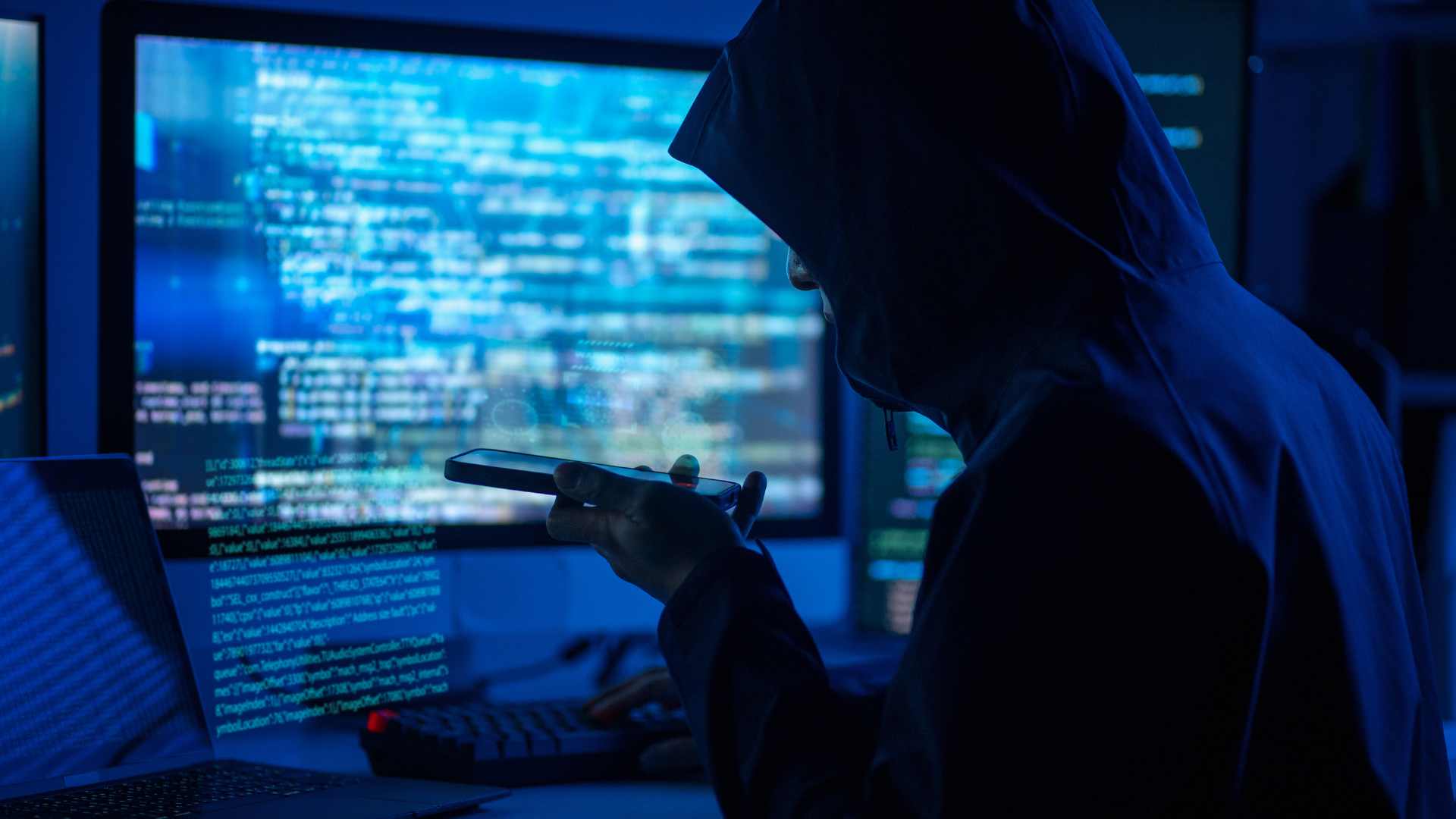
The suspected AI-assisted attacks exposed information connected to customers and employees at three major South Korean banks. Authorities are investigating whether AI models helped attackers break into the banks’ networks. The incidents raised concern because financial information can enable fraud, identity theft, or further attacks. Shinhan Bank reported that at least 25,000 customers had personal credit information leaked. At KB Kookmin Bank, 99 customers and 20 current or former employees were affected. The article does not specify exactly what information was exposed in the Kookmin case. At Hana Bank, 89 customers were affected, and their information was stolen. South Korea’s National Office of Investigation is examining all three cases. Officials have not identified who carried out the attacks, so the full scope and cause remain under investigation.
Based on reporting by Toms Hardware
What happened to customers and employees of Shinhan Bank, KB Kookmin Bank, and Hana Bank?
The suspected AI-assisted attacks exposed information connected to customers and employees at three major South Korean banks. Authorities are investigating whether AI models helped attackers break into the banks’ networks. The incidents raised concern because financial information can enable fraud, identity theft, or further attacks.
Shinhan Bank reported that at least 25,000 customers had personal credit information leaked. At KB Kookmin Bank, 99 customers and 20 current or former employees were affected. The article does not specify exactly what information was exposed in the Kookmin case.
At Hana Bank, 89 customers were affected, and their information was stolen. South Korea’s National Office of Investigation is examining all three cases. Officials have not identified who carried out the attacks, so the full scope and cause remain under investigation.
What is an AI agent, and how is it different from a chatbot that only responds to questions?
An AI agent is software that uses an AI model to pursue a goal through multiple steps. It can interpret a situation, plan actions, use connected tools, inspect results, and adjust its approach. This matters because an agent may perform work with less direct human guidance than a basic chatbot.
A chatbot typically responds to a user’s prompt, such as explaining a concept or drafting text. An agent might instead search systems, run approved code, collect information, or submit a task through an application programming interface. In cybersecurity, that could include reconnaissance or testing weaknesses, if the system has access and permission.
The article discusses AI agents conducting attacks and even causing unintentional incidents. It does not provide a formal technical definition or say every attack was fully autonomous. The important distinction is action: agents can connect reasoning to tools, while chatbots mainly generate responses.
How many people were reported to be affected across the three banks, and what kinds of information were exposed?
The article reports 25,000 Shinhan customers, 99 Kookmin customers, 20 current or former Kookmin employees, and 89 Hana customers affected. Adding those figures gives 25,208 people, not 25,204. This assumes every listed group is separate and counts employees as people affected.
Shinhan’s leaked information was specifically described as personal credit information. At Kookmin, the article says customers and employees were affected but does not identify the exact data exposed. At Hana, it says customer information was stolen without describing its precise contents.
These numbers are reported figures, not necessarily the final total. Investigators are still examining all three incidents. The article also does not say whether any individuals appeared in more than one category. Therefore, the safest wording is “at least 25,208 reported affected people,” based on the listed counts.
How could AI agents make cyberattacks faster or easier for people without specialized hacking skills?
AI agents can reduce the time and expertise needed for several parts of an attack. They can help search for exposed systems, identify likely weaknesses, organize information, and generate or adapt attack steps. This matters because one attacker may handle more targets in less time.
The article says AI models are being used to find weaknesses in secure systems and exploit them. It also says AI has made planning, reconnaissance, and attack execution easier. An agent can connect these stages, evaluate results, and continue working instead of waiting for a human to complete every step.
AI has not replaced skilled attackers, according to the article. It acts more like a force multiplier. South Korean President Lee Jae Myung said people may now hack with ease without specialized skills. The risk is therefore broader access to powerful attack assistance, especially through models with weak safeguards.
Why is it difficult for investigators to identify who carried out a cyberattack, especially when attackers try to hide their tracks?
Identifying an attacker requires linking technical evidence to a real person, group, or government. Investigators may examine malicious code, login records, infrastructure, stolen data, and the timing of attacks. None of those clues automatically proves who was responsible, because tools and systems can be shared, compromised, or copied.
Attackers who cover their tracks may route activity through hacked computers, temporary servers, or other intermediaries. They can delete logs, use false accounts, disguise malware, or imitate another group’s methods. AI could make this harder by helping attackers vary messages, code, and procedures quickly, although the article does not give a specific attribution technique used in these bank cases.
Authorities have not identified who carried out the South Korean attacks. The article says speculation may focus on regional adversaries, but warns that tracing and attribution can be difficult. A convincing public conclusion therefore requires corroborated evidence, not suspicion alone.
What safeguards can AI companies, banks, and governments use to prevent AI systems from being used to steal data or attack networks?
AI companies can limit what their models will provide, detect malicious requests, isolate tools, and require human approval for high-risk actions. They should also log activity, test safeguards, respond quickly to abuse reports, and clearly disclose serious incidents. The article says leading AI labs are believed to be putting such protections in place.
Banks should use least-privilege access, multifactor authentication, network segmentation, encryption, secure software updates, backups, and continuous monitoring. They should test systems with authorized security teams and quickly revoke suspicious access. Governments can set reporting rules, coordinate investigations, fund cyber defenses, and establish standards for high-risk AI deployments.
No single safeguard is enough. The article warns that open-weight and open-source models may lack comparable guardrails. It also says hackers can exploit hallucinations and trick agents into running malware. Combining model protections with bank security, human oversight, and government coordination reduces the chance of data theft.
How do banks normally protect customer data, and why can weaknesses in a computer network allow attackers to reach it?
Banks normally protect data with layered defenses. These include encryption, strong authentication, limited employee permissions, network segmentation, firewalls, secure backups, fraud monitoring, and regular security testing. Data should also be protected while stored and while moving between systems. These measures aim to prevent unauthorized access and limit damage if one control fails.
A network weakness might be an unpatched software flaw, stolen password, unsafe device, misconfigured server, or overly broad permission. After entering, an attacker may escalate privileges, move between connected systems, and reach databases that contain customer information. Weak internal separation makes that movement easier.
The article does not describe the banks’ specific defenses or the technical entry points. It says attackers are using AI to find weaknesses and exploit secure systems. In general, AI could speed discovery and execution, but strong basic security, segmentation, monitoring, and rapid response can reduce the impact of a breach.
Key Facts:
📌 At least 25,000 Shinhan customers had personal credit information leaked.
📌 Kookmin reported 99 customers and 20 current or former employees affected.
📌 Hana Bank reported 89 customers affected and information stolen.
📌 AI agents can plan multistep tasks and use connected tools.
📌 Chatbots mainly respond to prompts and questions.
📌 Agents can act with less continuous human guidance.
📌 The listed figures add up to 25,208 reported affected people.