News · Politics & Governance
No impunity for September 8 killings, September 9 violence
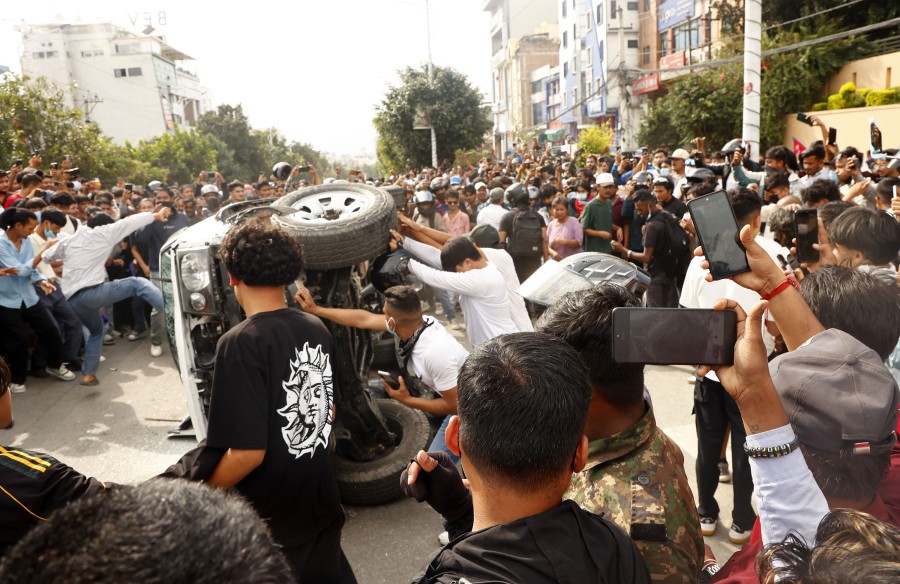
The Gen Z protests produced two connected but distinct justice issues. On September 8, security forces cracked down on a peaceful protest, causing the deaths of 19 youths. The article says political and security officials may bear responsibility for those deaths and related human rights violations. On September 9, and into the following day, criminal acts also occurred amid the unrest. These included lynching, killing, arson, looting, and vandalism against private property, homes, public buildings, and government offices. The article says some people used the protests as an opportunity to commit these offences. The key issue is accountability on both sides. Authorities must investigate excessive force used against protesters. They must also investigate protesters or others accused of serious crimes and prosecute them when evidence supports charges. Ignoring either form of wrongdoing could encourage future violence and weaken public trust in democracy.
Based on reporting by Kathmandu Post Nepal
What happened during the September 8 killings and the September 9 violence surrounding Nepal’s Gen Z protests?
The Gen Z protests produced two connected but distinct justice issues. On September 8, security forces cracked down on a peaceful protest, causing the deaths of 19 youths. The article says political and security officials may bear responsibility for those deaths and related human rights violations.
On September 9, and into the following day, criminal acts also occurred amid the unrest. These included lynching, killing, arson, looting, and vandalism against private property, homes, public buildings, and government offices. The article says some people used the protests as an opportunity to commit these offences.
The key issue is accountability on both sides. Authorities must investigate excessive force used against protesters. They must also investigate protesters or others accused of serious crimes and prosecute them when evidence supports charges. Ignoring either form of wrongdoing could encourage future violence and weaken public trust in democracy.
What is impunity, and how does it differ from withdrawing charges when the law allows it?
Impunity is the condition in which people responsible for crimes avoid investigation, prosecution, or punishment. It matters because repeated non-accountability can make violence seem acceptable and encourage others to offend. The article warns that unchecked arson and vandalism could become normal in political protests.
Withdrawing charges is different when the law permits it. The Regmi panel said some people may have been prosecuted only for participating in protests. Their cases could potentially be withdrawn because protest participation alone is not a serious crime. By contrast, allegations of murder, attempted murder, arson, or looting require legal scrutiny.
The difference rests on evidence and the law, not political pressure. A lawful withdrawal corrects an improper or unsupported prosecution. Impunity protects serious offenders from accountability. The article says cases must not be withdrawn simply to accommodate political interests when existing law forbids withdrawal.
How many people and criminal cases were examined by the Regmi panel, and how many cases might be withdrawn?
The Regmi panel reviewed charges involving 1,778 individuals implicated in 445 cases connected with the Gen Z movement. This scale shows that the protests generated a broad criminal-justice problem, not just a few isolated allegations. The panel examined whether each case could legally be withdrawn.
It concluded that only cases against around 300 people could potentially be withdrawn. These individuals may have faced prosecution merely because they participated in protests. The panel distinguished that conduct from allegations involving serious offences, including murder, attempted murder, arson, and looting.
For the remaining people, the panel said withdrawal was not allowed under existing laws. This does not itself establish guilt. Instead, it means the allegations must proceed through investigation and due process. The government should assess evidence in court rather than release accused people to satisfy political interests or pressure from officials.
What roles did the Regmi panel, the Gauri Bahadur Karki Commission and the National Human Rights Commission play in investigating the violence?
The three bodies had related but different roles. The Regmi panel reviewed criminal charges against people arrested during the movement and assessed whether cases could legally be withdrawn. It rejected broad withdrawals, allowing possible withdrawal only where prosecution may have rested on protest participation alone.
The Gauri Bahadur Karki Commission examined the September 8 crackdown. It recommended action against several political actors, bureaucrats, and security officials. The National Human Rights Commission conducted a separate investigation with a broader scope. It also recommended action against political and security officials for human rights violations during the September 8–9 protests.
The institutions therefore addressed accountability from complementary directions. The Regmi panel focused on criminal cases against protest-related accused people. The Karki Commission and the rights commission focused on state conduct and wider violations. The article urges the government to consider all three sets of recommendations through due process.
Why should people accused only of joining a protest be treated differently from those accused of murder, arson, looting or vandalism?
Peaceful protest is a legitimate democratic activity, so participation alone should not trigger criminal prosecution. Treating ordinary participants like violent offenders would punish civic expression and could chill future demonstrations. The article therefore supports withdrawing cases against people prosecuted merely for taking part.
The situation changes when evidence points to murder, attempted murder, arson, looting, or vandalism. These acts injure people, destroy property, and threaten public safety. A protest does not provide immunity for crimes committed within it. Investigators must identify individual conduct and bring supported allegations before the courts.
This distinction protects both rights and public order. It prevents authorities from using criminal cases to silence protest while ensuring victims can seek justice for serious harm. The Regmi panel’s recommendation reflects that balance. It supported possible withdrawal for roughly 300 people but rejected withdrawal for most cases involving serious alleged offences.
What could happen if serious crimes committed during political protests are repeatedly left unpunished?
Repeated impunity changes expectations. If people see offenders escape consequences, they may conclude that political unrest protects criminal conduct. That can weaken deterrence, reduce trust in institutions, and make victims believe the law cannot protect them. The article specifically warns that arson and vandalism could become normalised.
The article gives a concrete pattern. Arson had become common since the Tinkune protest in March, targeting private property, homes, public buildings, and government offices. In many cases, those responsible escaped accountability. It identifies this earlier impunity as one factor behind mass arson during the following September unrest.
The danger extends beyond one protest movement. The article points to worrying signs in July’s communal violence in the Tarai-Madhesh, where private and public properties were targeted. Consistent investigation and prosecution, based on evidence, are therefore needed to prevent violence from becoming an accepted political tactic.
How does equal accountability through due process help uphold the rule of law and prevent both state abuses and violence by protesters?
Due process means investigating allegations fairly, assessing evidence, and allowing lawful decisions rather than imposing punishment or granting protection for political reasons. Equal accountability matters because no person should be above the law. It also protects innocent protesters from prosecution based only on participation.
The article presents two necessary forms of accountability. Authorities must face action for the September 8 crackdown and human rights violations. People accused of lynching, murder, arson, looting, or vandalism must also face investigation and prosecution when evidence is sufficient. Neither political affiliation nor official position should decide the outcome.
This approach can reduce future violence in two directions. It can deter excessive state force by showing officials that abuses have consequences. It can also deter protesters from taking the law into their own hands. The article argues that democracy cannot flourish where impunity prevails, making fair legal process essential to democratic stability.
Key Facts:
📌 Nineteen youths died during the September 8 crackdown.
📌 September 9 violence included lynching, arson, looting, and vandalism.
📌 Justice is required for both state abuses and protest-related crimes.
📌 Impunity means avoiding accountability for wrongdoing.
📌 Lawful withdrawal may protect people charged only for peaceful participation.
📌 Serious-crime charges cannot be withdrawn merely for political convenience.
📌 The panel examined 1,778 individuals.