News · Defence & Security
War in Ukraine Escalates With Drone Strikes on Cargo Ships
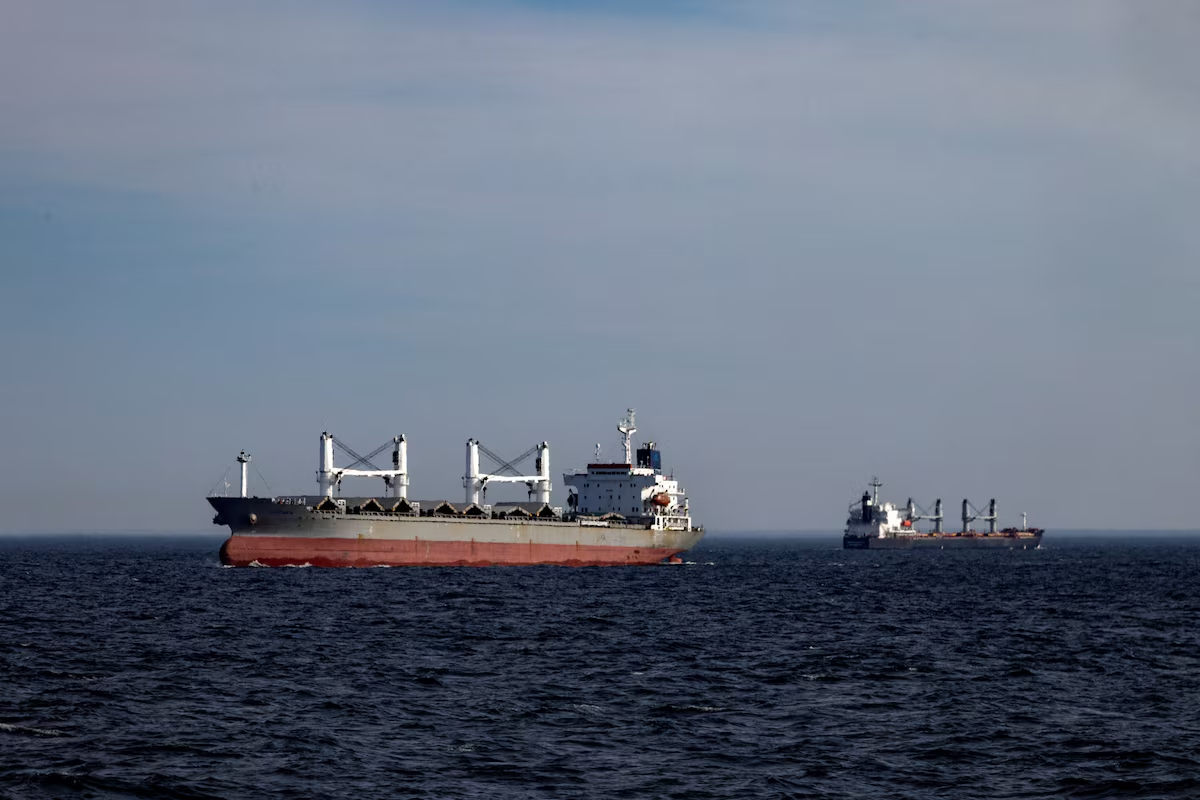
Commercial shipping in and around the Black Sea has come under repeated drone attacks. Vessels were hit in Bulgaria’s exclusive economic zone, Romania’s zone, and near Ukraine’s Odesa region. The incidents threaten civilian crews and agricultural trade. Two general cargo ships were struck overnight in Bulgaria’s economic zone. A rapeseed-oil vessel was damaged near Odesa, killing one person. A Turkish-owned cargo vessel carrying corn caught fire and sank in Romania’s zone after two drone strikes, killing two crew members. Another Togolese-flagged vessel also sank, with its crew’s status unknown. The attacks widen the dangerous area for shipping. Analysts said vessels may now face risks soon after entering the Black Sea, not only near Ukrainian ports. This could further disrupt routes used for grain and other goods, while increasing insurance and freight costs.
Based on reporting by gCaptain
What happened to the commercial ships in and around the Black Sea, and where did the attacks occur?
Commercial shipping in and around the Black Sea has come under repeated drone attacks. Vessels were hit in Bulgaria’s exclusive economic zone, Romania’s zone, and near Ukraine’s Odesa region. The incidents threaten civilian crews and agricultural trade.
Two general cargo ships were struck overnight in Bulgaria’s economic zone. A rapeseed-oil vessel was damaged near Odesa, killing one person. A Turkish-owned cargo vessel carrying corn caught fire and sank in Romania’s zone after two drone strikes, killing two crew members. Another Togolese-flagged vessel also sank, with its crew’s status unknown.
The attacks widen the dangerous area for shipping. Analysts said vessels may now face risks soon after entering the Black Sea, not only near Ukrainian ports. This could further disrupt routes used for grain and other goods, while increasing insurance and freight costs.
What is an exclusive economic zone, and how is it different from a country's territorial waters?
An exclusive economic zone, or EEZ, is a sea area where a coastal country has special rights to explore, manage, and use natural resources. These include fish, oil, gas, and seabed minerals. The concept comes from international maritime law. This explanation uses established international law because the article refers to EEZs but does not define them.
Territorial waters are different. They usually extend up to 12 nautical miles from a coast and are part of the country’s sovereign maritime territory. An EEZ may extend as far as 200 nautical miles. In an EEZ, other countries generally retain freedom of navigation and overflight, although the coastal state controls resource activity.
That distinction matters here. Drone strikes in Bulgaria’s or Romania’s EEZ occurred in areas where those countries have economic rights, but not necessarily full territorial sovereignty. This helps explain why such incidents do not automatically count as attacks on NATO territory.
How many vessels, crew members, and deaths are directly mentioned in the reported attacks and sinkings?
The article directly identifies four vessels connected to the reported attacks and sinkings. Two general cargo ships were hit overnight in Bulgaria’s exclusive economic zone. A separate commercial vessel carrying rapeseed oil was damaged near Odesa. Another cargo vessel, described as Turkish-owned and carrying corn, caught fire and sank in Romania’s zone. The article also describes a Togolese-flagged vessel sinking, which appears to be the second ship from the overnight attack.
At least 18 crew members are specifically accounted for. A Bulgarian ferry rescued all 18 people aboard the Palau-flagged ship that caught fire and sank. The article does not provide the number of people aboard the Togolese vessel, whose search operation continued.
Three deaths are directly reported: one from the damaged rapeseed-oil vessel and two aboard the sunken cargo vessel. Therefore, the known human toll is three deaths and at least 18 crew members involved, with the overall crew total unresolved.
Why are the Black Sea ports of Constanta, Varna, and Burgas important alternatives for shipping Ukrainian and Russian agricultural products?
Constanta in Romania and Varna and Burgas in Bulgaria are important alternative ports for moving agricultural goods through the Black Sea region. They give traders additional routes when fighting or attacks disrupt other ports. This matters because Russia and Ukraine are among the world’s biggest agricultural exporters.
The ports can support shipping and trading operations along the Romanian and Bulgarian coasts. Traders have used them as alternatives while navigating wider regional disruptions. However, an alternative port only helps if ships can safely reach it, load or unload cargo, and obtain affordable insurance.
The new attacks threaten that advantage. Kpler analyst Madeleine Overgaard said the danger may now begin when ships enter the Black Sea, rather than only when they approach Ukrainian ports. If routes to Constanta, Varna, or Burgas become riskier, traders may face fewer choices, higher costs, and additional pressure on grain supplies.
What happens to shipping insurance, freight costs, and global grain prices when commercial vessels face greater danger?
When commercial vessels face greater danger, insurers reassess the chance of loss, damage, or crew casualties. They may raise premiums or impose special war-risk charges. Ship operators then face higher costs for carrying cargo through the affected area. The article specifically says the strikes are driving insurance costs higher.
The mechanism continues through freight markets. If fewer ships are willing to enter the Black Sea, available shipping capacity falls. Operators may need longer routes, extra security, or more expensive risk coverage. Those costs can be reflected in freight rates paid by traders and exporters.
Grain prices may also come under pressure. Russia and Ukraine are major agricultural exporters, and disruption can delay deliveries or limit supply reaching global buyers. The article presents higher freight costs and grain prices as potential consequences, not guaranteed outcomes. The size of the effect depends on how widespread and long-lasting the attacks become.
Why do attacks or drone incidents in a NATO member's exclusive economic zone not automatically trigger NATO's collective-defense clause?
NATO’s collective-defense principle says an armed attack against one member can be treated as an attack against all. But the article says incidents in an exclusive economic zone do not automatically trigger that protection. An EEZ gives Bulgaria or Romania economic rights, while territorial waters are more closely tied to sovereignty.
The legal and factual circumstances also matter. Authorities must assess what happened, who caused it, whether the incident was deliberate, and how serious it was. Bulgaria’s prime minister said the strikes were unacceptable but noted that more serious past incidents had occurred without triggering a forceful NATO response. NATO also has formal consultations under a separate provision.
This leaves the response flexible rather than automatic. Alliance leaders must consider the incident’s nature and form of any action. Repeated drone incursions and attacks may test NATO’s readiness, especially if incidents spread, but the article does not say that collective defense has been activated.
How does maritime shipping connect grain producers in Russia and Ukraine with food buyers around the world?
Maritime shipping is the physical link between grain-producing regions and food buyers worldwide. Farmers and exporters move grain to ports, where it is loaded onto commercial vessels. Those ships carry large cargoes across seas to importers, processors, livestock producers, and food markets. This system matters because Russia and Ukraine are two of the world’s biggest agricultural exporters.
The key mechanism is coordinated movement. Ports receive grain, ships provide long-distance transport, insurers cover maritime risks, and traders arrange sales and routes. Ports on Romania’s and Bulgaria’s coasts, including Constanta, Varna, and Burgas, can offer alternatives when other routes are disrupted. Safe navigation is essential at every stage.
Attacks threaten that connection by damaging vessels, endangering crews, and raising insurance and freight costs. Ships may avoid risky waters or require longer routes. The result can be slower deliveries, narrower export options, and higher prices for buyers around the world if disruptions continue.
Key Facts:
📌 - Ships were attacked in Bulgaria’s, Romania’s, and Ukraine’s maritime areas.
📌 - One damaged rapeseed-oil vessel reported one death.
📌 - A Turkish-owned cargo ship sank, killing two crew members.
📌 - An EEZ can extend up to 200 nautical miles from a coast.
📌 - Territorial waters usually extend 12 nautical miles.
📌 - Other states retain navigation rights in an EEZ.
📌 - Four vessels are directly described as attacked, damaged, or sunk.