News · Defence & Security
Russian drone and missile barrage kills 11 in Ukraine
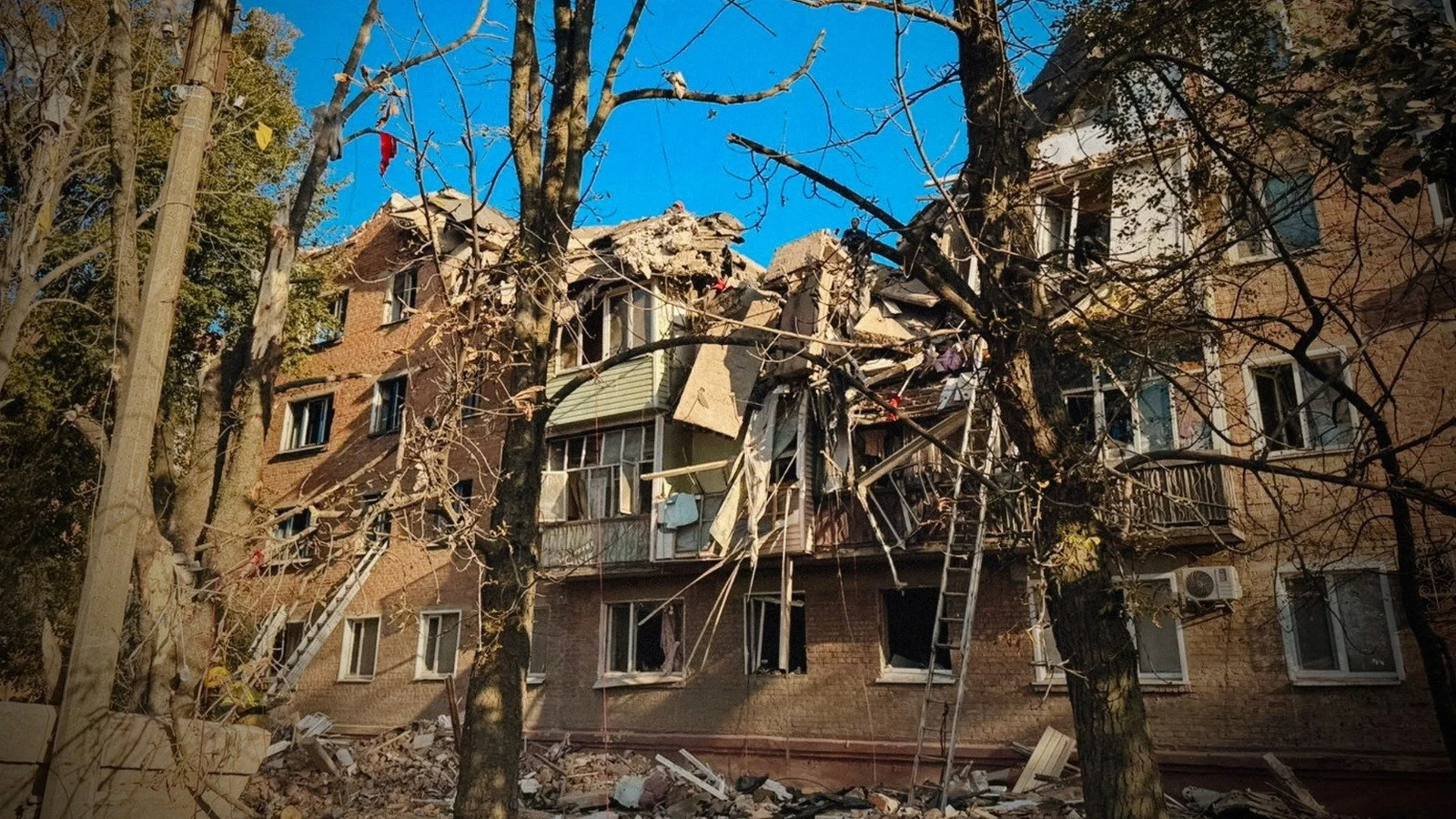
Russia carried out a large overnight barrage against several Ukrainian regions. President Volodymyr Zelensky said at least 11 people were killed. The attack also damaged energy, industrial, transport, and residential sites. It matters because air attacks can harm civilians while disrupting essential services. Kyiv, Poltava, Dnipropetrovsk, and Kharkiv were among the main areas targeted. In Pryluky, in northern Chernihiv region, a missile struck a five-storey apartment building. Authorities reported four deaths and 20 injuries there, while more residents might have remained trapped. Two people were killed in Kyiv, and two in Poltava region. Other reported damage occurred in Dnipro, Zaporizhzhia, and Kremenchuk. Zelensky gave the nationwide death toll as at least 11, while the article does not provide one complete nationwide wounded total. The continuing rescue work showed how one strike can create both immediate casualties and longer-lasting fear.
Based on reporting by RTE Ireland
What happened in the overnight barrage, which places were hit, and how many people were killed or wounded?
Russia carried out a large overnight barrage against several Ukrainian regions. President Volodymyr Zelensky said at least 11 people were killed. The attack also damaged energy, industrial, transport, and residential sites. It matters because air attacks can harm civilians while disrupting essential services.
Kyiv, Poltava, Dnipropetrovsk, and Kharkiv were among the main areas targeted. In Pryluky, in northern Chernihiv region, a missile struck a five-storey apartment building. Authorities reported four deaths and 20 injuries there, while more residents might have remained trapped. Two people were killed in Kyiv, and two in Poltava region.
Other reported damage occurred in Dnipro, Zaporizhzhia, and Kremenchuk. Zelensky gave the nationwide death toll as at least 11, while the article does not provide one complete nationwide wounded total. The continuing rescue work showed how one strike can create both immediate casualties and longer-lasting fear.
What is a ballistic missile, and how is it different from a cruise missile or a drone?
A ballistic missile is powered strongly during launch, then travels along a high, curved trajectory before descending toward its target. It can move extremely fast, especially near impact. That speed and changing altitude make detection and interception difficult. The article calls Russian ballistic missiles Ukraine’s greatest air-defence challenge.
A cruise missile usually stays within the atmosphere and uses an engine throughout much of its flight. It can fly low and steer like an aircraft. A drone is an unmanned aircraft. Drones can be slower, cheaper, and able to remain over an area or follow programmed routes. The article says Russia used both missiles and drones, while Fire Point produces cruise missiles and drones.
These differences affect defence planning. Ballistic missiles demand powerful sensors and rapid interceptors. Cruise missiles and drones may be detected differently and attacked with varied systems. No single defence method works equally well against every threat.
How large was the attack, and how many missiles and drones did Ukrainian air defences intercept?
The attack was large enough to be described as one of Russia’s biggest strikes against Ukraine. Zelensky said Russia fired 70 missiles and also used drones. The scale matters because simultaneous attacks can overwhelm warning systems, air-defence crews, shelters, and emergency responders across several regions.
Ukraine’s air force said its air-defence units downed 161 targets. The article does not explain how that total divides between missiles and drones. It also does not clearly state whether “targets” means every intercepted weapon or includes another reporting category. Therefore, the reliable figures are 70 missiles plus additional drones used, and 161 targets reported downed.
Even successful interceptions cannot prevent every consequence. Some weapons reached cities and infrastructure, including an apartment block and energy-related facilities. The continuing need for more air-defence packages reflects the challenge of protecting a large country against mixed, repeated attacks.
Why would Russia target Ukraine’s energy infrastructure, and what effects can damage to it have on civilians?
Russia would target energy infrastructure because electricity supports nearly every part of Ukrainian life and war production. Zelensky said the attack’s key target was the energy sector and that Russia wanted to strike painfully and demonstratively. Disrupting power can pressure civilians and complicate Ukraine’s military and economic response.
A damaged power plant, substation, or transmission line can interrupt electricity far beyond the impact site. Homes may lose heating, pumps may struggle to provide water, and hospitals must rely on generators. Transport systems, factories, communications, and elevators can also be affected. The article reported damage to energy and industrial facilities, as well as transport infrastructure.
The consequences may last after the missiles stop. Crews must repair equipment while facing possible follow-up attacks. Repeated strikes can force rolling outages and increase public fear. Ukraine’s requests for more air-defence supplies therefore concern both battlefield protection and the daily survival of cities.
What roles do Russia, Ukraine’s air force, air-defence units, and defence companies such as Fire Point play in this conflict?
Russia is the attacking force described in the article. Its military launched missiles and drones against Ukrainian regions and said it aimed at military-industrial facilities. Ukraine is the defending country. Its air force reports incoming threats, directs the defence picture, and supports responses to attacks.
Air-defence units are the systems and personnel that detect, track, and intercept airborne weapons. They reportedly downed 161 targets during this barrage. Defence companies add another layer. Ukrainian company Fire Point manufactures and stores Flamingo cruise missiles and medium- and long-range drones, according to Russia’s defence ministry. Zelensky also said Ukraine had used a domestically made ballistic missile in combat.
These roles show a contest between attack, protection, and production. Russia seeks to damage Ukrainian infrastructure and defence capacity. Ukraine needs air defences to protect cities while its companies expand local weapons production. The article says Fire Point expected a longer-range FP-9 missile by autumn, but that is a stated expectation, not a completed capability.
Besides intercepting missiles and drones, what other methods can Ukraine use to protect cities and critical infrastructure from air attacks?
Intercepting weapons is only one part of protecting cities. Ukraine can reduce risk by making important systems harder to find, hit, or disable. This includes underground or reinforced facilities, physical barriers, fire protection, backup power, and duplicate control systems. Such measures matter because no air-defence network stops every missile or drone.
Critical equipment can be dispersed instead of concentrated in one vulnerable site. Utilities can prepare mobile transformers, spare parts, repair crews, and alternative power routes. Authorities can improve alerts and direct residents to shelters, including metro stations such as those used in Kyiv. Camouflage and decoy sites may also confuse attackers, while strong communications help coordinate emergency responses.
These methods do not make attacks harmless. They aim to limit casualties, keep essential services operating, and restore them quickly. Ukraine’s repeated requests for air-defence packages show that these measures must complement, not replace, interceptors and other military protection.
How does an electricity network keep a modern society running, and why is it especially vulnerable during war?
An electricity network connects power stations, substations, transmission lines, and local distribution systems. Generators produce electricity, high-voltage lines move it long distances, and substations change voltage before homes and businesses receive it. This network powers hospitals, water systems, heating, transport, communications, homes, and industry.
Its interconnected design brings efficiency but also creates vulnerabilities. A strike on a major substation or transmission route can block electricity from reaching many communities. Damage to a power plant can reduce supply, while attacks on control equipment can make balancing the network harder. Backup generators help individual sites, but cannot replace a functioning national grid.
During war, repairs are dangerous and replacement equipment may take time to obtain. Power failures can interrupt medical treatment, water pumping, heating, food storage, and communications. The article’s focus on energy infrastructure shows why protecting the grid is both a civilian necessity and a strategic priority.
Key Facts:
📌 At least 11 people were killed across Ukraine.
📌 A Pryluky apartment strike killed four and wounded 20.
📌 Kyiv, Poltava, Dnipropetrovsk, and Kharkiv were major target areas.
📌 Ballistic missiles travel on fast, arcing trajectories after powered launch.
📌 Cruise missiles fly through the atmosphere like guided aircraft.
📌 Drones are unmanned aircraft that can be remotely controlled or programmed.
📌 Russia used 70 missiles plus drones in the barrage.