News · Defence & Security
Overnight Russian drone, missile strikes kill 8 across Ukraine
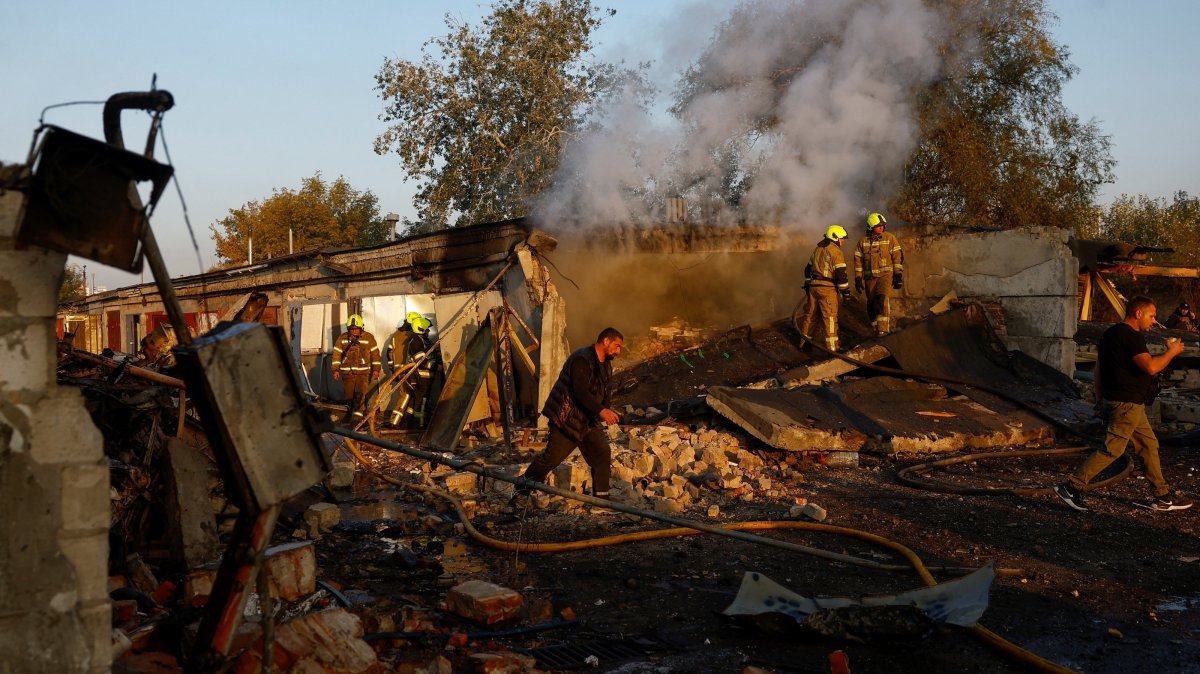
At least eight people died in Russian drone and missile strikes overnight into Wednesday. The attacks damaged homes, factories, transport links, and other infrastructure. The toll included two deaths in Kyiv, four in Pryluki, and two in the Poltava region. The strikes mattered because they hit both civilians and systems that support everyday life. Pryluki, in northern Chernihiv region, suffered one of the worst impacts. A missile struck a five-story apartment building, killing at least four people and injuring 20. Rescuers searched the rubble for additional victims. In Kyiv, residents took shelter in deep metro stations while explosions echoed across the capital. Strikes also damaged an industrial facility in Dnipro, transport infrastructure in Zaporizhzhia, and apartment buildings in Kremenchuk. The Ukrainian air force said attacks focused on Kyiv, Poltava, Dnipropetrovsk, and Kharkiv. Officials also reported damage in surrounding regions, including Chernihiv. The spread shows how overnight strikes can disrupt several parts of the country at once, while forcing residents to shelter and continue working despite danger.
Based on reporting by Daily Sabah Turkey
What happened overnight, and which Ukrainian cities and regions were hit?
At least eight people died in Russian drone and missile strikes overnight into Wednesday. The attacks damaged homes, factories, transport links, and other infrastructure. The toll included two deaths in Kyiv, four in Pryluki, and two in the Poltava region. The strikes mattered because they hit both civilians and systems that support everyday life.
Pryluki, in northern Chernihiv region, suffered one of the worst impacts. A missile struck a five-story apartment building, killing at least four people and injuring 20. Rescuers searched the rubble for additional victims. In Kyiv, residents took shelter in deep metro stations while explosions echoed across the capital. Strikes also damaged an industrial facility in Dnipro, transport infrastructure in Zaporizhzhia, and apartment buildings in Kremenchuk.
The Ukrainian air force said attacks focused on Kyiv, Poltava, Dnipropetrovsk, and Kharkiv. Officials also reported damage in surrounding regions, including Chernihiv. The spread shows how overnight strikes can disrupt several parts of the country at once, while forcing residents to shelter and continue working despite danger.
What are drones, cruise missiles, and ballistic missiles, and how do they differ?
Drones are unmanned aircraft. Attack drones can carry explosives, fly relatively slowly, and sometimes change direction or approach at low altitude. Cruise missiles are powered weapons that usually fly through the atmosphere along a guided route, often at low altitude. Ballistic missiles receive strong propulsion early, then travel much of their path on a steep, high-speed arc before descending toward the target.
These differences affect detection and defense. Drones may be cheaper and can arrive in large numbers. Cruise missiles can follow terrain or maneuver. Ballistic missiles are much faster and give defenders less time to react. The article says Russia used all three categories, while Ukrainian officials specifically reported ballistic missiles targeting Kyiv.
The attack therefore presented several problems at once. Defenders had to find slower, lower-flying drones and cruise missiles while also responding to faster ballistic weapons. The article does not provide technical details about each weapon’s route or warhead, but it shows why mixed attacks can stretch air defenses.
How large was the attack, and how many of the incoming weapons did Ukraine say its air defenses destroyed or intercepted?
The overnight assault was large and used multiple weapon types. Ukraine’s air force reported 130 drones and 48 cruise missiles, plus ballistic missiles whose number was not given. That means at least 178 drones and cruise missiles were launched, with the total higher once ballistic missiles are included. The scale matters because simultaneous attacks can overwhelm defenses and threaten distant regions.
Ukraine said air-defense units downed 161 targets. The wording refers to targets, not necessarily a complete count of every weapon launched. It also does not explain in the article how many were drones, cruise missiles, or ballistic missiles. Because the ballistic total is unknown, the exact interception rate cannot be calculated from the available figures.
Even so, the reported numbers show a substantial defensive effort. Strikes still caused deaths and damage in Kyiv, Pryluki, Poltava, Dnipro, Kremenchuk, and Zaporizhzhia. The contrast is important: intercepting many targets can reduce destruction, but it does not guarantee that every weapon will be stopped or every city protected.
What targets did Russia say it was trying to hit, and what kinds of civilian and industrial sites were actually damaged?
Russia’s Defense Ministry said the strike targeted Ukraine’s military-industrial capacity. It named facilities in Kyiv and several regions connected with Fire Point, a Ukrainian defense company. Russia said the sites made or stored Flamingo cruise missiles and medium- and long-range drones. It described the operation as a massive strike using high-precision weapons and drones.
The reported damage also reached places used by civilians and the wider economy. In Pryluki, a missile hit a five-story residential building, killing at least four people and injuring 20. Officials reported apartment damage in Kremenchuk, an industrial facility damaged in Dnipro, and transport infrastructure damaged in Zaporizhzhia. Kyiv residents sheltered in metro stations during the attack.
These accounts show the difference between claimed military objectives and reported consequences on the ground. The article does not independently verify every target claim. It does establish that the strikes affected homes, transport, and industrial sites, creating risks for residents while also disrupting production and movement.
How do air-defense systems detect and stop incoming missiles and drones, and why can some weapons still get through?
Air-defense systems first detect a possible threat using tools such as radar, infrared sensors, or other surveillance networks. Computers and operators track its direction, speed, and likely target. Command systems then choose a response. That may include a surface-to-air interceptor, electronic disruption, or guns designed for shorter-range threats. The goal is to destroy, divert, or disable the incoming weapon before impact.
Different weapons create different challenges. Drones can fly low and appear in large groups. Cruise missiles can maneuver and follow routes that complicate tracking. Ballistic missiles move extremely fast and may leave only a short engagement window. Defenders must also identify targets correctly and coordinate systems across a wide area. The article says Ukraine downed 161 targets during this attack, showing the value of layered defense.
Some weapons can still pass through when an attack saturates defenses, approaches from unexpected directions, or exploits gaps in coverage. The article notes that Ukraine had faced a critical lack of air defenses for months. That shortage can leave even defended cities vulnerable, as the deaths and damage reported overnight demonstrate.
What happens to civilians and a city's daily life when apartment buildings, transport links, factories, and other infrastructure are damaged?
When buildings and infrastructure are damaged, the effects spread beyond the immediate blast. Residents can be killed, injured, trapped, or forced from their homes. Transport damage makes commuting, deliveries, and emergency response harder. Factory damage can interrupt jobs and production. The combined result is a city that must manage rescue and repairs while people try to maintain ordinary routines.
The article gives several clear examples. A missile hit a five-story residential building in Pryluki, killing at least four people and injuring 20. In Kyiv, many residents moved into deep metro stations for protection. Strikes damaged an industrial facility in Dnipro, transport infrastructure in Zaporizhzhia, and apartment buildings in Kremenchuk. These impacts affected housing, mobility, work, and public safety at the same time.
Daily life continues, but under pressure. Ukraine’s human rights commissioner described people planning their working day after another sleepless night. Further strikes could increase repair needs, disrupt local economies, and deepen fear. The article shows that infrastructure damage is both a physical crisis and a long-term challenge to civilian resilience.
Why has Ukraine faced shortages of air-defense systems, and how does access to them shape a country's ability to protect its population during war?
Air defenses are essential because they determine how many incoming weapons a country can detect and stop. Ukraine’s officials said the country had faced a critical shortage for months. President Volodymyr Zelenskyy and others repeatedly appealed for additional help and supplies. When defenses are scarce, commanders must prioritize major cities, military sites, energy systems, or other vital locations.
The article does not give a full historical explanation for the shortage. In general, prolonged war can consume interceptors faster than they are replaced. Advanced systems are expensive, complex, and produced in limited quantities. Countries also need compatible radar, launchers, trained crews, maintenance, and ammunition. These constraints can make outside support important when attacks continue at high volume.
Access directly shapes civilian protection. Ukraine said it downed 161 targets in this attack, yet missiles and drones still killed at least eight people and damaged homes and infrastructure. More capable, better supplied defenses could reduce the number of weapons reaching cities, but no system guarantees complete protection. Continued attacks make supply, repair, training, and long-term production critical.
Key Facts:
📌 At least eight people were killed across Ukraine overnight.
📌 Four people died after a missile hit Pryluki’s apartment building.
📌 Kyiv residents sheltered in deep metro stations during the attacks.
📌 Drones are unmanned aircraft that can carry explosives.
📌 Cruise missiles fly powered, guided routes through the atmosphere.
📌 Ballistic missiles travel rapidly along arcing trajectories.
📌 Russia launched 130 drones and 48 cruise missiles.