News · Economy & Business
RBI repo rate news LIVE: RBI raises GDP growth forecast to 7.1 per cent for FY27
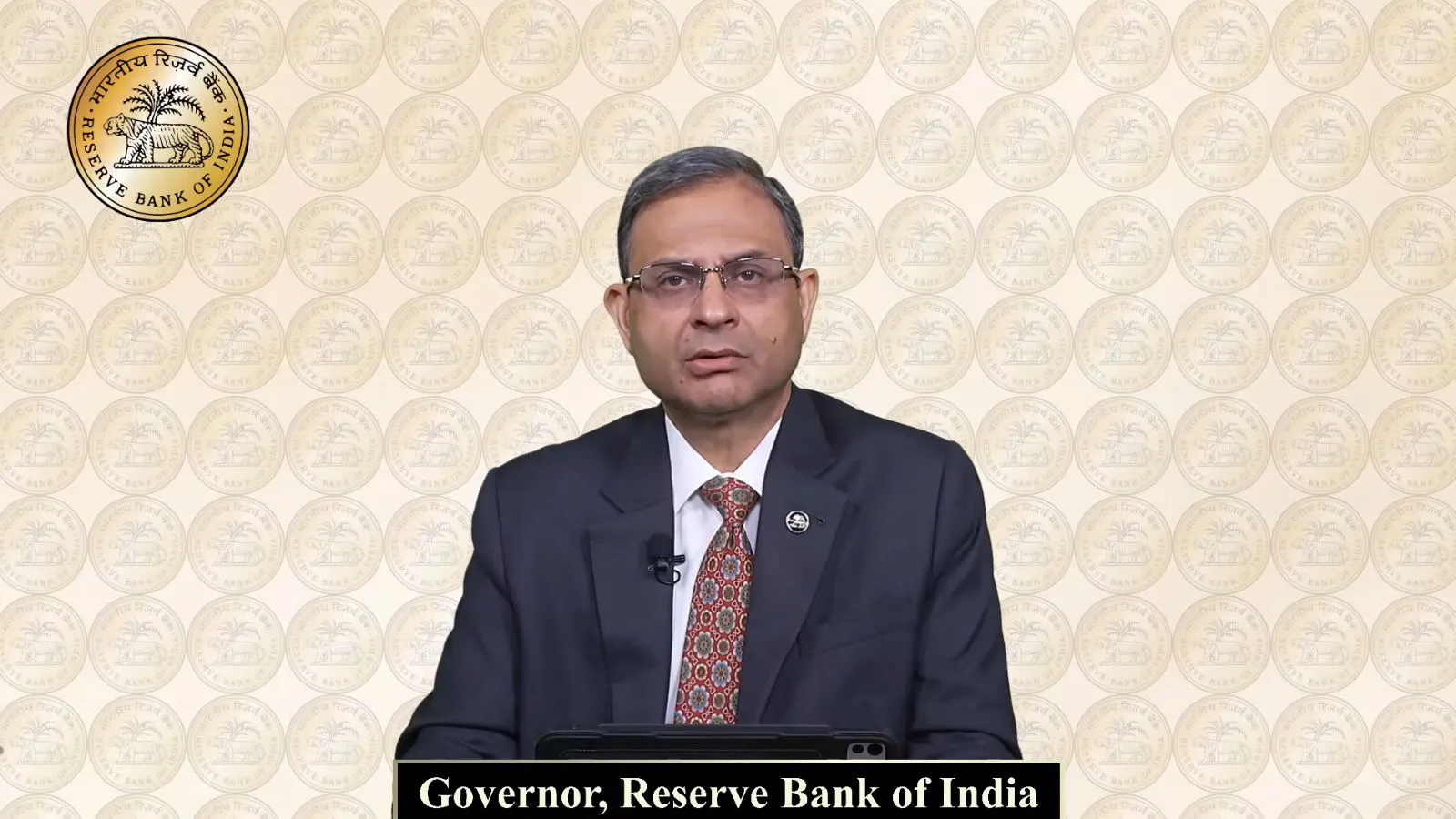
The policy change clearly identified in the article is a 25-basis-point repo-rate increase, taking the rate to 5.50%. The repo rate is the RBI’s policy rate and affects borrowing costs across the financial system. However, the article does not provide the RBI’s FY27 GDP growth forecast or say whether it changed. That distinction matters. A rate hike affects loans, EMIs and investment conditions immediately or after lenders reset rates. A GDP forecast is the RBI’s estimate of economic growth for the financial year ending March 2027. It helps explain how policymakers view future economic momentum, but no numerical estimate appears here. The article says inflation may move toward the upper end of the RBI’s tolerance band. Sachin Bajaj therefore expects another hike in December. Any FY27 forecast should be checked against the RBI’s official policy statement, rather than inferred from this article.
Based on reporting by Indian Express
What exactly did the RBI change in this policy decision—the repo rate and the FY27 GDP growth forecast?
The policy change clearly identified in the article is a 25-basis-point repo-rate increase, taking the rate to 5.50%. The repo rate is the RBI’s policy rate and affects borrowing costs across the financial system. However, the article does not provide the RBI’s FY27 GDP growth forecast or say whether it changed.
That distinction matters. A rate hike affects loans, EMIs and investment conditions immediately or after lenders reset rates. A GDP forecast is the RBI’s estimate of economic growth for the financial year ending March 2027. It helps explain how policymakers view future economic momentum, but no numerical estimate appears here.
The article says inflation may move toward the upper end of the RBI’s tolerance band. Sachin Bajaj therefore expects another hike in December. Any FY27 forecast should be checked against the RBI’s official policy statement, rather than inferred from this article.
What is the repo rate, and why does it influence the interest rates charged by banks?
The repo rate is the interest rate at which the RBI lends money to commercial banks, usually against approved securities. It is a key policy tool because it influences the cost and availability of funds in the banking system. A higher repo rate generally makes borrowing more expensive.
Banks do not simply copy the repo rate into every loan. They add their own spread, which reflects operating costs, credit risk and profit margins. Loans linked directly or indirectly to the repo rate can therefore become costlier when the RBI increases it. The effect may appear through a higher interest rate, a higher EMI, a longer tenure, or a combination.
The article says floating-rate and repo-linked borrowers may feel the increase quickly. BankBazaar notes that such loans usually reset within a few months. Borrowers can ask lenders how the change applies and consider annual prepayments.
What happens to a floating-rate home loan when the repo rate rises by 25 basis points?
When the repo rate rises by 25 basis points, a floating-rate home loan linked to it usually becomes more expensive after the lender’s reset. The borrower’s interest rate increases, raising the cost of servicing the outstanding principal. This matters because even a small rate change can accumulate substantially over many years.
Raoul Kapoor gives a simple illustration: a home-loan rate of 7.15% could move to around 7.40% if the full increase reaches borrowers. The lender may raise the monthly EMI to repay the loan within the original period. Alternatively, it may keep the EMI similar by extending the tenure, which creates more interest over time.
The article says floating and repo-linked borrowers may feel the effect quickly, though reset timing differs. Borrowers should confirm the lender’s method and may reduce the added cost through regular prepayments.
How much could the monthly EMI and total interest increase on a Rs 50 lakh home loan after this rate hike?
The article estimates that a 25-basis-point increase has a noticeable but manageable effect on a Rs 50 lakh home loan. The exact impact depends on the lender, interest rate, tenure and whether the loan runs to maturity. Long tenures magnify the total interest even when the monthly change looks modest.
For a 30-year loan, Atul Monga says the monthly EMI rises by Rs 852 at a public-sector bank, from Rs 34,109 to Rs 34,961. At a private bank, it rises by Rs 867, from Rs 35,821 to Rs 36,688. If the loan runs for the entire tenure, extra interest is approximately Rs 3.07 lakh or Rs 3.12 lakh.
These are illustrations, not universal outcomes. BankBazaar also cites an Rs 817 monthly increase for Rs 50 lakh over 25 years. Prepayments can reduce the additional interest.
How does a bank decide whether to pass a rate increase on through a higher EMI, a longer loan tenure, or both?
A bank first recalculates the loan using the revised interest rate, outstanding principal and remaining tenure. It then considers whether the borrower can manage a higher EMI and whether the original end date should be preserved. The lender’s loan agreement and internal policy also shape the decision.
If the EMI increases, the borrower pays more each month but may finish on the original schedule. If the EMI stays unchanged, the lender can extend the tenure so the same monthly payment covers the higher interest. That feels easier immediately, but it increases total interest. Some lenders may combine a smaller EMI increase with a modest tenure extension.
The article says the outcome depends on the lender. BankBazaar advises borrowers to ask exactly how the change will be applied. A small annual prepayment can help offset the extra interest, especially when tenure is extended.
Who sets India’s policy interest rates, and what role does the RBI’s Monetary Policy Committee play in that decision?
India’s policy interest rates are set by the RBI’s Monetary Policy Committee, or MPC. The RBI is the country’s central bank, while the MPC is the designated body responsible for deciding the policy repo rate. Its decision influences borrowing costs throughout the economy.
The committee studies inflation, economic growth, financial conditions and risks before choosing among a rate increase, a pause or a cut. A hike is intended to restrain demand and inflation, while a cut generally supports borrowing and economic activity. The decision does not mechanically set every bank-loan rate, because lenders apply their own spreads and reset rules.
The article describes the repo rate rising to 5.50% and says cuts are off the table for now. Sachin Bajaj expects another hike at the December meeting. That view reflects concern that inflation could approach the upper end of the RBI’s tolerance band.
How are inflation, interest rates, borrowing, economic growth, and the RBI’s GDP forecast connected?
Inflation means prices are rising, reducing the purchasing power of money. When inflation looks persistent, the RBI can raise interest rates to make borrowing more expensive and saving more attractive. This can reduce demand, ease price pressures and support inflation control. Lower rates generally work in the opposite direction by encouraging loans, spending and investment.
The chain is not immediate or exact. A rate hike can increase home-loan EMIs, as the article shows, and may make households postpone borrowing or choose smaller homes. That can moderate demand. But higher borrowing costs can also weigh on business investment and economic activity, affecting growth.
The RBI’s GDP forecast signals its assessment of future economic expansion. The supplied article does not state the FY27 forecast, so no number can be cited. It does say inflation may near the tolerance band’s upper end, helping explain expectations of another December hike.
Key Facts:
📌 Repo rate increased to 5.50%.
📌 The article does not state the FY27 GDP growth forecast.
📌 Another rate hike may come at the December policy meeting.
📌 The RBI lends short-term funds to banks at the repo rate.
📌 Higher repo rates generally increase banks’ funding costs.
📌 Repo-linked loans usually reset within a few months.
📌 A 25-basis-point hike can move 7.15% to about 7.40%.