News · Defence & Security
War update: 202 clashes on front line over past day
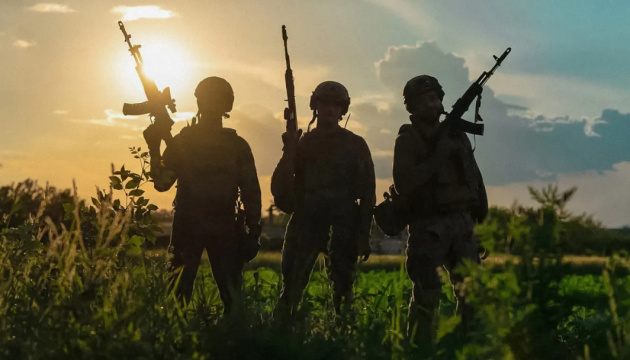
A front-line clash means opposing military units exchange fire or attempt to attack one another in an active battle area. It can involve infantry, armored vehicles, artillery, or support from aircraft and drones. A clash is an event, not automatically a major territorial change. For example, the article says Ukrainian forces repelled 27 Russian attacks in the Pokrovsk sector. It also records 14 attacks in the Kostyantynivka sector and 13 in the Huliaipole sector. These reports describe repeated attempts and defensive responses. The total of 202 clashes shows intense activity across several sectors during the reported day. However, the number alone does not reveal casualties, duration, or territory captured. The article reports attacks being stopped or repelled, but it does not report a breakthrough. Front-line counts therefore measure combat pressure more clearly than final results.
Based on reporting by Ukrinform English
What does a "clash on the front line" mean in a war?
A front-line clash means opposing military units exchange fire or attempt to attack one another in an active battle area. It can involve infantry, armored vehicles, artillery, or support from aircraft and drones. A clash is an event, not automatically a major territorial change.
For example, the article says Ukrainian forces repelled 27 Russian attacks in the Pokrovsk sector. It also records 14 attacks in the Kostyantynivka sector and 13 in the Huliaipole sector. These reports describe repeated attempts and defensive responses.
The total of 202 clashes shows intense activity across several sectors during the reported day. However, the number alone does not reveal casualties, duration, or territory captured. The article reports attacks being stopped or repelled, but it does not report a breakthrough. Front-line counts therefore measure combat pressure more clearly than final results.
How large was the reported military activity over the past day, in terms of clashes, airstrikes, bombs, drones, and shelling attacks?
The report describes a highly active 24-hour period ending at 08:00 on October 7. It records 202 clashes, 85 Russian airstrikes, 278 guided aerial bombs, 9,728 kamikaze drones, and 2,521 shelling attacks. Together, these figures show pressure from both long-range weapons and ground operations.
The numbers represent different kinds of activity. Airstrikes and guided bombs indicate attacks delivered from the air. Kamikaze drones are one-way attack systems, while shelling usually refers to artillery or other weapons firing explosive rounds. Clashes count direct encounters between forces. These categories can overlap during one operation.
The scale matters because sustained attacks can stretch defenses, disrupt movement, and damage positions. Still, the article does not explain how many weapons hit targets, how much damage occurred, or how many attacks were intercepted. The figures therefore show intensity, not a complete measure of battlefield success.
Which parts of the front saw the most fighting, and where did Russian forces concentrate their attacks?
Fighting was spread across much of the front, but it was heaviest in the Pokrovsk sector. Ukrainian forces reported stopping 27 attacks there. Kostyantynivka had 14 attacks, Huliaipole had 13, and Southern Slobozhanshchyna had 11. Lyman followed with eight reported attacks.
The article specifically says Russian forces concentrated their main efforts near Serhiivka and Molodetske in Pokrovsk. They also attacked toward Kuchering Yar, Vilne, Bilytske, Vodianske, Dobropillia, and Novohryshyne. Other fighting occurred near Kostyantynivka, Novoselivka, Mykolaipillia, Osykove, and several Huliaipole locations.
This pattern indicates a broad offensive effort with a clear focus on Pokrovsk. The article also reports no active Russian operations in the Sloviansk, Oleksandrivka, and Prydniprovske sectors. It says no Russian offensive groupings were detected in Volyn and Polissia, suggesting no reported buildup there.
What happens to a military campaign when one side repeatedly attacks the same sectors without making a reported breakthrough?
When one side repeatedly attacks the same sectors without reported territorial gains, the campaign can become an attritional struggle. The attacker spends troops, ammunition, vehicles, and time. The defender also faces exhaustion and damage. Neither side necessarily achieves a decisive result.
The article illustrates this pattern in Pokrovsk, where Ukrainian forces reported stopping 27 attacks. Russian troops also made repeated attempts in Kostyantynivka, Huliaipole, and Southern Slobozhanshchyna. These attacks can test defenses, seek weak points, and keep Ukrainian units tied to threatened areas.
The forward effect is uncertain. Continued pressure might eventually force a retreat if defenses weaken. It might instead produce a stalemate if attacks remain costly and unsuccessful. The article reports attacks being stopped or repelled and does not report a breakthrough. It provides no figures for casualties, ammunition use, or lasting territorial change.
Why are places such as Pokrovsk, Kostyantynivka, Kupyansk, and Lyman important enough to be reported as separate sectors?
A military sector is a defined portion of the front used to organize operations and report activity. Separating sectors helps commanders track attacks, assign units, and compare threats. It also gives the public a clearer picture than treating the entire front as one battlefield.
The article separately lists Pokrovsk, Kostyantynivka, Kupyansk, and Lyman. Their reports differ sharply: Pokrovsk saw 27 stopped attacks, Kostyantynivka saw 14, Kupyansk saw one, and Lyman saw eight. That separation shows that combat pressure was uneven across the front.
A sector can matter because of its roads, settlements, terrain, supply routes, or position relative to other defensive lines. The article does not explain the specific strategic importance of every named place. It does show that these areas had distinct operational conditions and required separate reporting. Sector boundaries can change as military priorities and front lines change.
How do guided aerial bombs, kamikaze drones, artillery, and ground assaults differ in the way they are used in combat?
These weapons and actions attack in different ways. Guided aerial bombs are released from aircraft and use guidance systems to steer toward a target. Kamikaze drones carry an explosive payload and crash into the target. Artillery launches shells from the ground, often against positions beyond direct sight. Ground assaults involve troops moving to seize or hold terrain.
The article records 278 guided bombs, 9,728 kamikaze drones, and 2,521 shelling attacks. It separately reports Russian ground attacks, including 27 in the Pokrovsk sector. These categories can work together: drones or bombs may strike defenses before artillery and troops attempt an advance.
Each method has different strengths and risks. Air weapons can hit distant positions, drones can provide numerous relatively small attacks, artillery can sustain fire, and ground forces are needed to occupy territory. The article gives totals but does not describe the effectiveness or accuracy of each weapon type. Numbers alone cannot show which method caused the most damage.
What is a front line, and how does it form and change during a prolonged war?
A front line is the broad zone separating opposing military positions, not always a single precise line. It forms when forces stop advancing and establish defensive positions, supply routes, observation posts, and fire support. Combat usually concentrates around gaps, roads, settlements, and advantageous terrain.
The article shows this organization through sectors such as Pokrovsk, Lyman, Kupyansk, and Orikhiv. Ukrainian forces reported attacks being repelled in some sectors, while Russian forces conducted no active operations in Sloviansk, Oleksandrivka, and Prydniprovske. Such differences reflect a front with active and quieter sections.
A prolonged war changes the front through small advances, withdrawals, fortified positions, and repeated assaults. Airstrikes, drones, artillery, and ground attacks can alter control or damage defenses before troops move. The article reports 202 clashes but does not map territorial changes. It therefore shows an active, uneven front without establishing how far the line moved that day.
Key Facts:
📌 A clash is an armed encounter between opposing forces.
📌 The report counted 202 front-line clashes in one day.
📌 A clash does not necessarily mean territory changed hands.
📌 The report counted 202 clashes over the past day.
📌 Russian forces launched 85 airstrikes and dropped 278 guided bombs.
📌 The report listed 9,728 drones and 2,521 shelling attacks.
📌 Pokrovsk recorded the highest total, with 27 attacks.