News · Politics & Governance
Germany news: Government presents plan for railroad revamp
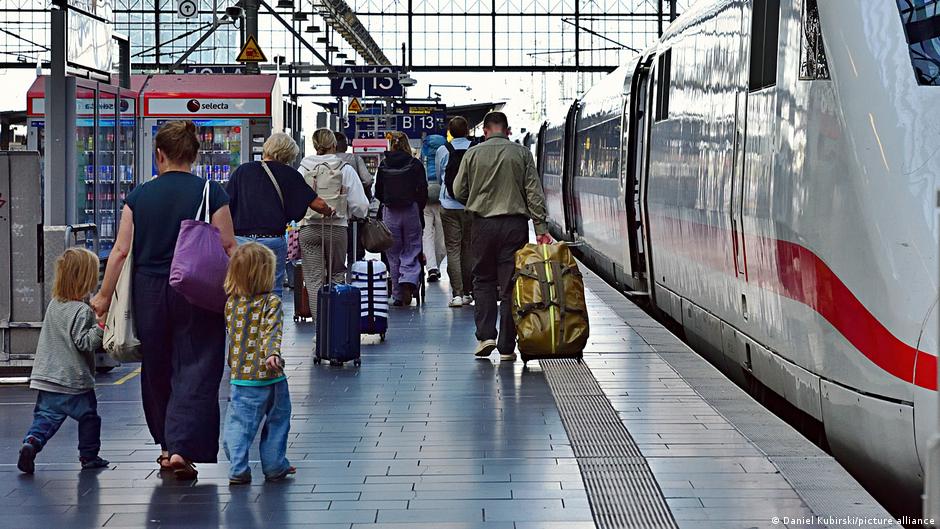
Infraplan is a 160-page plan from Germany’s Transport Ministry covering railway improvements from 2026 to 2030. It acts as a central guide for setting priorities, directing work, and checking results. The plan is revised every year, so progress can be reviewed and adjusted. It addresses a railway system facing serious reliability problems. Planned work includes repairing routes, adding digital technology, electrifying lines, rebuilding stations, reducing noise, and extending or constructing tracks. The plan also introduces measurable targets instead of relying only on broad promises. This matters because railway users currently face frequent disruption. In September, nearly every second long-distance train was delayed. Infraplan does not yet provide renovation financing; that still depends on the government budget. The ministry is working on a longer-term railway fund, which could help turn the plan’s goals into sustained improvements.
Based on reporting by DW News
What is Germany’s “Infraplan,” and what problem is it designed to address?
Infraplan is a 160-page plan from Germany’s Transport Ministry covering railway improvements from 2026 to 2030. It acts as a central guide for setting priorities, directing work, and checking results. The plan is revised every year, so progress can be reviewed and adjusted.
It addresses a railway system facing serious reliability problems. Planned work includes repairing routes, adding digital technology, electrifying lines, rebuilding stations, reducing noise, and extending or constructing tracks. The plan also introduces measurable targets instead of relying only on broad promises.
This matters because railway users currently face frequent disruption. In September, nearly every second long-distance train was delayed. Infraplan does not yet provide renovation financing; that still depends on the government budget. The ministry is working on a longer-term railway fund, which could help turn the plan’s goals into sustained improvements.
What improvements does the plan aim to complete between 2026 and 2030?
The Infraplan sets a broad modernization program for Germany’s railway network between 2026 and 2030. Its purpose is not simply to repair old tracks. It combines physical construction with digital and environmental upgrades, aiming to make the whole system more dependable.
The planned work includes repairing railway routes, digitizing operations, and electrifying lines that are not yet powered. Stations are also due for reconstruction. Other measures include noise control, extensions to existing lines, and entirely new routes. One specific target is the construction of 155 kilometers of new track by 2030.
The plan also creates a way to measure whether these improvements happen. Its eight indicators include new-track construction, electrification, and delays caused by infrastructure defects. The document sets direction but does not secure renovation funding. The ministry is preparing a railway fund law to provide financing over several years.
How much new railway track does Germany plan to build by 2030, and how common were long-distance train delays in September?
The Infraplan sets a clear construction target: Germany wants to build 155 kilometers, or about 96 miles, of new railway track by 2030. This is one of the plan’s mandatory goals and provides a concrete way to judge whether expansion is happening.
The target is part of a wider program. Germany also plans route repairs, electrification, digital upgrades, station reconstruction, noise control, and extensions or new lines. The plan’s performance system tracks several kinds of progress, rather than measuring success only by the amount of new track completed.
The need is visible to passengers now. In September, nearly every second long-distance train was delayed. The article identifies infrastructure defects as one source of delays. Infraplan aims to track those delays and reduce them, but financing remains unresolved because renovations currently depend on the government budget. A planned railway fund could support work over several years.
How will the plan’s eight performance indicators make progress on railway repairs more transparent?
The eight performance indicators are designed to make railway modernization easier to evaluate. Instead of describing progress vaguely, the government can compare actual results with mandatory targets. The plan is revised annually, creating regular opportunities to review whether work is advancing.
The indicators cover practical outputs and reliability. They include how many kilometers of new track are built each year, how many kilometers are electrified, and how many minutes of delay are caused by infrastructure defects. These measures connect construction work with the passenger experience.
This system can show where the program is succeeding and where it is falling behind. It can also make responsibilities and priorities more visible to decision-makers and the public. However, indicators do not themselves pay for construction. Railway renovations still depend on the government budget, while the Transport Ministry is working on legislation for a railway fund that would secure financing for several years.
Why does Germany’s railway infrastructure need repairs, digitization, electrification, and station reconstruction?
Germany needs this work because its railway infrastructure is in poor condition and is contributing to unreliable service. The article describes the system as derelict and reports that nearly every second long-distance train was delayed in September. Repairs are therefore aimed at restoring dependable basic operations.
Each upgrade addresses a different infrastructure need. Route repairs can fix physical weaknesses. Digitization can modernize railway management and operations. Electrification can replace reliance on less efficient train power systems on unelectrified lines. Station reconstruction can improve aging passenger facilities and railway structures. Noise control addresses effects on nearby communities.
These measures are presented as connected parts of a wider renewal effort, not isolated projects. Better infrastructure should support more reliable service, while new and extended lines can add capacity. The plan sets goals through 2030, but the article notes that financing is not yet secured. Its success will depend on implementation and stable funding.
Who is responsible for carrying out the plan, and how does DB InfraGO fit into Germany’s railway system?
The Transport Ministry is responsible for establishing the framework. Undersecretary Ulrich Lange described Infraplan as the government’s central compass for setting priorities and monitoring implementation. The ministry also plans to revise the document each year and is preparing a law for a railway fund.
DB InfraGO fits into the system as Deutsche Bahn’s infrastructure division. The ministry formally handed the plan to its chairman, Philipp Nagl. That signals DB InfraGO’s operational role in putting infrastructure priorities into practice, including work on routes, tracks, stations, and electrification. The article does not describe every division of responsibility.
The government remains important because funding currently comes through the budget. DB InfraGO cannot simply deliver the entire program without financial decisions and resources. A future railway fund is intended to secure financing for several years. Implementation will therefore require cooperation between the ministry, the infrastructure operator, and public budget authorities.
Why does reliable railway infrastructure matter for a country’s economy, environment, and everyday mobility?
Reliable railway infrastructure matters because businesses, workers, students, and families depend on predictable travel. Companies use rail to move people and goods, so delays can disrupt schedules and economic activity. A dependable network also makes regions easier to reach and supports everyday mobility without requiring everyone to drive.
The article’s figures show why this matters in Germany. Nearly every second long-distance train was delayed in September. Infraplan responds with route repairs, digital upgrades, electrification, station reconstruction, noise control, and new or extended lines. Its indicators connect infrastructure work with outcomes such as delays caused by infrastructure defects.
Rail can also support environmental goals when people and freight can shift from more carbon-intensive transport. That broader benefit is established transport knowledge; the article itself focuses mainly on reliability and modernization. By 2030, Germany wants 155 kilometers of new track, but financing remains a challenge. Long-term funding will influence whether the plan improves mobility, economic performance, and environmental outcomes.
Key Facts:
📌 Infraplan covers German railway improvements from 2026 through 2030.
📌 The 160-page plan is revised annually.
📌 Nearly every second long-distance train was delayed in September.
📌 The plan covers repairs, digitization, electrification, and station reconstruction.
📌 Noise control and new railway lines are also planned.
📌 Germany targets 155 kilometers of new track by 2030.
📌 Germany plans to build 155 kilometers of new track by 2030.