News · Social Issues
France suspends stun grenades at student protests after teen loses hand
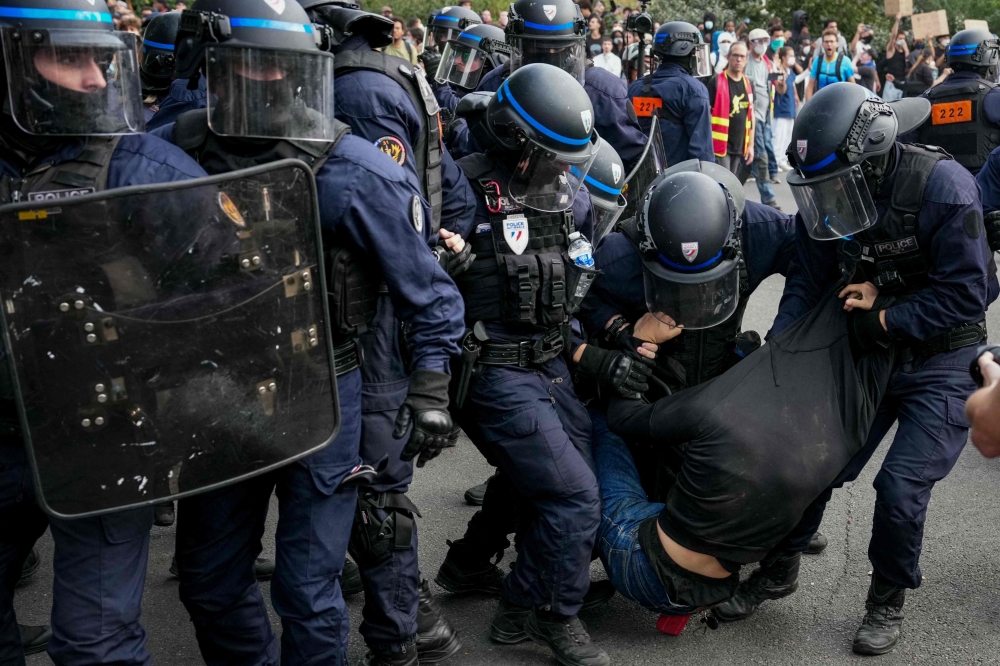
A stun grenade, often called a flash-bang, is a less-lethal police device that creates a sudden bright flash and extremely loud noise. Its purpose is to disorient people briefly. A tear-gas grenade is different because it releases a chemical irritant that causes burning eyes, coughing, and breathing difficulty. Neither device is harmless. The key mechanism is what each grenade releases. A stun grenade uses light, sound, and pressure. A tear-gas grenade spreads an irritating agent. The article reports that a 15-year-old lost a hand after police fired a stun grenade. It also says a 14-year-old lost several teeth after being hit in the face by a tear-gas grenade at close range. The article does not provide technical specifications for either weapon. These definitions use established general knowledge. Their risks matter because crowd-control tools can cause severe injuries when used near people or at close range, increasing scrutiny of police tactics.
Based on reporting by Malay Mail Malaysia
What is a stun grenade, and how is it different from a tear-gas grenade?
A stun grenade, often called a flash-bang, is a less-lethal police device that creates a sudden bright flash and extremely loud noise. Its purpose is to disorient people briefly. A tear-gas grenade is different because it releases a chemical irritant that causes burning eyes, coughing, and breathing difficulty. Neither device is harmless.
The key mechanism is what each grenade releases. A stun grenade uses light, sound, and pressure. A tear-gas grenade spreads an irritating agent. The article reports that a 15-year-old lost a hand after police fired a stun grenade. It also says a 14-year-old lost several teeth after being hit in the face by a tear-gas grenade at close range.
The article does not provide technical specifications for either weapon. These definitions use established general knowledge. Their risks matter because crowd-control tools can cause severe injuries when used near people or at close range, increasing scrutiny of police tactics.
Why did France suspend the use of stun grenades at student demonstrations?
France suspended stun grenades because their use had been linked to serious injuries during student demonstrations. The decision followed growing allegations that police were using disproportionate force. It mattered especially because many protesters were minors and the demonstrations were largely peaceful, even though some clashes became violent.
The clearest example was a 15-year-old who lost a hand on Monday after police fired a stun grenade. Separately, a 14-year-old in northwest Paris lost several teeth after a tear-gas grenade struck him in the face at close range. A policeman was charged in that case. These incidents increased pressure for an immediate change in tactics.
Interior Minister Laurent Nunez announced the suspension on radio. Police had also opened 18 internal investigations into alleged misconduct. The suspension may reduce the risk of similar injuries, while investigations and public debate will test whether authorities can restore confidence without weakening public safety.
How many people have been arrested, and how many internal investigations into police misconduct have been opened?
The protests had produced a very large arrest total: more than 6,500 people. Most of those arrested were minors. The figure shows how widely the unrest had spread and how heavily policing had become part of the national crisis.
Alongside the arrests, police opened 18 internal investigations into allegations of misconduct. The article does not say that every arrest involved misconduct, or that every investigation would lead to discipline. These are separate figures: arrests concern people detained during the protests, while investigations examine possible wrongdoing by police.
The numbers reflect two competing pressures. Authorities sought to contain sporadic violence and protect public safety. Protesters, families, teachers, and unions accused police of disproportionate force. Further investigations, court proceedings, and official explanations will be important in determining accountability and shaping public confidence in the response.
What were the students protesting, and who joined them?
The student protests began over everyday conditions in high schools for students aged 15 to 17. Demonstrators complained that school buildings were dilapidated and that too few teachers were available. Their demands focused on the quality and safety of education rather than a single isolated incident.
Students showed their opposition by blocking entrances to hundreds of high schools. The movement then widened. Parents, teachers, and union workers joined demonstrations in Paris and other cities. Tens of thousands of people took to the streets on the day described in the article, making the dispute a national political crisis.
The broader coalition increased pressure on the government to respond. Most demonstrations were largely peaceful, but sporadic violent clashes occurred. President Emmanuel Macron held an emergency meeting with Prime Minister Sebastien Lecornu and other ministers, while Lecornu prepared a public address on the protests and national finances.
What could happen to the protests and to public trust in the police after serious injuries and allegations of disproportionate force?
Serious injuries can change a protest from a dispute about school conditions into a wider argument about policing and state power. They may increase anger, bring more parents and organizations into the streets, and strengthen demands for an end to controversial tactics. They can also make peaceful demonstrations harder to manage if trust collapses.
The article gives two powerful examples. A 15-year-old lost a hand after a stun grenade was fired. A 14-year-old lost several teeth after a tear-gas grenade hit him in the face at close range. Police opened 18 internal investigations, and an officer was charged in the second case. Such steps create mechanisms for accountability.
The future is not certain. Credible investigations and proportionate policing could help rebuild confidence. Delays, unclear findings, or further injuries could deepen distrust and prolong the protests. Officials must address both sporadic violence and allegations of police misconduct.
What authority does France's interior minister have over police tactics, and how is that authority different from the president's and prime minister's roles?
The interior minister oversees France's Interior Ministry and, in general, the national police. That authority includes setting operational guidance and restricting particular crowd-control tools. In this article, Laurent Nunez used it to suspend police use of stun grenades at student demonstrations. The move directly changed police tactics.
The president and prime minister have broader political roles. The president provides national leadership and convened the emergency meeting described in the article. The prime minister directs the government’s work and coordinates ministers, including the interior minister. Their influence includes priorities, public policy, and political accountability, while the interior minister handles the relevant policing portfolio.
The exact boundaries depend on French law and government practice, which the article does not explain in detail. In practical terms here, Nunez announced the tactical suspension, while Macron and Lecornu addressed the wider political crisis. Police commanders then apply the authorized rules in the streets.
What legal and democratic principles are supposed to balance the right to peaceful protest with the state's responsibility to protect public safety?
The basic balance is between the right to peaceful protest and the state’s duty to protect people from violence. Authorities should allow peaceful assembly and expression. Restrictions should have a lawful basis and be necessary for a legitimate safety purpose. Force should be proportionate to the threat, not used simply to silence criticism.
That means distinguishing peaceful protesters from people committing violence. Police should use the least dangerous effective method, give warnings when feasible, and protect bystanders. Arrests should follow clear rules, with access to due process. Independent investigations and judicial review can examine alleged misconduct. These are general democratic and human-rights principles; the article does not list France’s specific legal provisions.
The events show why the balance matters. Demonstrations were largely peaceful, but sporadic clashes occurred. More than 6,500 people were arrested, while 18 police investigations opened. Fair enforcement and transparent accountability can protect safety without undermining the right to protest or public trust.
Key Facts:
📌 Stun grenades use intense light and sound to disorient people.
📌 Tear-gas grenades release chemicals that irritate the eyes and airways.
📌 Both devices can cause serious injuries.
📌 A 15-year-old lost a hand after police fired a stun grenade.
📌 Police opened 18 internal investigations into alleged misconduct.
📌 The interior minister suspended stun-grenade use at the protests.
📌 More than 6,500 people had been arrested.