News · Defence & Security
Apartment buildings damaged in Kremenchuk as result of missile attack
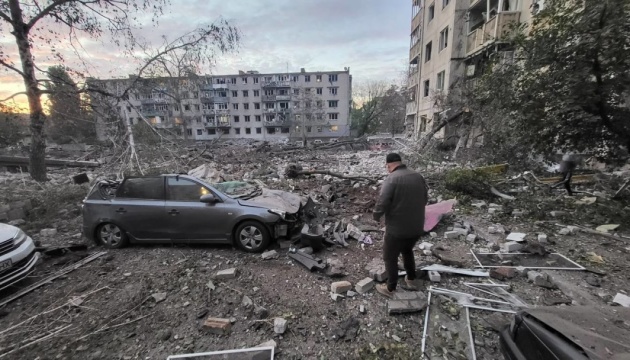
The reported attack struck a residential area of Kremenchuk, in Ukraine’s Poltava region. Apartment buildings were damaged. The incident matters because homes are civilian spaces, so damage can immediately threaten residents, shelter, and essential services. The report also shows that the attack affected more than one location. Vitalii Diakivnych, head of the Poltava Regional Military Administration, said a strike was recorded during the massive missile attack. Emergency services were dispatched to the scene. The article also says Russian forces struck an enterprise in Kremenchuk district, showing simultaneous damage to residential and industrial property. At the time of reporting, officials were still clarifying whether anyone in Kremenchuk had been hurt or killed. The report confirms no casualty total there. The immediate priorities were emergency response and assessment. Longer-term needs could include repairing homes, restoring services, and supporting displaced residents, depending on the damage found.
Based on reporting by Ukrinform English
What happened in Kremenchuk during the reported attack?
The reported attack struck a residential area of Kremenchuk, in Ukraine’s Poltava region. Apartment buildings were damaged. The incident matters because homes are civilian spaces, so damage can immediately threaten residents, shelter, and essential services. The report also shows that the attack affected more than one location.
Vitalii Diakivnych, head of the Poltava Regional Military Administration, said a strike was recorded during the massive missile attack. Emergency services were dispatched to the scene. The article also says Russian forces struck an enterprise in Kremenchuk district, showing simultaneous damage to residential and industrial property.
At the time of reporting, officials were still clarifying whether anyone in Kremenchuk had been hurt or killed. The report confirms no casualty total there. The immediate priorities were emergency response and assessment. Longer-term needs could include repairing homes, restoring services, and supporting displaced residents, depending on the damage found.
Where is Kremenchuk, and why is it important within Ukraine's Poltava region?
Kremenchuk is a city in central Ukraine, within Poltava Oblast, also called Poltava region. It lies on the Dnipro River and is widely known as an important industrial and transport center. Those features give it significance beyond its neighborhoods. Damage there can affect residents, businesses, transportation, and regional services.
The article reports damage to apartment buildings in a Kremenchuk residential area. It also says Russian forces struck an enterprise in Kremenchuk district. That pairing illustrates the city’s mixed character: people live near workplaces, factories, roads, utilities, and other urban infrastructure. The article does not identify the enterprise or explain why it was targeted.
Kremenchuk’s importance means an attack can have wider effects than damage to individual homes. Families may lose safe housing, while businesses and supply networks may face disruption. Officials must therefore manage both civilian protection and infrastructure recovery. The reported response began with emergency services reaching the affected locations and clarifying the situation.
How many apartment buildings were damaged, and how many casualties have been confirmed?
The report does not state how many apartment buildings were damaged. It uses the plural phrase “apartment buildings,” so at least two were affected, but the exact number cannot be established from the article. Accuracy matters because early attack reports can change as responders inspect buildings and verify reports.
The article likewise does not confirm any deaths or injuries in Kremenchuk. It says information about casualties was being clarified. Two deaths were reported in Kyiv’s Darnytskyi district from a separate overnight Russian attack, but those deaths should not be counted as Kremenchuk casualties. The locations and incidents are distinct.
The current confirmed picture is therefore limited: multiple apartment buildings were damaged, and Kremenchuk’s casualty count was not yet available. Emergency services had been dispatched to the scene. Further inspections, medical checks, and official updates would be needed to establish the final damage and casualty figures.
Which authorities and emergency services respond after a missile strike, and what do they do first?
After a missile strike, regional and local authorities coordinate the initial response. In this report, Vitalii Diakivnych, head of the Poltava Regional Military Administration, provided the update. Emergency services were sent to the scene. Their first tasks are generally to make the area safer, find people needing help, control fires, and assess damaged buildings.
Responders may include rescue crews, firefighters, police, medical teams, utility workers, and local officials. They work together because a damaged apartment building can contain trapped residents, broken gas or power lines, fires, unstable walls, and unexploded hazards. Police can restrict access, while rescue and medical teams search, extract, and treat people.
The article confirms dispatch but does not list every agency or describe each action taken. It says casualty information was still being clarified. That means the response was in its early assessment stage. Authorities would then document damage, support residents, restore essential services, and arrange further assistance as conditions become clear.
What immediate and longer-term consequences can a missile strike on a residential area create for civilians?
A missile strike on homes creates immediate risks to life and safety. Explosions can injure or kill residents, damage apartments, start fires, and make buildings unsafe. Broken windows, doors, roofs, power lines, water pipes, or heating systems can leave families exposed. Emergency workers must also consider fires, unstable structures, and other hazards.
In Kremenchuk, the article confirms damage to apartment buildings and says emergency services were dispatched. Officials were still clarifying casualties, so the immediate human impact was not yet known. Residents may need rescue, medical care, temporary shelter, food, clothing, and help locating relatives. Nearby streets and services may also be disrupted.
Longer-term consequences can include displacement, expensive reconstruction, lost belongings, stress, and trauma. Schools, workplaces, and local businesses may be interrupted. Recovery can require inspections, demolition or repair, utility restoration, financial support, and mental-health assistance. The scale depends on damage that responders and authorities confirm after examining the site.
Why might a city contain both residential buildings and enterprises that are affected during the same attack?
A city is not divided into perfectly separate zones. Residential neighborhoods often stand near factories, offices, warehouses, roads, railways, power facilities, and other services. This arrangement supports daily life and jobs, but it also means one incident can damage homes and economic infrastructure at the same time. The article reports exactly that pattern in Kremenchuk.
The strike damaged apartment buildings in a residential area. Diakivnych also said Russian forces struck one of the enterprises in Kremenchuk district. These locations may serve different purposes, but they share the same urban environment. Roads, electricity, water, workers, and supply networks can connect them, so damage to one area may affect the other.
The article does not identify the enterprise or explain the intended target. What it does show is the practical consequence of attacks in populated, mixed-use areas: civilians and businesses can both face disruption. Authorities must respond to housing damage while also checking industrial sites, transport links, utilities, and wider public safety.
What is a missile, and how do missile attacks challenge air-defense systems and civilian protection?
A missile is a powered weapon designed to travel toward a target, usually with guidance that helps control its path. Missiles can be launched from aircraft, ships, vehicles, or ground positions. Their speed, range, flight path, and possible ability to change course make them difficult threats for defenders and civilians.
Air-defense systems must detect an incoming object, track it, determine what it is, and decide whether and how to intercept it. This process happens under severe time pressure. Some missiles fly low, move quickly, follow complex routes, or arrive in groups. Even a successful interception may leave falling debris, while a missile that reaches a populated area can damage buildings.
The Kremenchuk report shows the civilian-protection challenge: a residential area was struck and apartment buildings were damaged. Emergency services responded, but the article does not describe the air-defense outcome. Protection also depends on warnings, shelters, strong buildings, emergency planning, and rapid rescue after impact.
Key Facts:
📌 A missile strike damaged apartment buildings in Kremenchuk.
📌 The strike hit a residential area.
📌 Emergency services were dispatched to the scene.
📌 Kremenchuk is in central Ukraine’s Poltava region.
📌 The city lies on the Dnipro River.
📌 It has important residential, industrial, and transport functions.
📌 The article says apartment buildings, but gives no exact number.