News · International Relations
For 26 years, India has searched passengers at Kathmandu airport. Nepal can’t say why
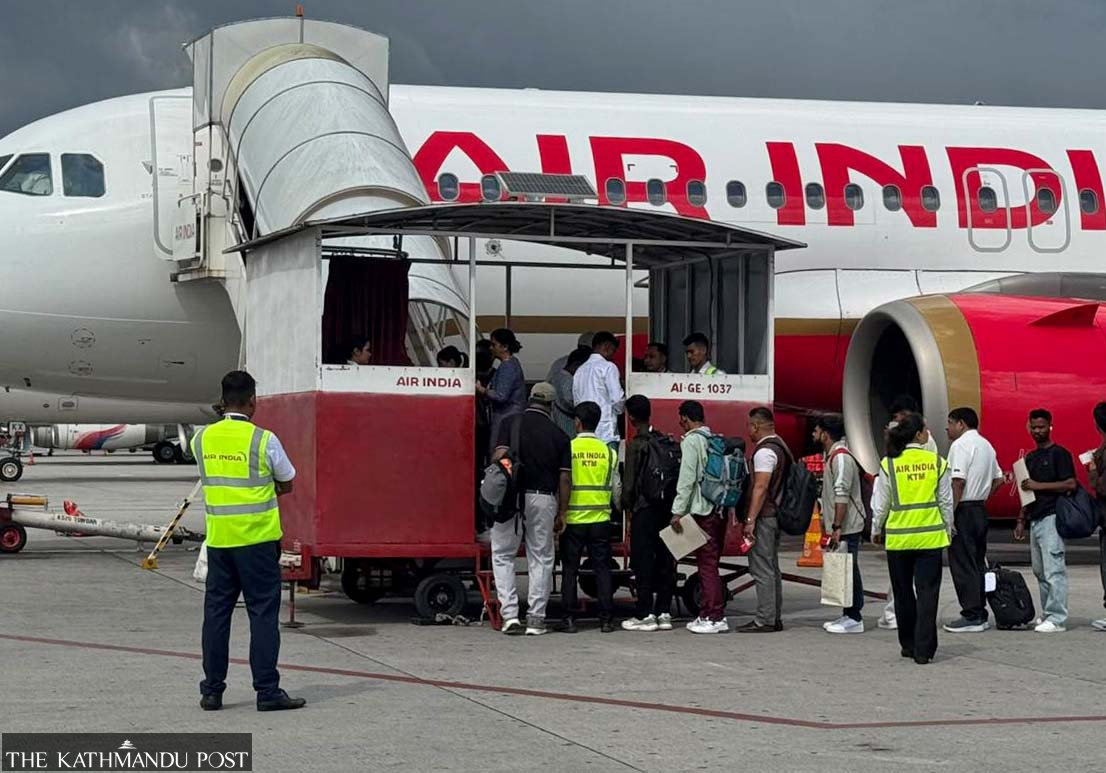
The extra screening is a final security check before passengers board Indian-registered aircraft at Tribhuvan International Airport. It happens after passengers have already passed through Nepal’s own security system. The arrangement matters because it gives Indian personnel a direct role in searching people on Nepali territory. Indian staff work at a raised platform on the airport apron. Passengers enter a trolley enclosed on four sides, one at a time. The staff frisk passengers and thoroughly hand-search their luggage. Nepali employees assist with the process but do not conduct the main search. The practice has continued for more than 26 years. Air India and IndiGo reportedly use Indian staff in three shifts. Nepal’s agencies cannot locate the original authorization, while India says extra measures were accepted after the IC814 hijacking. Other international airlines do not face this additional foreign screening.
Based on reporting by Kathmandu Post Nepal
What additional security screening do passengers on Indian-registered aircraft undergo at Kathmandu’s airport?
The extra screening is a final security check before passengers board Indian-registered aircraft at Tribhuvan International Airport. It happens after passengers have already passed through Nepal’s own security system. The arrangement matters because it gives Indian personnel a direct role in searching people on Nepali territory.
Indian staff work at a raised platform on the airport apron. Passengers enter a trolley enclosed on four sides, one at a time. The staff frisk passengers and thoroughly hand-search their luggage. Nepali employees assist with the process but do not conduct the main search.
The practice has continued for more than 26 years. Air India and IndiGo reportedly use Indian staff in three shifts. Nepal’s agencies cannot locate the original authorization, while India says extra measures were accepted after the IC814 hijacking. Other international airlines do not face this additional foreign screening.
How many Indian security personnel typically help screen passengers for a single flight, and how many passengers and crew were on the hijacked IC814 flight?
Indian security personnel form a substantial part of the screening team for flights to India. An official told Kantipur that six to eight Indian employees usually work on the apron for one flight. This is separate from the total staffing of 12 to 15 people supporting the flight’s security operation.
The figures show how visible the arrangement is. Indian employees work in three shifts for Air India and IndiGo. They search passengers and hand baggage, while Nepali staff provide assistance. The article does not give a separate number for IC814 passengers and crew; it states that the aircraft carried 190 people.
That hijacking became the reason for the later screening system. On December 24, 1999, five hijackers seized IC814 soon after it left Kathmandu. The aircraft eventually landed in Kandahar, and the hostage crisis ended after 190 passengers and crew were released on December 31.
What was the IC814 hijacking, and how did it lead to the extra screening arrangement?
Indian Airlines Flight IC814 was hijacked on December 24, 1999, minutes after departing Kathmandu. Five men, later identified by Indian investigators as Pakistani nationals linked to Harkat-ul-Mujahideen, took control. The aircraft travelled through Amritsar, Lahore, and Dubai before landing in Kandahar.
The week-long crisis ended on December 31. India released three jailed militants, including Masood Azhar, in exchange for the passengers and crew. India then asked Indian Airlines to suspend Kathmandu flights. The suspension lasted five months, although other international carriers continued flying there.
After Nepal’s foreign minister visited India on May 7, 2000, the countries agreed to restore service. Indian Airlines resumed flights on June 1, but passengers faced a separate ramp screening after Nepal’s checks. Indian reports said Nepal accepted an extra X-ray machine and a final check by Indian security personnel. Nepal has never publicly confirmed the terms or produced the authorization.
Why is it significant that Nepal’s government agencies cannot find a document authorizing Indian personnel to search passengers at the airport?
Nepal’s missing records create uncertainty about who approved Indian personnel to search passengers at Tribhuvan. The issue is not merely historical paperwork. It concerns authority over security procedures inside a Nepali airport and whether the arrangement was formally agreed, documented, and subject to review.
Kantipur asked the tourism and civil aviation ministry, the Civil Aviation Authority of Nepal, and the Home Ministry to locate the records. Each referred the question to another agency. India’s side contains public evidence: its minister told the Lok Sabha in 2000 that additional airline security measures were in place and would be reviewed.
Nepal, however, has never publicly acknowledged the precise terms or said whether it agreed in writing. The searches have continued since 2000 without a clear paper trail. That weakens transparency and accountability. It also makes future renegotiation harder, because officials may lack a shared record of the original conditions and limits.
What happens to Nepal’s control over airport security and its relations with India when foreign personnel conduct passenger searches on Nepali territory?
When foreign personnel conduct searches at a Nepali airport, Nepal’s practical control over a core state function appears less complete. The article does not say India has taken over the airport. It shows, instead, that a special foreign role operates alongside Nepal’s official screening system, creating questions about authority and accountability.
Indian staff search bodies and hand baggage on the apron, while Nepali staff assist but are excluded from the main search. India has also repeatedly sought permission for sky marshals on flights leaving Kathmandu. Nepali officials have rejected or quietly shelved those requests, yet the existing searches have remained in place.
This produces diplomatic friction and an unusual two-tier system. Indian carriers receive extra procedures that other airlines do not. Successive Nepali governments have not formally reviewed or removed the arrangement. Without clear documentation or a public agreement, future governments may face pressure to clarify responsibility, limits, and whether the practice should continue.
Why are passengers on other international airlines, including Nepal Airlines flights to India, screened only by Nepali authorities?
The additional search is not a general rule for every international flight from Kathmandu. It began as a special response to the IC814 hijacking and was linked to Indian Airlines’ return to Kathmandu. That history explains why other carriers do not automatically receive the same treatment.
Qatar Airways, Turkish Airlines, and Cathay Pacific operate under Nepal’s security regime. Their passengers complete Nepali screening and then board without a final search by foreign staff. Nepal Airlines passengers flying to New Delhi, Bengaluru, and Mumbai follow the same pattern. The article says Indian Airlines and IndiGo, by contrast, deploy Indian staff for the extra check.
This difference leaves a carrier-specific arrangement in place rather than a universal airport policy. It also highlights the lack of a clear public record: Nepal has not explained why the exception continues or formally acknowledged its terms. The result is a divided practice, with foreign searches attached to particular Indian-operated flights.
How does international aviation law, especially the ICAO security framework, divide responsibility between the country hosting an airport and foreign countries that operate flights there?
International aviation security is primarily organized around the state where an airport is located. Under the Chicago Convention’s security framework, especially Annex 17, Nepal is responsible for its national aviation security program and controls at Tribhuvan. That includes screening passengers, baggage, and access to restricted airport areas.
Foreign airlines must comply with the host state’s approved security measures. Their home countries can impose additional requirements on their airlines or seek extra safeguards. But foreign officers conducting searches inside another country would normally require that country’s authorization and coordination. The framework therefore distinguishes airline responsibility from the host state’s sovereign security authority.
The article does not examine ICAO rules or say whether Nepal’s arrangement meets them. It does show why the missing authorization matters. A written agreement could define roles, supervision, liability, and limits. Without one, responsibility may be unclear even though the practice has continued for years. This is established aviation-law context, not a finding stated in the article.
Key Facts:
📌 Indian staff conduct a second search after Nepal’s airport screening.
📌 Passengers and hand luggage are searched on the airport apron.
📌 Nepali staff assist but do not perform the main search.
📌 Six to eight Indian employees typically screen one flight.
📌 The wider flight team includes 12 to 15 people.
📌 IC814 carried 190 passengers and crew combined.
📌 IC814 was hijacked minutes after leaving Kathmandu on December 24, 1999.