News · Defence & Security
Russia Pledges to Continue Massive Strikes on Kyiv, Urges Foreign Diplomats to Leave City
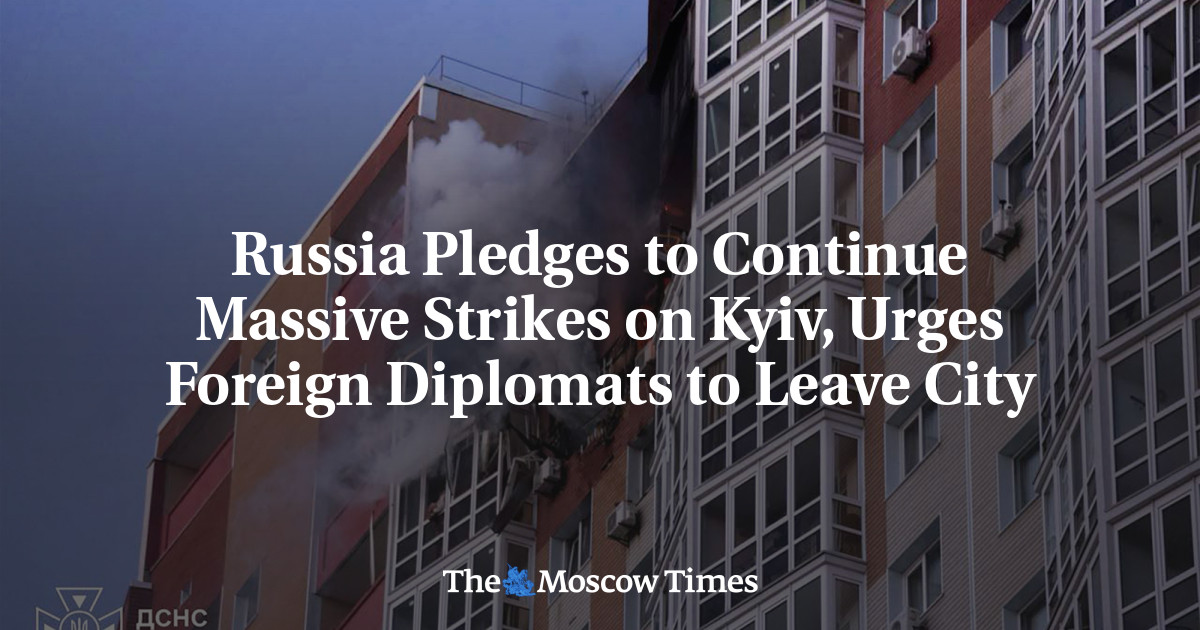
Russia announced that its forces would continue what it called targeted retaliatory strikes against military facilities in Kyiv and other Ukrainian cities. The statement followed a recent escalation of attacks on infrastructure in the capital. Russia says the strikes respond to Ukrainian attacks on Russian civilians and infrastructure. The Foreign Ministry also warned foreign nationals, including diplomatic mission staff, against remaining in Ukraine or traveling there. It said people who ignore the warning would bear responsibility for adverse consequences. The article reports that a bridge over the Dnipro River was hit in an air attack on Saturday. The announcement signals that Moscow does not intend to pause its campaign. It also increases risks for residents, aid workers, journalists, and diplomats in affected cities. The warning is a Russian government claim and threat, not an independent finding about who is responsible for every attack.
Based on reporting by Moscow Times
What did Russia announce about further strikes on Kyiv and other Ukrainian cities, and whom did it warn to leave?
Russia announced that its forces would continue what it called targeted retaliatory strikes against military facilities in Kyiv and other Ukrainian cities. The statement followed a recent escalation of attacks on infrastructure in the capital. Russia says the strikes respond to Ukrainian attacks on Russian civilians and infrastructure.
The Foreign Ministry also warned foreign nationals, including diplomatic mission staff, against remaining in Ukraine or traveling there. It said people who ignore the warning would bear responsibility for adverse consequences. The article reports that a bridge over the Dnipro River was hit in an air attack on Saturday.
The announcement signals that Moscow does not intend to pause its campaign. It also increases risks for residents, aid workers, journalists, and diplomats in affected cities. The warning is a Russian government claim and threat, not an independent finding about who is responsible for every attack.
What is a retaliatory strike, and how is Russia using that term to justify its attacks?
A retaliatory strike is military action described as a response to an earlier attack by an opponent. The term explains the claimed reason for an attack, but it does not automatically make the action lawful or prove who caused the original harm. Target selection and civilian protection still matter.
Russia says Ukrainian Armed Forces committed what it calls terrorist acts against Russian civilians and civilian infrastructure. It uses those allegations to justify systematic strikes on military facilities in Kyiv and other Ukrainian cities. President Vladimir Putin similarly said Ukraine was paying for its attacks on Russia.
This language creates a competing narrative about responsibility. Russia presents its attacks as measured responses, while Ukraine disputes Russia’s conduct. The article says both sides deny targeting civilians or civilian infrastructure. Independent assessments would be needed to establish the facts behind individual incidents and whether international law was followed.
How many people live in Kyiv, and why does that make attacks on the capital’s infrastructure especially significant?
The article says Kyiv has about 3 million residents. That population makes attacks on the capital’s infrastructure especially significant because damage can spread beyond one neighborhood. A bridge, power facility, or transport link may serve large numbers of people and support essential services.
The reported bridge attack illustrates the problem. Bridges connect districts divided by the Dnipro River and help move commuters, emergency crews, supplies, and other traffic. Damage can create delays, crowding, and difficult detours. Strikes on infrastructure can also disrupt electricity, heating, water, communications, or transport, depending on what is hit.
The article says the intensifying campaign has upended life for Kyiv’s residents before winter. A large urban population has fewer easy alternatives when key systems fail. Continued strikes could deepen humanitarian pressure, especially if cold weather and repeated damage limit repairs or force residents to leave affected areas.
What happens to civilians when bridges, power systems, and other infrastructure are damaged before winter?
When bridges, power systems, and other infrastructure are damaged, civilians can lose access to basic services and safe movement. Power failures may interrupt heating, water pumping, communications, hospitals, and businesses. Bridge damage can isolate neighborhoods, delay emergency response, and make commuting or evacuation harder.
The article gives Kyiv as a concrete example. Russia has intensified strikes on the capital, including an air attack that hit a bridge across the Dnipro River. The campaign has disrupted life for Kyiv’s roughly 3 million residents. The danger is sharper before winter, when cold temperatures increase dependence on heating and electricity.
The immediate effects may include long detours, shortages, service interruptions, and greater exposure to danger. Repeated attacks can also slow repairs because crews must work under threat. The article does not provide specific outage figures, but continued strikes would likely increase pressure on civilians and local authorities to maintain essential services.
Why are bridges across the Dnipro River strategically important for moving people, supplies, and military forces in Kyiv?
Bridges across the Dnipro are important because the river divides Kyiv and surrounding routes. Crossings concentrate movement between the city’s banks. If a bridge is damaged, people and vehicles may need long detours, reducing the speed and capacity of transport across the capital.
In practical terms, bridges can carry commuters, food, fuel, medical supplies, repair crews, and emergency responders. During wartime, they may also support the movement of military units and equipment. The article reports that a bridge over the Dnipro was hit in a Saturday air attack, but it does not identify the bridge’s exact role or the scale of the damage.
That uncertainty matters. A crossing’s impact depends on whether alternatives remain open and whether authorities can repair it safely. Damage to several routes would create greater disruption. It could slow civilian services and military logistics alike, making bridges strategically important to both urban life and the wider war effort.
How have Russian and Ukrainian attacks on cities, border regions, oil facilities, and grain vessels created a cycle of claimed retaliation?
The article describes a broad pattern of reciprocal attacks rather than one isolated exchange. Russia has struck Kyiv and other Ukrainian cities. Ukraine has shelled Russian enterprises and used drones in Russian border regions. Both governments present at least some of these actions as responses to the other side’s conduct.
The cycle also reaches strategic economic targets. The article says both sides have increased attacks on grain vessels in the Black Sea. Russian oil refineries and other enterprises have faced Ukrainian shelling, while Ukrainian drones have killed civilians in Russian border regions. Russia says Ukrainian attacks justify its own systematic strikes.
This pattern can sustain escalation because each side points to earlier harm when defending new attacks. Civilian life, infrastructure, trade, and energy systems become entangled with military objectives. The article says both sides deny targeting civilians or civilian infrastructure. Without verified accountability, competing claims can keep retaliation going and make further strikes more likely.
What does international humanitarian law require regarding military targets and civilians, and why do both sides deny attacking civilian infrastructure?
International humanitarian law requires warring parties to distinguish military objectives from civilians and civilian objects. Attacks must be directed at legitimate military targets. They must also be proportionate and planned with feasible precautions to reduce civilian harm. Retaliation does not remove these obligations.
The article says Russia describes its strikes as targeted attacks on military facilities. It also reports damage to a bridge and a wider campaign affecting Kyiv’s infrastructure. Russia and Ukraine both deny targeting civilians or civilian infrastructure. Those denials reflect the legal and political importance of showing that attacks had lawful military aims.
A denial alone does not establish what happened. Investigators would need reliable evidence about the target, the expected civilian harm, the precautions taken, and the actual effects. If infrastructure served both civilian and military purposes, its legal status would depend on the facts. The article does not provide enough evidence to judge individual strikes.
Key Facts:
📌 Russia said targeted strikes would continue in Kyiv and other Ukrainian cities.
📌 A Dnipro bridge was hit in a Saturday air attack.
📌 Russia warned foreign nationals and diplomats to leave or avoid Ukraine.
📌 Retaliatory strikes are presented as responses to earlier attacks.
📌 Russia says Ukrainian attacks justify its strikes on military facilities.
📌 Both sides deny deliberately targeting civilians or civilian infrastructure.
📌 Kyiv has about 3 million residents.