News · International Relations
Lukashenko Vows Belarus’ Full Support for Putin on Ukraine
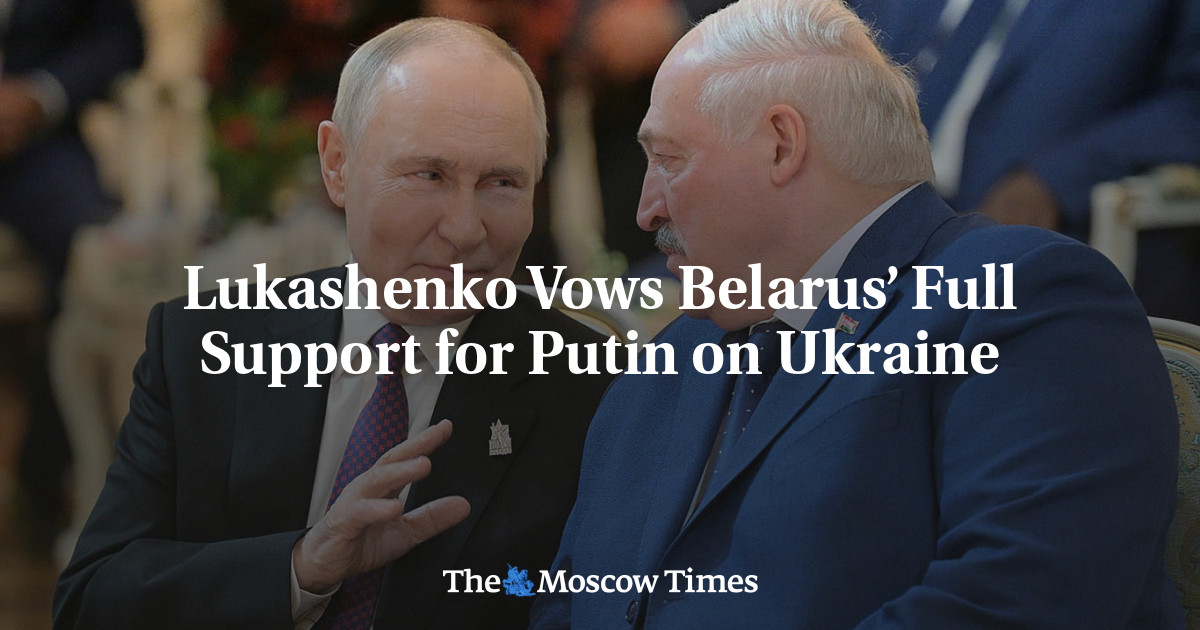
Lukashenko’s promise was political and strategic loyalty. He told Putin that Belarus would remain committed to their “common course” and would support Russia if its leadership made a decision. This matters because Belarus is a close Russian ally and has already helped Moscow’s military campaign. At the same time, Lukashenko claimed to have his own understanding of some aspects of the conflict. He also said Belarusian troops would not be sent directly into the war. Belarus has instead supported Russia through access to its territory and military cooperation. The pledge leaves Belarus aligned with Moscow while preserving a stated limit on direct combat involvement. That distinction may help Lukashenko manage domestic and international risks. However, his support still strengthens Russia’s position and could complicate diplomatic efforts to stop or freeze the conflict.
Based on reporting by Moscow Times
What exactly did Alexander Lukashenko promise Vladimir Putin, and what limits did he place on Belarus’s support?
Lukashenko’s promise was political and strategic loyalty. He told Putin that Belarus would remain committed to their “common course” and would support Russia if its leadership made a decision. This matters because Belarus is a close Russian ally and has already helped Moscow’s military campaign.
At the same time, Lukashenko claimed to have his own understanding of some aspects of the conflict. He also said Belarusian troops would not be sent directly into the war. Belarus has instead supported Russia through access to its territory and military cooperation.
The pledge leaves Belarus aligned with Moscow while preserving a stated limit on direct combat involvement. That distinction may help Lukashenko manage domestic and international risks. However, his support still strengthens Russia’s position and could complicate diplomatic efforts to stop or freeze the conflict.
How has Belarus already helped Russia’s war effort, and what involvement has Lukashenko said Belarusian troops will avoid?
Belarus has already assisted Russia without officially entering the war as a direct combatant. Its territory provided Russia with a staging ground for the full-scale invasion launched in 2022. That geographic access gave Russian forces another route and operating area near Ukraine.
The key mechanism was logistical and military access. Forces, equipment, and operations could use Belarusian territory, even while Lukashenko said Belarusian troops themselves would not be sent into the fighting. More recently, Belarus has expanded military preparations and hosted Russia’s nuclear-capable Oreshnik missile system.
This creates a gap between direct participation and meaningful support. Belarus may avoid sending soldiers into Ukraine, yet still affect Ukraine’s security through territory, weapons-related cooperation, and military readiness. Its announced “targeted mobilization” also suggests that Belarus is preparing for greater regional tension.
What is the Eurasian Economic Union, and why would Lukashenko make this statement at one of its meetings?
The Eurasian Economic Union, or EAEU, is a Russian-led regional organization built around economic cooperation and integration. The article identifies five members: Russia, Belarus, Armenia, Kazakhstan, and Kyrgyzstan. Its meetings give leaders a formal setting to discuss shared regional interests.
Lukashenko made his statement while addressing the union’s governing body. That setting mattered because it connected his promise to Russia with a wider institution, not just a private exchange with Putin. His words presented Belarus as a dependable partner despite disagreements over parts of the Ukraine war.
The message also had a diplomatic purpose. It reassured Russia while other EAEU members were present, including Kazakhstan, whose president has proposed freezing the conflict to restart talks. Lukashenko’s remarks therefore emphasized alliance loyalty rather than support for an immediate pause or independent diplomatic path.
How many countries belong to the Eurasian Economic Union, and how does its membership compare with Russia’s wider network of partners?
The Eurasian Economic Union has five countries: Russia, Belarus, Armenia, Kazakhstan, and Kyrgyzstan. The article directly identifies these members, so the bloc’s formal size is clear. It is a specific regional organization rather than a complete list of countries cooperating with Russia.
Russia’s wider network is broader in kind and likely in number. It can include countries connected through trade, security ties, diplomacy, or other arrangements outside the EAEU. The article does not provide a total count or define that larger network, so no exact comparison is possible from the source.
The important contrast is institutional. The EAEU has a fixed membership and shared framework, while Russia’s wider partnerships are more varied. Lukashenko’s statement at the EAEU meeting highlighted Belarus’s place inside Russia’s formal regional bloc, even as Moscow maintains relationships beyond it.
What consequences could Belarus’s continued support have for Ukraine’s security, the war’s military balance, and diplomatic efforts to freeze the conflict?
Continued Belarusian support could affect Ukraine’s security even without Belarusian troops entering the war. Belarus shares a strategic relationship with Russia and previously allowed its territory to support the invasion. Military deployments and preparations there could force Ukraine to watch another direction and divide defensive resources.
The mechanism is pressure and access. Belarus can provide territory, logistical depth, and military cooperation, while Russia’s deployment of the nuclear-capable Oreshnik system raises the stakes of regional deterrence. These actions may strengthen Russia’s military position, although the article does not quantify their battlefield effect.
Diplomatically, Minsk’s pledge could make a negotiated freeze harder. Kazakhstan’s president has twice proposed freezing the conflict to restart talks, but Lukashenko emphasized following Russia’s decisions. If Belarus continues backing Moscow, it may reduce the space for a separate Belarusian role and reinforce Russia’s ability to reject or shape diplomatic initiatives.
Why is Belarus trying to improve relations with the United States while reaffirming its alignment with Russia?
Belarus wants better relations with the United States because sanctions have imposed political and economic costs. The article says Washington reopened dialogue with Minsk and eased some sanctions in exchange for prisoner releases. Belarus has also sought broader sanctions relief since Trump returned to the White House.
At the same time, Lukashenko cannot easily discard Russia. Moscow is Belarus’s main military partner, and Belarus has allowed Russian forces to use its territory. His public promise to remain on Russia’s common course reassures Putin while leaving room for limited dealings with Washington.
This is a balancing strategy, not a clear break with either side. Belarus may seek practical benefits from the United States, such as reduced sanctions and diplomatic contact, while preserving Russian security backing. Its room to maneuver will depend on whether Washington demands policy changes that conflict with Minsk’s military alignment with Moscow.
What are economic sanctions, and how can the threat of keeping or lifting them influence a smaller country’s political and security choices?
Economic sanctions are restrictions imposed by one country or group on another. They can limit banking, trade, investment, technology, travel, or access to assets. Their purpose is to raise the cost of policies without immediately using military force. The article links Belarusian sanctions to its 2020 election crackdown and support for Russia’s invasion.
The mechanism is bargaining pressure. Sanctions can make it harder for a smaller country to earn money, obtain goods, or work with international institutions. The threat of keeping them may encourage prisoner releases or other concessions. In this case, the Trump administration eased some sanctions after Belarus released prisoners.
Sanctions do not automatically change a government’s security choices. Belarus still reaffirmed alignment with Russia while seeking relief from Washington. This shows the trade-off: Minsk may accept limited diplomatic steps for economic benefits, but its military partnership with Moscow remains a central constraint.
Key Facts:
📌 Lukashenko promised continued alignment with Russia’s common course.
📌 He said Belarus has its own views on parts of the conflict.
📌 He has said Belarusian troops will not fight directly in Ukraine.
📌 Belarus served as a staging ground for Russia’s 2022 invasion.
📌 Lukashenko says Belarusian troops will not deploy directly into the war.
📌 Belarus has intensified military preparations and hosted Oreshnik missiles.
📌 The EAEU is a Russian-led bloc focused on regional economic cooperation.