News · Science & Technology
India needs its own AI safety framework, not a copy of US pact: Industry experts
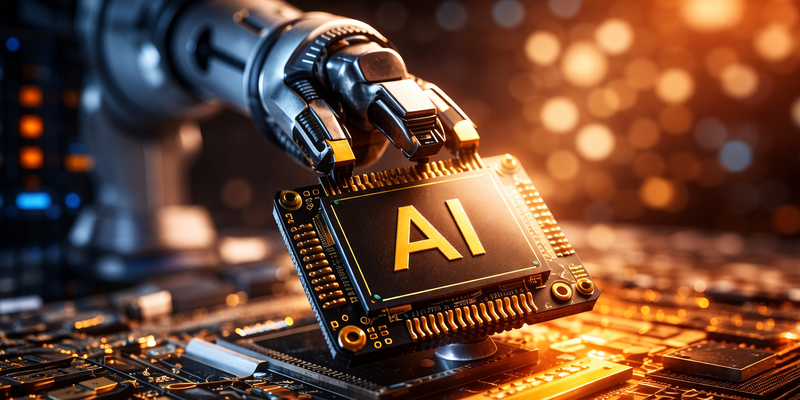
An AI safety framework is a coordinated set of safeguards for developing, testing, deploying, and monitoring artificial intelligence. It explains who is responsible when systems fail and how serious problems should be reported. Its purpose is to keep AI benefits while reducing threats to people, institutions, and public trust. The article highlights practical protections. These include testing systems before deployment, internal monitoring, independent audits, dedicated oversight teams, and board-level responsibility. Safety matters especially as models become more capable and agentic. Such systems may receive greater access to digital systems and more freedom to make decisions. Experts want India’s framework to address deepfakes, cyberattacks, civil-rights harms, and unreliable outcomes. Velamakanni said India needs binding rules for transparency, incident reporting, and accountability when serious harm occurs. The IndiaAI Safety Institute could test new models without forcing certification of every release. This approach would strengthen trust without unnecessarily blocking innovation.
Based on reporting by YourStory
What is an AI safety framework, and what is it designed to prevent?
An AI safety framework is a coordinated set of safeguards for developing, testing, deploying, and monitoring artificial intelligence. It explains who is responsible when systems fail and how serious problems should be reported. Its purpose is to keep AI benefits while reducing threats to people, institutions, and public trust.
The article highlights practical protections. These include testing systems before deployment, internal monitoring, independent audits, dedicated oversight teams, and board-level responsibility. Safety matters especially as models become more capable and agentic. Such systems may receive greater access to digital systems and more freedom to make decisions.
Experts want India’s framework to address deepfakes, cyberattacks, civil-rights harms, and unreliable outcomes. Velamakanni said India needs binding rules for transparency, incident reporting, and accountability when serious harm occurs. The IndiaAI Safety Institute could test new models without forcing certification of every release. This approach would strengthen trust without unnecessarily blocking innovation.
How many major technology companies signed the White House Accord on Super Intelligence, and what controls did they promise?
The accord involved six technology companies: Google, Axiom, Paradox, Meta, Nvidia, and Elon Musk’s Vector. Their executives signed alongside US President Donald Trump on September 29. The agreement is voluntary, so its promises rely largely on company commitments rather than direct legal enforcement.
The companies agreed to create internal controls for monitoring their AI models. They also promised dedicated oversight teams, independent external audits, and board-level oversight. These mechanisms spread responsibility beyond engineers and require senior leaders and outside reviewers to examine safety practices.
The companies further agreed to meet regularly to establish safety standards. Experts described this arrangement as a form of self-policing by frontier AI companies. Indian specialists said the pact could offer useful ideas, but India should not copy it. They want a framework suited to Indian languages, applications, risks, and institutions.
How would India’s proposed approach differ from the United States’ voluntary pact, the European Union’s binding rules, and China’s state-directed model?
The United States pact mainly relies on voluntary commitments and self-policing by frontier AI companies. The European Union has taken a binding, risk-based approach, which uses legal requirements that vary according to potential harm. China follows a state-directed control model, giving government authorities a central role in managing AI risks.
Experts say India should develop its own approach. It could use a domestic commitment as a building block for global AI-safety cooperation, while protecting access to advanced models for India and the Global South. The framework should reflect India’s application-led industry, languages, and institutions.
The article does not present a final Indian framework. Instead, experts propose different combinations of voluntary and mandatory measures. Suggestions include pre-deployment testing, independent audits, incident reporting, named responsibility, and stronger public safety oversight. India could also use its role in the Global Partnership on AI and the AI Impact Summit’s momentum.
Why do experts say India’s AI rules must account for its many languages, cultural contexts, and application-focused technology industry?
India’s AI environment differs from that of countries dominated by frontier-model developers. Experts say Indian companies are mainly building applications that serve businesses and users. Those applications must work across many vernacular languages and reflect varied cultural contexts. A single imported framework may miss these practical challenges.
A useful example is language reliability. An AI system that performs well in English may misunderstand a regional language, local expression, or culturally specific situation. Khanna said Indian rules should ensure reliable performance across vernacular languages and unique cultural contexts. They should also prevent AI firms from exploiting knowledge asymmetry, where users understand less about the technology than providers.
The framework must also create a level playing field. Gopalan said global frontier models should face the same rules as Indian systems because they compete for the same customers. This could support fair competition, safer applications, and broader public trust as India expands its AI ecosystem.
What could happen to citizens, businesses, and public institutions if AI risks such as deepfakes, cyberattacks, privacy violations, or unreliable decisions are not controlled?
The article identifies deepfakes, cyberattacks, privacy problems, civil-rights concerns, and unreliable decisions as risks requiring attention. If these dangers are not controlled, citizens could face deceptive media, stolen information, unfair treatment, or harmful automated decisions. Public trust in digital services and institutions could weaken.
Businesses could suffer financial losses, damaged reputations, cyber intrusions, or unfair competition. A deepfake might mislead customers or impersonate an executive. An insecure AI system could expose sensitive data. In sectors such as banking and healthcare, an unreliable decision could affect money, treatment, or access to services.
Public institutions face especially serious consequences because their decisions affect large populations. The experts therefore call for transparency, incident reporting, accountability, and safeguards for government use. The article does not list every possible outcome, but it stresses that voluntary compliance alone leaves gaps in civil rights and public safety. Strong oversight could limit these harms without stopping innovation.
What is a hybrid approach to AI regulation, and how could it combine voluntary standards with mandatory rules in areas such as healthcare, banking, defence, and government?
A hybrid approach combines flexible voluntary standards with legally binding safeguards. Voluntary guidance can adapt quickly in fast-moving technical areas, especially where regulators may not yet have deep expertise. Mandatory rules apply when AI could affect safety, rights, privacy, or essential services.
Mandal proposed mandatory requirements for potential harms in defence, healthcare, banking, and government use cases. Voluntary standards could guide other technical areas. A company might therefore follow evolving best practices for model development, while still having legal duties to test, report, and control high-risk systems.
The article presents this as a way to protect safety without restricting every line of code. Khanna described a similar “techno-legal” model, combining strong voluntary compliance with binding mandates, including rules on synthetically generated information. Experts still disagree about the balance. Velamakanni wants stronger binding safeguards, while Gopalan favors self-regulation to preserve competition.
What are frontier and agentic AI systems, and why does giving them greater autonomy and access to real-world systems make safety testing and oversight more important?
Frontier AI systems are highly advanced models at the leading edge of capability. Agentic systems are models that can pursue tasks, use tools, or make decisions with greater autonomy. The article warns that these systems are becoming more capable and are being given greater access to other systems.
That combination changes the safety challenge. A model that only answers questions has limited direct reach. A more agentic model might interact with software, data, or operational systems and act on its decisions. The article therefore calls for testing before deployment, monitoring, independent audits, oversight teams, and clear responsibility for risks.
Velamakanni said safety must stay ahead of capability to prevent catastrophic risks. Experts do not want testing to become a bottleneck requiring certification of every model release. Instead, they support stronger institutions, including the IndiaAI Safety Institute, to test newly released systems and identify serious problems before or after deployment.
Key Facts:
📌 AI safety frameworks organize testing, monitoring, oversight, and accountability.
📌 They aim to prevent catastrophic risks and serious public harms.
📌 India’s experts seek transparency, incident reporting, and responsible oversight.
📌 Six companies signed the White House Accord on Super Intelligence.
📌 Promised controls included monitoring, oversight teams, audits, and board supervision.
📌 The accord is voluntary and emphasizes company self-policing.
📌 The US pact emphasizes voluntary self-policing.